
Pellet Grilling in Cold Weather: The Complete Winter Smoking Guide (2026)
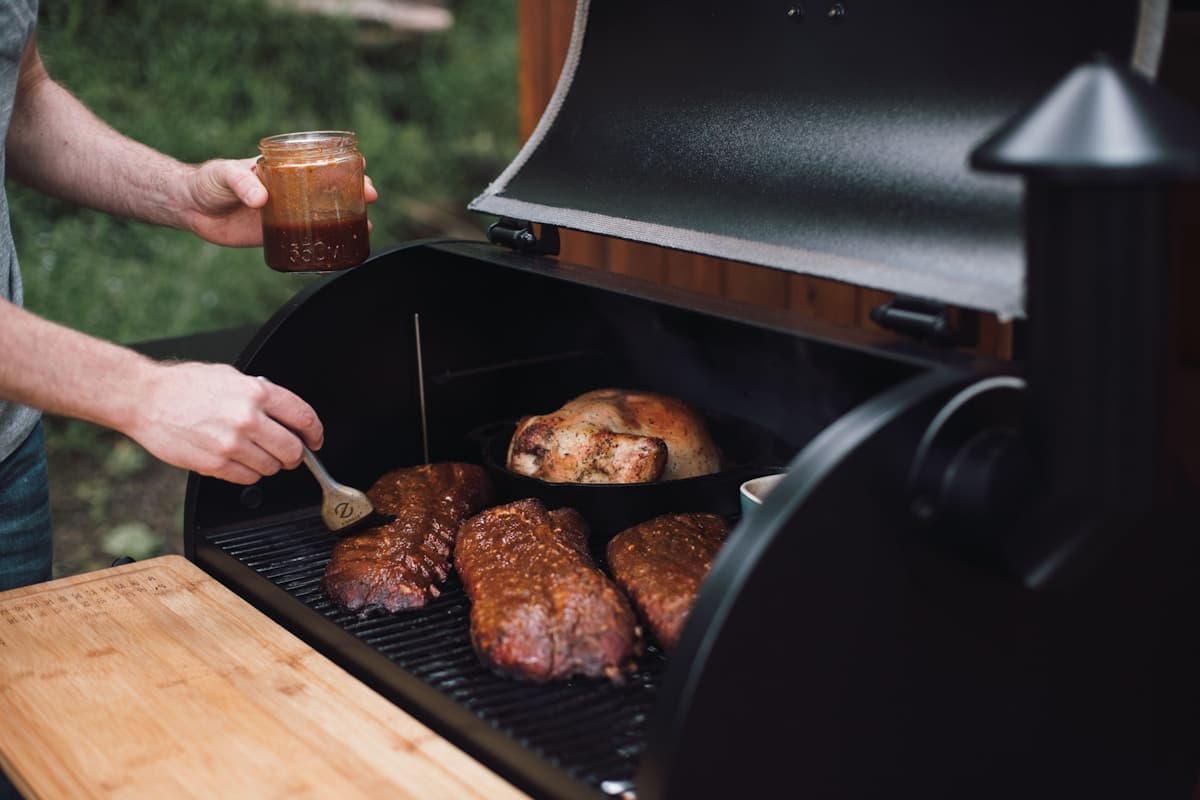
Winter does not have to end your BBQ season. A pellet grill will ignite, hold temperature, and turn out excellent brisket in the snow — but cold weather changes how the grill behaves, how much fuel it burns, and how long your cooks take. Ignore those changes and you will fight temperature swings, blow through a hopper of pellets, and pull dinner off two hours late.
This guide covers why cold matters, the fixes that actually help (ranked by impact), winter-specific maintenance, and what to realistically expect when the thermometer drops.
Why Cold Weather Changes Everything
A pellet grill is a thermostat-driven appliance. The controller reads the internal temperature, and when heat escapes, it feeds more pellets and ramps the fan to compensate. In summer, the gap between your set point and the outside air might be 150 degrees F. In winter, that gap can double — and the grill has to burn fuel to cover every degree of it.
Here is what that means in practice:
- Pellet consumption climbs noticeably. Most pellet grills are single-wall steel barrels, and thin steel sheds heat fast when the surrounding air is cold. The controller responds the only way it can: more pellets, more often. In severe cold, owners commonly report burning up to roughly double their normal amount to hold the same temperature.
- Wind makes it worse than cold does. Still, cold air forms an insulating boundary layer around the barrel; wind strips that layer away continuously, pulling heat out of the steel far faster. A gusty 35-degree day is often harder on a pellet grill than a calm 15-degree one.
- Preheats take longer. The barrel, grates, and drip tray all start at outdoor temperature. Budget extra time before the food goes on.
- Temperature swings widen on gusty days. Each gust pulls heat out of the barrel, the controller overcorrects, and your normally steady set point starts oscillating. The fixes below reduce it.
- Grease and ash behave differently. Grease that flows to the bucket in July turns solid in January, and moisture can clump ash in the fire pot. Both need more attention in winter (more below).
None of this is a reason to park the grill until spring — just a reason to set up smart.
What Actually Helps, Ranked by Impact
Here are the changes that matter, in order of how much difference they make.
1. Placement and a Windbreak (Free, and the Biggest Win)
Because wind is the single largest driver of winter heat loss, blocking it delivers more benefit than any accessory you can buy. Position the grill so a wall, fence, or corner of the house breaks the prevailing wind — even rotating it so gusts hit the back instead of the lid seam helps. A freestanding folding windbreak works if you have no natural shelter.
Critical safety warning: never move a pellet grill into a garage, shed, enclosed porch, or under an open garage door — even in a blizzard, even "just for this one cook." Pellet grills burn wood and produce carbon monoxide, an odorless gas that can be lethal in enclosed or partially enclosed spaces. They are also a fire hazard near structures. Outdoors, with open air on all sides and clearance from walls and overhangs, is the only safe place to run one. If the weather is too dangerous to stand outside briefly, it is too dangerous to grill.
2. An Insulation Blanket
An insulation blanket is a fitted thermal jacket that wraps the grill barrel and slows heat loss through the steel. With less heat escaping, the controller feeds fewer pellets, temperatures hold steadier in wind, and preheats shorten. For anyone who cooks regularly below about 40 degrees F, it is the best money you can spend on winter performance.
Many manufacturers — Traeger, Camp Chef, Green Mountain, and others — sell fitted blankets sized for specific models, and a fitted blanket is the best option when one exists for your grill. If your model does not have one, a generic insulated grill blanket sized to your barrel dimensions does the same job. Two rules: only use a blanket designed for pellet grill exteriors (never improvise with moving blankets or foil bubble wrap), and follow the manufacturer's guidance on maximum set temperatures while the blanket is installed.
Fit is the whole mechanism, and the part numbers do not carry across generations — our best pellet grill insulation blankets guide matches six verified in-stock blankets to the grills they fit, including Traeger's BAC626 and BAC627 sizes, the Woodridge, Pit Boss, Camp Chef, and a universal panel for models nobody cuts a blanket for.
3. A Double-Wall or Heavier-Gauge Grill
If you live somewhere with real winters and you are shopping for a grill anyway, construction matters more than any spec sheet feature. Double-wall and insulated designs trap a layer of air (or insulation) between two steel skins, dramatically slowing heat loss — the same principle as a thermos.
Two examples from our review library: the Z Grills 700D4E uses a dual-wall lower barrel that gives it a meaningful edge in cold and wind at a budget price, and premium builds like the Yoder YS480S rely on heavy 10-gauge steel that stores and holds heat far better than the thin single-wall barrels common at lower price points. You do not need either to grill in winter — but if cold-weather cooking is your normal, thermal mass and insulation should be near the top of your buying criteria. If you are shopping rather than just adapting, our best pellet grills for cold weather roundup ranks the insulated and heavy-gauge options, including fitted blankets by model.
4. Dry Pellets and Airtight Storage
Winter is hard on pellets. Wood pellets are compressed sawdust held together by the wood's own lignin — the moment they absorb moisture, they swell, crumble, burn inefficiently, and can jam the auger. Damp pellets also produce more ash.
Buy quality 100 percent hardwood pellets, and store them indoors in a sealed container like an airtight pellet bin rather than in the open bag or the hopper. If pellets have sat in the hopper through a wet stretch, pour them out and check for swelling or crumbling before your next long cook. Fresh, dry fuel is cheap insurance against a mid-brisket flameout.
5. Plan Longer, Keep the Lid Closed, and Monitor Remotely
Every lid opening costs more in winter. The recovery that takes five minutes in July can take two or three times as long when the replacement air is 20 degrees F. The fix is discipline plus technology:
- Plan the cook longer than usual and start earlier than you think you need to.
- Keep the lid closed. If you are looking, you are not cooking — and in winter, you are paying double for the peek.
- Use a wireless thermometer so you can watch internal temperatures from inside the house instead of opening the lid to check. See our best wireless meat thermometer guide for current picks.
6. Keep the Hopper Topped Up
Cold cooks burn more fuel, so summer hopper math no longer applies — a hopper that covers a 12-hour summer brisket may run dry overnight in January. Top it off before every winter cook, check it at every wrap or spritz, and set the app alert if your grill has a pellet-level sensor. Running dry mid-cook means a relight, a long re-preheat, and a stalled dinner.
Winter-Specific Maintenance
Cold adds a few items to the normal maintenance routine:
- Clear snow off before and after cooking. Snow sitting on a hot lid melts and refreezes into ice; snow left on a cold grill works moisture into seams, hinges, and the hopper lid. Brush it off both times.
- Cover the grill, and wait until it cools. Steel contracts in the cold and draws moisture into every gap, so a quality cover matters more in winter than any other season. Just never cover a warm grill — trapped condensation is exactly what you are trying to prevent. If you still need one, our pellet grill cover buying guide lists what fits each model.
- Empty the grease bucket more often. Grease freezes solid. A full frozen bucket cannot be poured out, and frozen grease in the drip channel can back up onto the drip tray during your next cook. Empty it while it is still warm, after every cook if needed.
- Check the lid gasket and seals. If your grill has a lid gasket, inspect it before the season. A leaky lid you would never notice in summer becomes a constant heat drain in wind.
- Vacuum the fire pot on schedule. Moisture clumps ash, and clumped ash chokes ignition. Winter is the wrong season to stretch cleaning intervals.
Realistic Winter Expectations
Even with every fix above, winter cooking runs on a different clock. Calibrate your expectations:
- Give yourself planning headroom. In serious cold, some grills struggle to reach their maximum set temperatures, and every grill recovers more slowly. If a recipe calls for 450 degrees F searing, plan as if you may only sustain something meaningfully lower — building roughly 25 degrees F of headroom into your plan (set higher where the recipe allows, or allow extra time) keeps a cold snap from wrecking the timeline.
- Cook times run long. Cold meat, a cold barrel, and slow lid recoveries all stack up. A cook that takes 6 hours in summer can easily stretch past that in January. Cook to internal temperature, never the clock, and start early — a finished brisket holds happily for hours wrapped in a cooler.
- Judge the day by the wind, not the thermometer. A calm, bitter-cold day is very cookable. A warmer day with sustained gusts is the one that causes temperature swings, blown timelines, and frustration. If you can pick your cook day, pick the calm one.
Frequently Asked Questions
Can you use a pellet grill in winter or snow?
Yes. Pellet grills work in winter, including in snow and sub-freezing temperatures. Expect longer preheats, higher pellet consumption, and slower cooks. Place the grill out of the wind (but never in a garage or enclosed space), use dry pellets, keep the lid closed, and consider an insulation blanket if you cook in the cold often.
Do pellet grill insulation blankets actually work?
Yes. A blanket slows heat loss through the single-wall steel barrel, so the controller feeds fewer pellets to hold your set temperature. Owners consistently report meaningful pellet savings and steadier temperatures in wind. Use a fitted brand blanket if one exists for your model, or a generic insulated grill blanket sized to your barrel — never an improvised covering.
Why does my pellet grill use so many pellets in the cold?
Single-wall steel sheds heat quickly in cold air, and wind strips it away even faster. The controller compensates by running the auger more often. In severe cold, owners commonly report burning up to roughly double their usual amount. A windbreak, an insulation blanket, dry pellets, and a closed lid all bring consumption back down.
What is the lowest outdoor temperature a pellet grill will still work in?
There is no hard cutoff — owners run pellet grills well below freezing and into sub-zero weather. The grill will still ignite and hold temperature; it simply burns more fuel and takes longer to get there. The practical limits are wind exposure, keeping pellets dry, and frozen grease management, not the number on the thermometer.
Winterize Your Pellet Grill
An insulated grill blanket is the single best upgrade for cold-weather cooking — steadier temps, shorter preheats, and real pellet savings all winter long.
Explore more: How Many Pellets Does a Pellet Grill Use? | All Guides | Complete Smoking Guide | Best Wireless Meat Thermometer | Z Grills 700D4E Review