
Smoked Meatloaf on a Pellet Grill
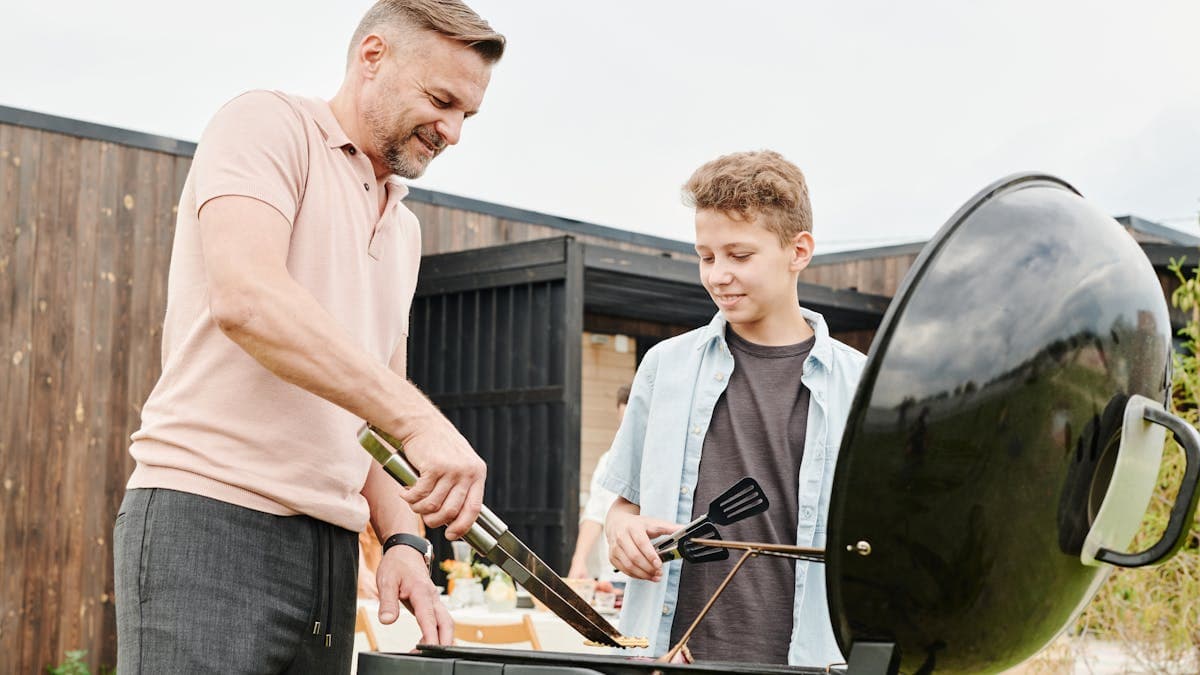
Smoked meatloaf is what happens when a weeknight staple gets the full barbecue treatment, and the upgrade is not subtle. In the oven, meatloaf steams inside a pan and develops flavor only where the glaze caramelizes. On a pellet grill, the entire exterior spends two-plus hours in wood smoke, building a smoky, bark-like crust around a juicy interior — and because ground beef takes on smoke faster than whole-muscle cuts, this is one of the biggest flavor-per-hour wins in pellet grilling.
The method is simple: a classic meatloaf mix, shaped free-form, smoked at 225 to 250°F to an internal temperature of 160°F, with a sweet-tangy glaze brushed on for the final 20 to 30 minutes. A 2-lb loaf takes about 2 to 3 hours. This recipe works on any pellet grill — Traeger®, Pit Boss, Camp Chef, Z Grills, or any other brand — the technique is identical across all of them.
Building a Meatloaf That Holds Together
The mix is standard meatloaf science, and each part earns its place:
- 80/20 ground beef. You want the fat. Lean beef dries out over a long smoke; the 20 percent fat bastes the loaf from the inside as it renders. A 50/50 beef-and-pork blend also works beautifully.
- The panade (breadcrumbs + milk). Soaking the breadcrumbs in milk before mixing creates a paste that traps moisture and keeps the texture tender rather than dense.
- Eggs bind the loaf so slices hold together.
- Onion, garlic, Worcestershire, rub. The flavor base. Any all-purpose BBQ rub works — Killer Hogs The BBQ Rub is a solid all-purpose choice. If your rub is salt-forward, skip the extra salt.
The one rule: do not overmix. Combine everything gently with your hands just until no dry streaks remain. Overworked ground beef turns springy and tough — the meatloaf equivalent of a rubber band. Mix less than you think you should.
Skip the Loaf Pan
This is the step that separates smoked meatloaf from oven meatloaf. A solid loaf pan defeats the entire purpose of the smoker: smoke only reaches the top surface, and the loaf simmers in its own rendered fat.
Instead, shape the loaf free-form on a wire rack set over a sheet pan, or on a perforated grill pan. This gives you:
- Smoke contact on every surface, not just the top
- Rendered fat draining away instead of pooling
- A crust that forms all the way around
- Easy transport on and off the grill without the loaf sagging through the grates
Shape it about 9 inches long, 4 to 5 inches wide, and evenly thick from end to end. A tapered loaf cooks unevenly — the thin end will be past 160°F while the center is still climbing.
Setting Up the Pellet Grill
- Fill the hopper. Meatloaf is a rare cook where you can lean into stronger smoke: hickory is the classic pairing, oak is a close second, and a balanced option like Signature Blend pellets covers it well if you keep one pellet on hand for everything. Our wood pellet flavor guide has the full breakdown.
- Set the grill to 225 to 250°F and preheat 15 minutes with the lid closed. The low end gives maximum smoke; 250°F trims the cook time toward the 2-hour mark with barely any flavor tradeoff.
The Cook: Low, Slow, and Glazed Late
- Set the rack with the meatloaf on the grates and close the lid.
- Insert a probe thermometer into the center of the loaf — dead center, from the top or the end. Ground meat gives no visual doneness cues you can trust, so the probe is doing all the work here. A leave-in wireless probe like the MEATER Plus lets you track the climb without opening the lid; our wireless thermometer guide compares the options.
- Smoke undisturbed until the center approaches 140°F, which takes roughly 1.5 to 2 hours for a 2-lb loaf.
Glazing: The Final 20-30 Minutes
Whisk the glaze — ketchup, brown sugar, cider vinegar, Worcestershire — while the loaf smokes. Timing matters here: brush it on too early and the sugars scorch bitter over the long cook; skip it and you lose the glossy, caramelized top that makes meatloaf feel finished.
When the internal temperature hits about 140°F, brush the glaze generously over the top and sides, then let the loaf ride for the final 20 to 30 minutes. The glaze tightens into a tangy lacquer right as the center finishes climbing.
160°F: Why There Is No Early Pull on Meatloaf
With whole-muscle cuts like chicken breast or pork tenderloin, we pull below the target and let carryover cooking finish the job. Meatloaf is different, and the difference is food safety. Grinding distributes any surface bacteria throughout the meat, which is why the USDA-safe temperature for ground beef is 160°F all the way through — no pull-early-and-rest allowance. Cook until the probe reads 160°F in the very center, and if one reading seems off, check a second spot.
The good news: the panade and the 80/20 fat content mean a properly mixed meatloaf stays juicy at 160°F. This is not a cut you need to baby — it is a cut you need to measure.
Rest the loaf 10 minutes before slicing. The slices firm up, hold together, and stay juicy instead of crumbling and leaking onto the board.
Serving and Leftovers
Slice thick and serve with the classics — mashed potatoes, green beans, mac and cheese. Leftovers might beat the first serving: a cold smoked meatloaf sandwich on white bread with extra glaze is a legitimate reason to make a double batch (two smaller loaves side by side cook in the same time as one, not longer).
Store slices airtight in the refrigerator for up to 4 days, or freeze individually wrapped slices for up to 3 months. Reheat gently in a covered skillet or a 300°F oven; a microwave works in a pinch but softens the crust you worked for.
Gear for This Recipe
What this cook actually leans on:
Killer Hogs The BBQ Rub (11 oz)
Camp Chef Competition Blend (20 lb)
MEATER Plus Wireless Thermometer
Final Thoughts
Smoked meatloaf on a pellet grill is a low-risk, high-reward cook: gentle mixing, a free-form loaf on a rack, 225 to 250°F, glaze at 140°F, and off at exactly 160°F — about 2 to 3 hours for a 2-lb loaf. If this is one of your first smokes, it is honestly a great starter cook, and our complete pellet grill smoking guide will fill in the fundamentals around it. The same mix, rolled instead of loafed, becomes smoked meatballs — appetizer, sub filling, or dinner over pasta.
Explore more: Complete Pellet Grill Smoking Guide | Wood Pellet Flavor Guide | All Recipes