
Pellet Grill vs Charcoal: Complete Comparison for BBQ Lovers
Pellet Grill vs Charcoal: The Bottom Line
This is the debate that divides backyard cooks more than any other. Pellet grill purists love the convenience and precision. Charcoal loyalists swear by the flavor and the craft. Both sides have valid points, and the truth is that both platforms produce outstanding food — they just take very different paths to get there.
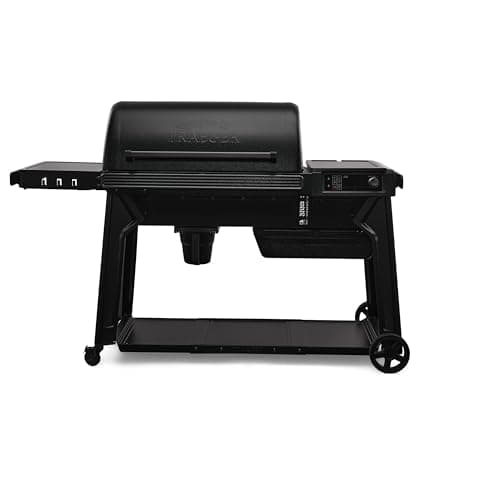
Pellet grills offer digital precision, hands-off cooking, and clean wood smoke flavor. They are the most convenient way to smoke, grill, roast, and bake outdoors. A modern pellet grill like the Traeger® Woodridge™ Pro sets the temperature, manages the fire, and alerts you when your food is done. If convenience and consistency are your priorities, pellet grills win.
Charcoal grills and smokers offer the most intense smoke flavor, the highest searing temperatures, and the deeply satisfying craft of managing a live fire. From a simple kettle grill to a full offset smoker, charcoal cooking connects you to the oldest form of outdoor cooking. If flavor intensity and hands-on craft are your priorities, charcoal wins.
Our take: Pellet grills are the better choice for convenience-minded cooks, beginners, and anyone who values consistency. Charcoal is the better choice for experienced pitmasters who enjoy fire management and want maximum smoke flavor. And many serious grillers own both — because the best grill is the one that matches what you are cooking today.
The Flavor Debate: Pellet vs Charcoal
This is the heart of the comparison, and it deserves an honest, detailed breakdown.
Charcoal Flavor Profile
Charcoal — whether briquettes or lump — produces flavor through two mechanisms:
-
Carbon combustion: Burning carbon creates a distinctive, slightly bitter, intensely "grilled" flavor. This is the primal taste we associate with BBQ — the char, the sear, the smokiness that comes from cooking over glowing coals.
-
Added wood smoke: Most charcoal cooks add wood chunks or chips to the coals, which smolder and produce thick, heavy smoke. The combination of charcoal's base flavor plus heavy wood smoke creates the deepest, most complex barbecue flavor achievable.
Which charcoal you burn shifts that base flavor as well — lump burns hotter and cleaner with less ash, while briquettes hold a steadier temperature through a long cook. The lump vs briquettes question is its own debate, and it is worth settling before you judge charcoal against pellets.
The charcoal advantage: The flavor is stronger, more intense, and more layered than what pellet grills produce. A brisket smoked for 12 hours over post oak and charcoal in an offset smoker has a depth of flavor that no pellet grill can fully replicate — we break that specific matchup down further in pellet grill vs offset smoker. Competition BBQ teams know this — while pellet grills are increasingly common on the circuit, the winningest teams in traditional BBQ competitions still tend to favor offsets and charcoal.
Pellet Grill Flavor Profile
Pellet grills produce flavor through one primary mechanism:
- Hardwood combustion: Compressed hardwood pellets burn cleanly, producing thinner, lighter smoke than charcoal with wood chunks. The smoke character is influenced by the wood species — hickory for bold, cherry for sweet, apple for fruity, mesquite for intense.
The pellet advantage: The smoke is cleaner, more controlled, and more consistent. There is no harsh bitterness, no risk of creosote buildup from oversmoked food, and the wood flavor is genuine and pleasant. Pellet smoke complements food rather than dominating it. For lighter proteins like chicken, fish, and pork tenderloin, the subtler smoke from pellets may actually be preferable to the heavier smoke from charcoal.
Where Does Super Smoke Fit In?
Models like the Traeger Woodridge Pro include Super Smoke Mode, which increases smoke output at temperatures below 225 degrees. This narrows the gap between pellet and charcoal smoke considerably, producing heavier, thicker smoke during the critical first hours of a cook.
Super Smoke does not fully replicate the charcoal + wood chunk experience, but it gets about 70-80% of the way there. For many home cooks, that is close enough — especially when paired with the convenience of digital temperature control.
The Honest Assessment
If you lined up a brisket smoked on charcoal next to one smoked on a pellet grill with Super Smoke, most people would notice a difference. The charcoal version would have a deeper, more complex smoke flavor, a thicker bark, and a more pronounced smoke ring. The pellet version would have a cleaner smoke flavor, more consistent texture throughout, and a thinner but still present smoke ring.
Both would be delicious. The charcoal version has a higher ceiling; the pellet version has a higher floor. The charcoal cook can produce transcendent BBQ — or a dry, oversmoked disaster. The pellet cook produces reliably great BBQ every time, with less variance in either direction.
Convenience: No Contest
This category is not close. Pellet grills are dramatically more convenient than charcoal in every practical dimension.
Fire Management
Charcoal: You light the coals (10-20 minutes to get going), arrange them for direct or indirect heat, manage airflow via vents, add fuel during long cooks, and make constant adjustments to maintain your target temperature. Fire management is a skill that takes months or years to master. Getting a charcoal smoker to hold 225 degrees for 12 hours requires attention, experience, and multiple fuel additions through the night.
Pellet grill: Fill the hopper, set the temperature, press start. The digital controller manages everything — auger speed, fan speed, combustion — automatically. WiFIRE®-connected models let you monitor and adjust from your phone. You can start a 12-hour brisket cook and go to sleep. The grill maintains 225 degrees all night without intervention.
The difference: Hours of active management versus minutes of setup. For busy families, weeknight cooks, and anyone who does not want fire management to be a hobby, the pellet grill wins overwhelmingly.
Temperature Control
Charcoal: Temperature control is manual and imprecise. You adjust top and bottom vents to increase or decrease airflow, which raises or lowers temperature. The response is not immediate — changes take 5-15 minutes to stabilize. Wind, ambient temperature, fuel depletion, and moisture all affect stability. Holding a specific temperature within 10 degrees requires constant attention. Experienced pitmasters can do it; beginners cannot.
Pellet grill: Temperature control is digital and precise. Set 225 and the controller holds 225. Modern systems like Traeger's Smart Combustion hold within 5 degrees of target regardless of conditions. You do not think about temperature management — the computer handles it.
Why it matters: Consistent temperature produces consistent results. Temperature spikes cause uneven cooking, dried-out surfaces, and rendering issues. Temperature drops extend cook times unpredictably. A pellet grill eliminates these variables entirely.
Cleanup
Charcoal: Ash disposal is the major inconvenience. A long cook generates pounds of ash that must cool completely before disposal. Grease and drippings mix with ash to form a paste that is tedious to clean. The grill body, grates, and vents all require periodic deep cleaning.
Pellet grill: Ash production is minimal compared to charcoal. Models with Traeger's EZ-Clean Grease & Ash Keg system channel waste into a removable container. Cleanup is faster and cleaner. Regular maintenance includes vacuuming the fire pot, cleaning the drip tray, and emptying the grease keg.
For a detailed pellet grill maintenance walkthrough, see our how to clean your Traeger guide.
Searing: Charcoal Wins
Charcoal produces the highest cooking temperatures of any backyard fuel source, and that translates directly into superior searing capability.
Charcoal: A chimney of hot lump charcoal can produce grate temperatures of 800-1,000 degrees. At these temperatures, the Maillard reaction happens in seconds, producing a deep, caramelized crust on steaks, chops, and burgers that is impossible to replicate at lower temperatures. Charcoal searing is the gold standard.
Pellet grill: Maximum temperatures of 450-500 degrees. This is hot enough to grill effectively but falls well short of the temperatures needed for a true high-heat sear. The result is a steak that is cooked well and has smoke flavor, but lacks the intense crust that charcoal or gas produces.
Pellet grill workarounds:
- Reverse sear: Smoke at 225, then finish on a screaming-hot cast iron pan (indoor or on a separate burner). This is actually many pitmasters' preferred method and produces exceptional results.
- Sear stations: Models like the Woodridge Elite include built-in sear stations that reach higher temperatures.
- Companion grill: Pair a pellet grill with a charcoal chimney and grate for searing. Two minutes over direct coals finishes a smoked steak perfectly.
Versatility Comparison
What a Pellet Grill Can Do
- Smoke at 180-250 degrees (brisket, ribs, pork butt, salmon)
- Grill at 350-500 degrees (burgers, chicken, vegetables, steaks)
- Roast at 300-400 degrees (whole chicken, prime rib, vegetables)
- Bake at 350-450 degrees (pizza, bread, casseroles)
- Dehydrate at low temperatures (jerky, dried fruits)
All with digital precision and minimal supervision.
What Charcoal Can Do
- Smoke at 200-275 degrees (traditional offset smoking)
- Grill at 400-700+ degrees (high-heat direct grilling)
- Sear at 800-1,000 degrees (steakhouse-quality crust)
- Rotisserie (with attachments on kettle grills)
Charcoal's versatility depends heavily on the type of charcoal grill. A simple kettle grill does direct and indirect cooking. An offset smoker specializes in low-and-slow. A kamado (like a Big Green Egg) handles smoking, grilling, searing, and baking. No single charcoal setup matches the range of a pellet grill without additional accessories or multiple units.
The verdict: Pellet grills are more versatile out of the box. Charcoal setups can be equally versatile, but typically require specialized equipment for each cooking style.
Cost Comparison
Purchase Price
Charcoal options:
- Basic kettle grill: $100-200
- Quality charcoal smoker: $200-500
- Offset smoker: $400-2,000+
- Kamado (ceramic): $500-3,000+
Pellet grill options:
- Entry-level: $350-500
- Mid-range: $500-1,200
- Premium: $1,200-3,500
Charcoal has a lower entry point, but quality offset smokers and kamados overlap with pellet grill pricing.
Fuel Costs
Charcoal: Lump charcoal costs $1-2 per pound. A long smoke can consume 15-30 pounds. Add wood chunks at $10-15 per bag. Annual cost for weekly cooking: $300-600.
Pellets: Hardwood pellets cost $1-2 per pound. A typical bag of 20 pounds lasts 8-20 hours. Annual cost for weekly cooking: $200-400.
Pellets are actually more fuel-efficient than charcoal for long cooks because the controlled combustion wastes less fuel. For short, high-heat cooks, charcoal costs are lower because you use less fuel.
Total Cost of Ownership (5 Years)
| Category | Charcoal (Offset Smoker) | Pellet Grill |
|---|---|---|
| Purchase | $500-1,000 | $800-1,200 |
| Fuel | $1,500-3,000 | $1,000-2,000 |
| Accessories | $100-300 | $100-300 |
| Total | $2,100-4,300 | $1,900-3,500 |
Over 5 years, pellet grills are often cheaper to operate than quality charcoal setups because of fuel efficiency. The myth that pellet grills are the "expensive option" does not hold up when you factor in charcoal consumption.
The Learning Curve
Charcoal Learning Curve
Charcoal cooking is a skill. A genuine skill that takes time and practice to develop.
- Fire starting: 1-2 cooks to learn
- Temperature control: 5-10 cooks to get comfortable, 20+ to master
- Long cook management: 3-5 brisket-length cooks before you can do it reliably
- Reading the fire: Ongoing learning — experienced pitmasters still learn after years
The learning curve is part of the appeal for many people. There is real satisfaction in mastering fire management and producing great BBQ through skill and attention. But it also means your first several cooks will be inconsistent, and bad cooks on expensive cuts of meat can be frustrating and costly.
Pellet Grill Learning Curve
- Basic operation: First cook — it works like an outdoor oven
- Temperature management: Automatic from day one
- Long cooks: Second or third cook — fill hopper, set temp, walk away
- Mastery: Learning which pellets pair with which foods, when to use Super Smoke, how to position food on the grate
The pellet grill learning curve is about food, not fire. Your first brisket on a pellet grill will be significantly better than your first brisket on charcoal, because the grill handles the hardest part (temperature consistency) for you.
Environmental Considerations
Charcoal produces more particulate emissions, more carbon monoxide, and more volatile organic compounds than pellet grills. The combustion is less efficient and less complete. Charcoal production itself has environmental impacts — traditional charcoal kilns are significant sources of air pollution.
Pellet grills burn more efficiently with more complete combustion, producing less particulate matter and fewer emissions per cook. Hardwood pellets are typically made from sawmill waste (a byproduct of the lumber industry), giving them a smaller environmental footprint than purpose-produced charcoal.
Neither option is zero-impact, but pellet grills are the more environmentally friendly choice.
Who Should Choose Which?
Choose a Pellet Grill If You:
- Value convenience and set-it-and-forget-it cooking
- Are new to outdoor cooking and want a forgiving learning curve
- Cook for your family on weeknights and want fast, reliable results
- Want one grill that smokes, grills, roasts, and bakes
- Prefer consistent, repeatable results over hands-on fire craft
- Do not want to manage a fire during 12-hour overnight cooks
- Appreciate WiFi connectivity and digital temperature control
Choose Charcoal If You:
- Want the deepest, most intense smoke flavor possible
- Enjoy the craft and satisfaction of managing a live fire
- Need the highest searing temperatures for steakhouse-quality crust
- Already have fire management skills or want to develop them
- Want the lowest possible entry cost (basic kettle grill)
- Cook in locations without electrical access
- View grilling as a hands-on hobby, not just a cooking method
Own Both If You Can
Many serious outdoor cooks eventually own both. The pellet grill handles the majority of cooking — weeknight meals, long overnight smokes, set-it-and-forget-it roasts. The charcoal setup comes out for special occasions — the perfect reverse-seared steak, a competition-style brisket on the offset, or a pizza at 800 degrees on the kamado.
Frequently Asked Questions
Does charcoal taste better than a pellet grill?
Charcoal and pellet grills produce different flavor profiles. Charcoal produces a more intense, primal smoke character with bitter and sharp notes from burning carbon. Pellet grills produce cleaner, sweeter wood smoke with flavor variations depending on the wood species. Many BBQ enthusiasts prefer charcoal flavor for its intensity, while others prefer the cleaner, more nuanced smoke from pellets. The most honest answer is that charcoal produces stronger smoke flavor, while pellet grills produce more refined, controllable smoke flavor.
Can a pellet grill produce as much smoke as charcoal?
Standard pellet grills produce less visible smoke than charcoal, and the smoke is thinner and cleaner. Models with Super Smoke Mode, like the Traeger® Woodridge™ Pro, close the gap significantly at low temperatures. However, even with Super Smoke, a pellet grill does not match the smoke intensity of a charcoal smoker running lump charcoal and hardwood chunks.
Is a pellet grill easier to use than charcoal?
Dramatically easier. A pellet grill is essentially a set-it-and-forget-it outdoor oven. Charcoal requires hands-on fire management: lighting, controlling airflow, monitoring temperature, adding fuel, and managing hot spots. A 12-hour brisket on charcoal demands frequent attention. The same brisket on a pellet grill requires setting the temperature and walking away.
Which is better for smoking brisket — pellet grill or charcoal?
Both produce excellent brisket through different methods. Charcoal produces the deepest, most traditional smoke flavor. Pellet grills produce cleaner smoke with exceptional temperature consistency. For beginners, a pellet grill produces reliably good brisket with almost no learning curve. For experienced pitmasters, charcoal offers a higher ceiling of flavor complexity at the cost of significantly more effort.
Can I get a smoke ring on a pellet grill?
Yes. Pellet grills produce nitric oxide during combustion, which creates a smoke ring. The ring is typically thinner on a pellet grill than on charcoal. Using Super Smoke Mode, cooking at lower temperatures for the first few hours, and choosing strong-smoke pellets like hickory or mesquite can enhance smoke ring formation.
Our Recommendation
For most home cooks in 2026, a pellet grill is the smarter investment. The convenience of digital temperature control, the versatility to smoke-grill-roast-bake, and the forgiving learning curve make it the best all-around outdoor cooking platform. The Traeger Woodridge Pro at $1,149 delivers Super Smoke Mode to close the flavor gap with charcoal, plus WiFIRE connectivity, 970 square inches, and a 10-year warranty.
If you are an experienced cook who already knows how to manage a fire and wants the maximum smoke flavor possible, charcoal remains the gold standard. There is nothing wrong with choosing charcoal — it is the original BBQ fuel for a reason, and the food it produces can be transcendent.
And if you are serious about outdoor cooking, the honest answer is to own both. Start with a pellet grill for its versatility, then add a charcoal setup when you are ready to explore the deeper end of the flavor pool.
Best Pellet Grill for Smoke Flavor: Traeger Woodridge Pro
Super Smoke Mode delivers thicker, more flavorful smoke at low temperatures — closing the gap with charcoal. WiFIRE connectivity, 970 sq in, and a 10-year warranty.
Ceramic kamados behave differently from a kettle or a barrel, because the thick walls do the stabilising — see pellet grill vs kamado if a Big Green Egg or Kamado Joe is the alternative you are weighing.
Explore more: Ultimate Traeger Grill Guide | All Comparisons | Best Pellet Grills Under $1,000 | Wood Pellet Flavor Guide