
Traeger Ironwood vs Timberline: Premium Pellet Grill Comparison
Traeger Ironwood vs Timberline: The Bottom Line
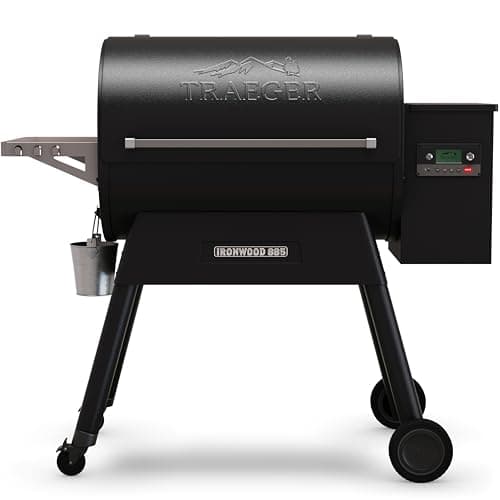
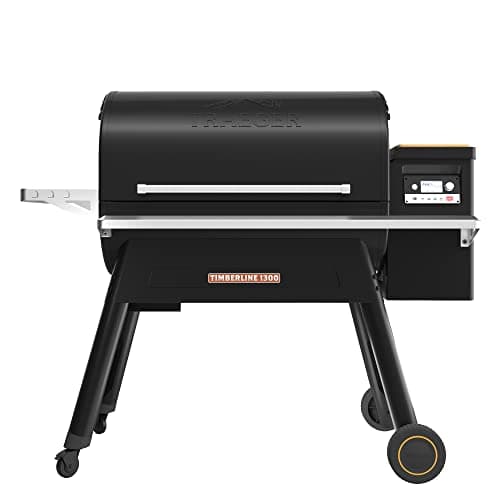
The Traeger® Ironwood and Timberline represent the top two tiers of Traeger's pellet grill lineup. Both are premium grills built with Smart Combustion technology, double-wall insulation, and downdraft exhaust. The question is not whether either is a good grill — both are exceptional — but whether the Timberline's additional $1,500 delivers enough incremental value to justify the jump from $1,999 to $3,499.
After extensive comparison, our pick for most buyers is the Traeger Ironwood. It delivers 90-95% of the Timberline's cooking performance, shares all of the same core technology, and costs $1,500 less. The Timberline is a remarkable grill, but the law of diminishing returns hits hard at this price tier.
The Timberline earns its place for a specific buyer: someone who wants the built-in induction cooktop, demands the absolute finest build materials, and is willing to pay a substantial premium for the last 5% of refinement. For everyone else, the Ironwood is the smarter investment.
Side-by-Side Specifications
| Feature | Traeger Ironwood | Traeger Timberline |
|---|---|---|
| Rating | 3.6 | 3.7 |
| Price | ||
| Cooking Space | 616 sq in | 880 sq in |
| Hopper Capacity | 20 lbs | 22 lbs |
| Max Temperature | 500°F | 500°F |
| Controller | WiFIRE Touchscreen | WiFIRE Touchscreen (Premium) |
| Smart Combustion | Yes | Yes (Enhanced) |
| Double-Wall Insulation | Yes | Yes (Heavier gauge) |
| Downdraft Exhaust | Yes | Yes (Refined) |
| Super Smoke Mode | Yes | Yes |
| Induction Cooktop | No | Yes |
| Construction | Double-wall insulated steel | Premium double-wall insulated steel |
| Warranty | 10-year | 10-year |
| P.A.L. System | Yes | Yes |
#ad — the price buttons are affiliate links and we may earn a commission at no extra cost to you. Prices come from Amazon at the time stamped on each button; the live Amazon price always wins. See our affiliate disclosure.
What the Ironwood and Timberline Share
Before diving into what separates these grills, it is important to recognize that they share the same fundamental technology platform. The core cooking experience is remarkably similar.
Shared technology:
- Smart Combustion engine — Both use Traeger's advanced temperature management system that continuously optimizes pellet feed rate, fan speed, and combustion in real time
- Double-wall insulation — Both maintain consistent internal temperatures in cold weather, wind, and rain
- Downdraft exhaust — Both circulate smoke and heat more evenly than traditional chimney-style pellet grills
- Super Smoke Mode — Enhanced smoke output below 225 degrees for deeper smoke flavor on low-and-slow cooks
- WiFIRE® touchscreen — Built-in controller with full app integration, no phone required for basic adjustments
- WiFIRE connectivity — Remote monitoring, temperature alerts, and access to Traeger's recipe library
- P.A.L. Pop-And-Lock — Modular accessory rail for hooks, shelves, and tools
- 10-year warranty — Identical coverage on both models
- 500-degree maximum temperature — Same ceiling for high-heat grilling
When you set both grills to 225 degrees and smoke a brisket in 70-degree weather, the results are nearly indistinguishable. The food tastes the same. The smoke ring looks the same. The bark develops the same way. The Timberline's advantages emerge in the details — build feel, extreme weather resilience, and the induction cooktop — not in the fundamental cooking output.
Traeger Ironwood: The Smart Choice for Most Grillers
The Traeger Ironwood sits at the sweet spot of Traeger's premium lineup. It delivers every core technology that makes the Timberline great — Smart Combustion, double-wall insulation, downdraft exhaust, Super Smoke — at a price that serious grillers can justify.
What makes the Ironwood compelling:
The Ironwood represents the point in Traeger's lineup where all of the technology that matters is included. You are not missing any cooking features. Smart Combustion holds temperature within a few degrees of target. The insulation handles cold weather without flinching. Super Smoke Mode produces outstanding low-temperature smoke. The touchscreen makes on-grill adjustments effortless.
At $1,999, you are paying for engineering excellence without the ultra-premium surcharge. It is the difference between a luxury sedan and a supercar — the sedan handles everything you actually need; the supercar adds prestige and marginal performance gains at a steep premium.
Pros
- All of Traeger's core premium technologies included
- Smart Combustion for exceptional temperature stability
- Double-wall insulation for year-round cold-weather cooking
- WiFIRE touchscreen controller built into the grill
- $1,500 less than the Timberline with 90-95% of the performance
- 10-year warranty — same as the Timberline
Cons
- 616 sq in cooking space is modest for the price
- No induction cooktop
- Lighter gauge materials than the Timberline
- Still a $2,000 investment
Traeger Timberline: The Best Traeger Makes
The Traeger Timberline is the flagship of Traeger's entire lineup — the grill where every material, component, and design decision prioritizes quality over cost. It is built to be the last pellet grill you ever buy.
What the Timberline adds over the Ironwood:
The most visible upgrade is the built-in induction cooktop, a feature unique to the Timberline in the pellet grill world. This side-mounted cooking surface heats instantly and provides precise temperature control for sauces, sides, searing, and any task that requires direct stovetop-style heat. It transforms the Timberline from a grill into a complete outdoor cooking station.
Beyond the cooktop, the Timberline uses heavier gauge materials throughout its construction. The lid feels more substantial. The hinges are beefier. The overall fit and finish is a clear step above the Ironwood. These are not features you can quantify in a spec sheet — they are things you feel when you open the lid, adjust the grates, and interact with the grill over years of ownership.
The Timberline also offers 880 square inches of cooking space — 43% more than the Ironwood's 616. This alone is a significant advantage for anyone who cooks for large groups or runs multiple proteins simultaneously.
Pros
- Built-in induction cooktop — unique in the pellet grill market
- 880 sq in of cooking space — substantially more than the Ironwood
- Heaviest gauge construction Traeger offers
- Enhanced Smart Combustion with refined exhaust system
- Premium fit and finish that you feel on every use
- 22-lb hopper for extended unattended cooks
Cons
- $3,499 is a major investment for any backyard grill
- Incremental cooking improvement over Ironwood is subtle
- Heavy — requires a dedicated, level surface
- Induction cooktop requires nearby electrical outlet
Head-to-Head: The Five Key Differences
1. The Induction Cooktop — Timberline's Defining Feature
The Timberline's built-in induction cooktop is the single feature that most clearly separates it from the Ironwood and every other pellet grill on the market.
How it changes the cooking experience:
- Sauces on the spot: Warm or reduce BBQ sauce, make pan gravy from drippings, or simmer a glaze without leaving the grill
- Reverse sear capability: Smoke a steak at 225, then sear it on a cast iron pan on the induction top — all without going inside
- Side dishes: Cook beans, corn, mac and cheese, or any stovetop side right next to the grill
- Instant heat: Induction heats in seconds, not minutes. No preheating required.
Is it essential? No. You can achieve the same results by running into the kitchen or using a separate portable burner. The cooktop's value is in convenience — having everything in one place, reducing trips inside, and keeping you at the grill during the entire cook. For people who entertain frequently and view grilling as an event, the cooktop is genuinely useful. For people who smoke a brisket and go inside until it is done, it is an expensive bonus.
2. Build Materials and Construction Quality
The Timberline uses heavier gauge steel throughout its body, lid, and internal components. Picking up the lid on both grills back-to-back, the difference is immediately obvious. The Timberline feels more substantial, more solid, and more precisely assembled.
Does heavier construction cook better? Marginally. Heavier materials retain heat more effectively, which translates to slightly faster recovery after lid openings and marginally better performance in extreme cold. In everyday use at reasonable ambient temperatures, the cooking performance difference is not meaningful.
Does it last longer? Likely yes. Heavier gauge steel resists warping, corrosion, and heat fatigue better over time. While both grills carry 10-year warranties, the Timberline's materials suggest it will maintain its structural integrity further into that warranty period and beyond.
3. Cooking Space: 616 vs 880 Square Inches
The Timberline provides 880 square inches of cooking area — 43% more than the Ironwood's 616. This is a significant practical difference.
What 616 sq in handles (Ironwood):
- 1 full packer brisket (tight)
- 3 racks of baby back ribs
- 12-14 burgers
- 2-3 spatchcocked chickens
- Feeds 6-10 people per cook
What 880 sq in handles (Timberline):
- 1 full packer brisket + 1-2 racks of ribs
- 5 racks of baby back ribs
- 20+ burgers
- 4-5 spatchcocked chickens
- Feeds 10-16 people per cook
If cooking space is your primary concern, note that the Ironwood XL at $2,199 offers 924 square inches — more than the Timberline — at $1,300 less. The Ironwood XL is worth considering if you want premium technology and maximum space without the Timberline's price tag.
4. Controller and Smart Combustion Refinements
Both grills use WiFIRE touchscreen controllers and Smart Combustion technology, but the Timberline's versions are refined. The controller interface is slightly more responsive, and the Smart Combustion algorithms are optimized for the Timberline's specific airflow and combustion chamber geometry.
In practice, this means the Timberline holds temperature within 2-3 degrees of target compared to the Ironwood's 3-5 degrees. This is a measurable improvement, but it is the kind of difference that matters more on paper than on your plate. A 3-degree variation during a 12-hour brisket cook does not produce a noticeably different result than a 5-degree variation.
5. The $1,500 Price Gap
This is where the rubber meets the road. The Timberline costs $3,499 — 75% more than the Ironwood's $1,999. Let us put that $1,500 gap in perspective.
What $1,500 buys you beyond the Ironwood:
- Built-in induction cooktop
- 264 additional square inches of cooking space
- Heavier gauge construction throughout
- Marginally refined Smart Combustion
- Premium fit and finish
What $1,500 buys you in the pellet grill world:
- A complete mid-range pellet grill (Camp Chef, Pit Boss, or recteq)
- 3+ years of premium hardwood pellets
- A top-tier wireless thermometer system plus accessories
- Approximately 7,500 pounds of pork butt at grocery prices
The Timberline's upgrades are real, but they are incremental. You are paying 75% more for perhaps 5-10% more capability. For most buyers, that math does not pencil out.
Who Should Buy Which?
Choose the Ironwood ($1,999) If You:
- Want all of Traeger's premium cooking technologies
- Cook year-round and need double-wall insulation
- Value Smart Combustion and downdraft exhaust
- Cook primarily for groups of 10 or fewer
- Want the best pellet grilling experience under $2,000
- Plan to invest the savings in accessories, pellets, and premium meat
Choose the Timberline ($3,499) If You:
- Specifically want the built-in induction cooktop
- Regularly cook for 12+ people and need 880 square inches
- Demand the absolute finest build materials in a pellet grill
- View grilling as a lifestyle investment, not just a cooking purchase
- Want the prestige and satisfaction of owning Traeger's flagship
- Have the budget and do not want to wonder "what if I had gotten the better one?"
Consider the Ironwood XL ($2,199) As a Middle Ground
The Ironwood XL delivers 924 square inches of cooking space — more than the Timberline — with all of the Ironwood's premium technology for $1,300 less than the Timberline. If cooking space is driving you toward the Timberline, the Ironwood XL may be the smarter choice.
Frequently Asked Questions
Is the Traeger Timberline worth $1,500 more than the Ironwood?
For most home cooks, no. The Ironwood delivers 90-95% of the Timberline's cooking performance at 57% of the price. The Timberline justifies its premium for buyers who specifically need the built-in induction cooktop, want the absolute best build materials Traeger® offers, or cook at a level where the Timberline's incremental improvements make a noticeable difference. For the vast majority of backyard grillers, the Ironwood is the smarter investment.
Does the Timberline cook better than the Ironwood?
In controlled side-by-side comparisons, the difference in food quality between the two grills is subtle. Both use Smart Combustion technology, double-wall insulation, and downdraft exhaust. The Timberline's heavier gauge materials and refined exhaust system provide marginally better temperature stability, but the improvement is measurable more by instruments than by taste.
What is the Timberline's induction cooktop used for?
The Timberline's built-in induction cooktop sits on the side of the grill and provides a cooking surface for sauces, side dishes, searing, and anything that benefits from direct stovetop-style heat. Common uses include warming BBQ sauce, making pan gravy from drippings, searing steaks before or after smoking, and preparing sides like beans or corn.
Can the Ironwood be upgraded to match the Timberline?
No. The Timberline's key differentiators — induction cooktop, heavier gauge materials, refined exhaust system, and premium controller — are built into the grill's core design and cannot be added to the Ironwood as aftermarket upgrades.
Which grill is better for cold weather smoking?
Both perform well in cold weather thanks to double-wall insulation and Smart Combustion technology. The Timberline's heavier materials retain heat slightly better at extreme temperatures, but the practical difference is minimal. Either grill handles freezing conditions without issues. If cold weather is your primary concern, both are excellent choices, and the Ironwood saves you $1,500.
Our Recommendation
For most buyers, the Traeger Ironwood is the clear winner. It shares all of the Timberline's core cooking technologies — Smart Combustion, double-wall insulation, downdraft exhaust, Super Smoke Mode, and WiFIRE touchscreen — at $1,500 less. The food you produce on an Ironwood is virtually indistinguishable from what the Timberline produces.
The Timberline earns its flagship status through the induction cooktop, superior materials, and the intangible satisfaction of owning the best Traeger makes. If those things matter to you and your budget allows, the Timberline will not disappoint. But if you are asking "is the upgrade worth it?" — for most people, the honest answer is no.
Put the $1,500 savings toward premium meat, a great wireless thermometer like the MEATER Plus, and a generous supply of hickory pellets. You will enjoy better meals than spending the same money on the Timberline's incremental construction upgrades.
Our Pick: Traeger Ironwood
Smart Combustion, double-wall insulation, downdraft exhaust, Super Smoke, and a WiFIRE touchscreen — all for $1,999. The Ironwood delivers 95% of the Timberline experience at 57% of the price.
Explore more: Ultimate Traeger Grill Guide | All Comparisons | Ironwood Review | Best Traeger Grills | Best High-End Pellet Grills