
Traeger Westwood vs Woodridge: Which Entry Traeger Should You Buy?
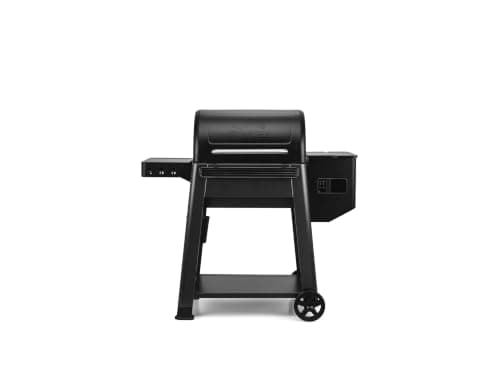
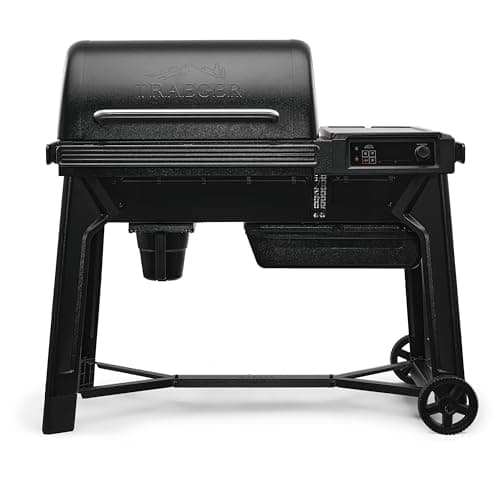
Traeger Westwood vs Woodridge: The Bottom Line
Traeger redrew the bottom of its lineup in April 2026. The Westwood arrived as a brand-new entry line that replaces the long-running Pro series, and the ladder now runs Westwood, then Woodridge, then Ironwood, then Timberline. That leaves most first-time Traeger buyers staring at exactly one question: spend $699.99 on the Westwood, or $899.99 on the Woodridge?
The two grills are closer than the $200 gap suggests. Both run digital controls with WiFIRE app connectivity, both include one wired meat probe, both take the P.A.L. Pop-And-Lock accessory rail, and — this surprises people — neither has Super Smoke Mode. The upgrades the Woodridge actually buys are less glamorous but more practical: 207 more square inches, six more pounds of hopper, a 50°F higher ceiling, three more years of warranty, and the EZ-Clean Grease & Ash Keg.
Our pick: the Traeger Woodridge. The $200 premium buys 32% more cooking space and a longer warranty for 29% more money — which means the Woodridge is, unusually, the cheaper grill per square inch ($1.05 vs $1.07). Buy the Westwood when $699.99 is a hard ceiling or your patio is small, not because it's the better deal per inch.
Side-by-Side Specifications
| Feature | Traeger Westwood | Traeger Woodridge |
|---|---|---|
| Rating | 4.4 | 4.5 |
| Price | $899.99 · View on Amazon Price as of October 15, 2026 | |
| Cooking Space | 653 sq in (428 main + 225 upper) | 860 sq in |
| Hopper Capacity | 18 lbs | 24 lbs |
| Temperature Range | 180-450°F | Up to 500°F |
| Controller | Digital buttons | Digital |
| WiFi | WiFIRE | WiFIRE |
| Super Smoke Mode | No | No |
| Pellet Sensor | No | No |
| Meat Probes | 1 wired (single port) | 1 wired |
| Side Shelf Included | Yes | No |
| Warranty | 7-year | 10-year |
| P.A.L. System | Yes | Yes |
#ad — the price buttons are affiliate links and we may earn a commission at no extra cost to you. Prices come from Amazon at the time stamped on each button; the live Amazon price always wins. See our affiliate disclosure.
What the Westwood and Woodridge Share
Before the differences, it's worth being clear about how much of the Traeger experience is identical at both price points — because it's most of it.
- Digital controller. Both use button-driven digital controls, not the touchscreen from Traeger's premium models and not an old-style dial. You set a temperature; the controller manages the fan and auger to hold it.
- WiFIRE connectivity. Full Traeger App integration on both: set and adjust temps from your phone, monitor the meat probe, get alerts, browse Traeger's recipe library. The Westwood is the cheapest way to get a WiFi-connected Traeger, and the Woodridge doesn't improve on the app — it's the same experience.
- One wired meat probe. Both ship with a single wired probe. Multi-meat cooks will want an aftermarket wireless thermometer on either grill.
- P.A.L. Pop-And-Lock accessory rail. The same modular accessory system as Traeger's pricier grills, on both.
- Real low-and-slow capability. Both reach down to proper smoking temperatures, and owner reports on both describe genuine wood-fired flavor rather than the faint smoke some budget pellet grills produce.
- No Super Smoke Mode, and no pellet-level sensor. Neither grill has either feature. This is the most important thing to understand about this comparison, and we'll come back to it.
If you set both grills to 225°F and cooked the same pork butt, the results would be very hard to tell apart. The Woodridge is not a better cooker than the Westwood — it's a bigger, longer-warrantied one.
The Four Upgrades the Woodridge Actually Buys
1. Cooking Space — 653 vs 860 Square Inches
This is the headline difference, and there's a nuance in it that the spec sheet hides.
The Westwood's 653 square inches is split across two tiers: a 428 sq in main grate plus a 225 sq in upper rack. The Woodridge gives you 860 square inches. So the raw gap is 207 square inches — 32% more grill — but the practical gap is larger than that for anything that needs to lie flat on the main grate.
Why that matters: a full packer brisket, a couple of pork butts side by side, or a big spatchcocked bird all need main-grate room. Upper racks are excellent for ribs, wings, sausages, and holding finished food, but they don't help you fit a 16-inch packer. Measured that way, the Westwood's usable main grate is 428 sq in against the Woodridge's 860 — and our Woodridge vs Woodridge Pro comparison documents the 860 sq in Woodridge comfortably handling a full packer brisket plus a rack of ribs.
For a household of two to five cooking weeknight dinners and the occasional weekend rack of ribs, the Westwood's dual-tier layout is genuinely plenty. For anyone who regularly cooks for 8 or more — or who bought a pellet grill specifically to chase brisket — the Woodridge's extra room stops being a luxury.
2. Hopper — 18 vs 24 Pounds
The Woodridge carries 24 pounds of pellets to the Westwood's 18. On the Woodridge that's roughly 12-24 hours of burn time at 225°F (and 3-4 lbs/hour once you push into the 400-500°F range).
Six pounds sounds trivial until you're running an overnight cook. Neither grill has a pellet-level sensor, so on both you're checking the hopper by eye rather than getting an app alert. The bigger hopper simply widens the margin for error — it's the difference between one check before bed and setting an alarm. If long overnight cooks are your plan, that six pounds matters more than it reads on paper.
3. Temperature Ceiling — 450°F vs 500°F
The Westwood runs 180-450°F. The Woodridge tops out at 500°F.
Be realistic about what that buys: neither grill is a searing machine. The Westwood's 450°F is fine for burgers, chicken, and vegetables but short of searing heat — the honest workaround is a reverse sear, smoking low on the grill and finishing over screaming-hot cast iron. The Woodridge's 500°F produces acceptable grill marks and a decent crust if you preheat fully and give the grates an extra 5-10 minutes to soak up heat, but it's still not a steakhouse crust.
So the extra 50°F is a real but modest upgrade: it widens your high-heat range and shortens preheats, without turning the Woodridge into something it isn't. If a hard sear is genuinely important to you, neither of these is your grill — see our best pellet grills for searing roundup instead.
4. Warranty and Cleanup — 7 Years vs 10, and the EZ-Clean Keg
The Westwood carries a 7-year warranty — already a big step up from the 3 years Traeger put behind the outgoing Pro series. The Woodridge carries 10 years.
Three extra years on a grill you plan to keep for a decade is real money, and it's the clearest signal of how Traeger tiers these platforms. The Woodridge also adds the EZ-Clean Grease & Ash Keg, which channels grease and ash into a removable keg beneath the grill. The Westwood's cleanup is no hardship — wipe-down grates and a quick-detach grease bucket that owner reviews consistently praise — but the EZ-Clean system handles ash too, which is the chore most pellet grill owners actually resent.
Where the Westwood Wins
This isn't a one-way comparison. Three things genuinely favor the cheaper grill:
- $200, obviously. That's a lot of brisket, a good wireless thermometer, and a season of pellets. If the budget is the budget, the Westwood delivers the complete core Traeger experience — the part that made the brand famous — for hundreds less.
- It includes a side shelf. This is the fun one: the Westwood ships with a side shelf and bottom shelf alongside its P.A.L. rail, while the base Woodridge does not include a side shelf — Woodridge owners typically add one or set up a folding table. On a $200-cheaper grill, that's a genuine point in the Westwood's column.
- Footprint and simplicity. At 116 lbs and a smaller chamber, the Westwood suits tight patios and balconies better. And with fewer square inches to heat, there's less grill to bring up to temperature for a weeknight cook for two.
Worth knowing: if it's purely space you want, the Westwood XL ($799.99) stretches to 823 sq in for $100 more — but the hopper stays at 18 lbs, so the XL burns the same fuel feeding a bigger chamber. At that point you're $100 from the Woodridge anyway, with its bigger hopper and longer warranty. The XL mostly makes sense if you want more grate but not the Woodridge's footprint.
Price Analysis: What Does $200 Actually Buy?
| Metric | Westwood | Woodridge |
|---|---|---|
| MSRP | $699.99 | $899.99 |
| Cooking Area | 653 sq in (428 main + 225 upper) | 860 sq in |
| Price Per Sq In | $1.07 | $1.05 |
| Hopper | 18 lbs | 24 lbs |
| Max Temp | 450°F | 500°F |
| Warranty | 7-year | 10-year |
| Price Difference | — | +$200 (29% more) |
| Space Difference | — | +207 sq in (32% more) |
This is the unusual part. In most step-up comparisons the cheaper model wins on price per square inch and you pay a premium for features. Here, the space grows faster than the price — 32% more grill for 29% more money — so the Woodridge comes out ahead on price per square inch at $1.05 versus $1.07, and it still throws in the bigger hopper, the higher ceiling, three extra warranty years, and the EZ-Clean keg on top.
That doesn't make the Westwood bad value; a $699.99 WiFIRE-connected Traeger with a 7-year warranty is a strong offer on its own terms. It means the $200 step to the Woodridge is one of the better-value moves in Traeger's current lineup — if you have the $200.
What Neither Grill Gives You
Honesty matters more than upsells, so here's what stays out of reach at both price points:
- Super Smoke Mode. Starts at the Woodridge Pro ($1,149.99). Stepping from the Westwood to the base Woodridge does not buy it. If enhanced low-temperature smoke is your goal, budget for the Pro — see Woodridge vs Woodridge Pro for whether that's worth another $250.
- A pellet-level sensor. Neither grill will tell you it's running low. On overnight cooks you're checking the hopper yourself on both.
- Multi-probe capacity. One wired probe each; the Westwood has a single probe port. Multi-meat cooks want an aftermarket wireless thermometer regardless of which you pick — our best wireless meat thermometer guide covers the options.
- A real sear. Covered above: 450°F and 500°F are both short of a steakhouse crust.
- Double-wall insulation. That's Ironwood territory ($1,999) and it's what makes cold-weather smoking painless. If you smoke through northern winters, read our Traeger Pro vs Ironwood comparison before settling at this tier.
Who Should Buy Which?
Choose the Traeger Westwood ($699.99) If You:
- Have a firm $700 ceiling and want a current-generation, WiFi-connected Traeger
- Cook for a household of two to five, mostly weeknight dinners and weekend ribs
- Have a small patio, deck, or balcony where footprint matters
- Want a side shelf included without buying accessories
- Are choosing between it and a closeout Pro 575 — the Westwood gives you more space, the same 18-lb hopper, and 7 years of warranty instead of 3
- Are fine reverse-searing steaks over cast iron
Choose the Traeger Woodridge ($899.99) If You:
- Can stretch to $899.99 and want the better value per square inch
- Regularly cook for 8 or more, or want a full packer brisket to fit the main grate comfortably
- Run long or overnight cooks where 24 lbs of hopper beats 18
- Want the 10-year warranty on a grill you intend to keep for a decade
- Want ash and grease handled by the EZ-Clean Keg rather than just a grease bucket
- Want a bit more high-heat headroom at 500°F
Step Up Further If You:
- Want Super Smoke Mode → Woodridge Pro ($1,149.99). It's the only way to get enhanced low-temp smoke in this family.
- Want cold-weather stability and the best smoke quality → Traeger Ironwood ($1,999), with double-wall insulation and Smart Combustion.
Frequently Asked Questions
What is the difference between the Traeger Westwood and Woodridge?
The Westwood is Traeger's entry line as of April 2026, sitting one rung below the Woodridge. For $200 less it gives you 653 sq in across two tiers, an 18-lb hopper, a 450°F ceiling, and a 7-year warranty. The Woodridge steps up to 860 sq in, a 24-lb hopper, a 500°F ceiling, a 10-year warranty, and the EZ-Clean Grease & Ash Keg. Both share digital controls, WiFIRE, one wired probe, and the P.A.L. rail — and neither has Super Smoke Mode or a pellet sensor.
Is the Traeger Woodridge worth $200 more than the Westwood?
For most buyers who can stretch, yes. You get 32% more space for 29% more money, which makes the Woodridge cheaper per square inch ($1.05 vs $1.07), plus a bigger hopper, a higher ceiling, and three more warranty years. Buy the Westwood if $699.99 is a hard ceiling or space is tight — not on value-per-inch grounds.
Can the Traeger Westwood or Woodridge sear a steak?
Neither does a true steakhouse sear. The Westwood stops at 450°F; the Woodridge reaches 500°F and manages acceptable grill marks with a full preheat. Reverse-searing over cast iron is the practical answer on both.
Does either the Westwood or the Woodridge have Super Smoke Mode?
No. Super Smoke starts at the Woodridge Pro ($1,149.99). Stepping from the Westwood to the base Woodridge buys space, hopper, heat, and warranty — not Super Smoke.
Which entry Traeger is better for smoking a brisket?
The Woodridge, on capacity and hopper. A packer needs main-grate room, and the Westwood's 653 sq in is split 428 main + 225 upper. The Woodridge's 860 sq in and 24-lb hopper suit long cooks better. Neither has a pellet sensor, so you're checking fuel manually either way.
Our Recommendation
For most buyers, the Traeger Woodridge is the better buy. It's the rare step-up that costs less per square inch than the model beneath it — 32% more grill for 29% more money — while adding a 24-lb hopper, a 500°F ceiling, three extra warranty years, and the EZ-Clean Grease & Ash Keg. If you're going to own the grill for a decade, that's the version to own.
But the Westwood is not a consolation prize. It delivers the exact cooking experience that built Traeger's reputation — set-and-forget temperature control, real wood smoke, WiFIRE from the couch — at the lowest price of any connected Traeger, with a 7-year warranty and a side shelf the Woodridge doesn't include. Early sentiment is strong, and for a household of two to five it is genuinely enough grill.
The honest summary: if $200 is available, spend it. If it isn't, buy the Westwood without a second thought — you are not giving up the part of the Traeger experience that matters.
Read our full individual reviews for more detail: Traeger Westwood Review | Traeger Woodridge Review
Our Pick: Traeger Woodridge
860 sq in, a 24-lb hopper, WiFIRE, the EZ-Clean Grease & Ash Keg, and a 10-year warranty for $899.99 — better value per square inch than the Westwood beneath it. Check the current price.
Explore more: Ultimate Traeger Grill Guide | Best Pellet Grills Under $1,000 | All Comparisons