
Best Wood Pellets for Brisket: Top 5 Flavors Ranked
Choosing the best wood pellets for brisket is one of the most important decisions you will make before a long smoke session. A brisket cook typically runs 10-16 hours depending on the size of the cut and your target temperature. That is 10-16 hours of continuous smoke exposure — meaning the wood flavor you choose becomes a fundamental part of the finished product, not just a background note.
The wrong pellet choice will not ruin a brisket, but the right one elevates it from good to unforgettable. This guide ranks the top 5 pellet flavors for brisket, explains why each works (or does not), and gives you specific recommendations so you can load your hopper with confidence on your next Traeger® cook. (Still shopping for the smoker itself? See our picks for the best pellet grill for brisket.)
Why Pellet Choice Matters More for Brisket Than Any Other Cut
Most proteins spend 1-4 hours on a pellet grill. A rack of ribs runs about 5-6 hours. Chicken thighs take 2 hours. At these shorter cook times, wood selection makes a noticeable but moderate difference.
Brisket is different. A full packer brisket (12-16 pounds) typically cooks for 12-16 hours at 225-250°F. During that entire time, the meat is absorbing smoke. The smoke ring — that prized pink layer beneath the bark — forms during roughly the first 4-6 hours, but flavor absorption continues throughout the cook.
This extended smoke exposure means:
- Strong woods become very strong. Flavors that are pleasant at 2 hours can become overpowering at 12 hours.
- Subtle woods can get lost. Ultra-mild woods like alder barely register on a cut as thick and richly flavored as brisket.
- Blends shine. Mixing two complementary pellet types often produces better results than any single wood because you get complexity without overwhelming intensity.
Brisket also has a bold, beefy flavor profile that pairs best with woods on the medium-to-strong end of the spectrum. Fruit woods alone tend to be too delicate to stand up to the richness of the meat and the black pepper bark that defines Texas-style brisket.
Top 5 Wood Pellets for Brisket, Ranked
1. Hickory — The Gold Standard
Traeger Hickory Hardwood PelletsIf you could only use one wood for brisket for the rest of your life, hickory is the answer. It is the definitive barbecue smoke flavor — bold, savory, and slightly sweet with a bacony depth that enhances beefy flavors without competing with them.
Why it works for brisket:
- Strong enough to penetrate a thick brisket during a 12+ hour cook
- Savory profile complements the beef rather than adding sweetness
- Produces a pronounced smoke ring
- This is the wood used by most championship BBQ pitmasters for a reason
Flavor intensity: Medium-strong. Hickory can become slightly bitter on very long cooks (16+ hours), but for the standard 12-14 hour brisket window, it is perfect.
Our recommendation: Hickory is the default. If you are smoking your first brisket or want reliable, competition-quality flavor, start here.
2. Mesquite — Bold and Intense
Traeger Mesquite Hardwood PelletsMesquite is the strongest-flavored smoking wood available. It delivers an intense, earthy, almost tangy smoke that is unmistakably Texan. Central Texas barbecue joints that cook over wood (not pellets) predominantly use post oak and mesquite, so if you are chasing that authentic Texas brisket flavor, mesquite gets you closer than any other pellet.
Why it works for brisket:
- The bold flavor stands up to the richest beef cuts
- Delivers an assertive, earthy smoke that defines Texas-style barbecue
- Excellent bark development due to the heavier smoke compounds
The caveat: Mesquite's intensity is a double-edged sword. On a 14-16 hour cook, pure mesquite can push into bitter territory for some palates. Many experienced pitmasters recommend using mesquite as a blend component (50/50 with oak, for example) rather than running it pure for the entire cook.
Our recommendation: Ideal for experienced smokers who want maximum smoke impact. New to brisket? Start with hickory, then try mesquite on your second or third cook to see if you prefer the bolder profile.
3. Oak / Signature Blend — The Balanced Choice
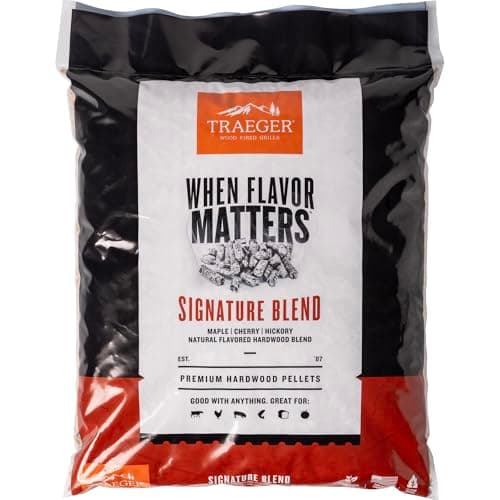
Traeger Signature Blend Hardwood PelletsOak is the most versatile smoking wood in existence. It sits right in the center of the flavor spectrum — more assertive than fruit woods, less intense than hickory or mesquite. Traeger's Signature Blend combines hickory, maple, and cherry, which produces a similarly balanced, medium-bodied smoke profile that works beautifully with brisket.
Why it works for brisket:
- Clean, medium-intensity smoke that never overpowers
- No risk of bitterness even on the longest cooks
- The balanced profile lets the beef flavor remain the star
- Oak is the wood of choice at many of the top-ranked Central Texas BBQ restaurants
Our recommendation: The Signature Blend is an excellent choice if you want complexity without committing to a single strong wood. It is also our top recommendation for pitmasters who cook brisket alongside other meats (like ribs or chicken) on the same grill — the balanced smoke works with everything.
4. Cherry — Sweet and Colorful
Traeger Cherry Hardwood PelletsCherry is a fruit wood with a mild, naturally sweet smoke flavor and a bonus visual feature: it produces a reddish-mahogany tint on the bark surface that looks stunning when the brisket is sliced. If you have ever seen brisket photos with a deep, dark-red bark and wondered how they got that color, cherry wood is often the answer.
Why it works for brisket:
- Adds a subtle sweetness that complements peppery brisket rubs
- Produces a beautiful dark mahogany color on the bark
- Mild enough that it will never overpower the beef
The limitation: Cherry alone may be too subtle for some brisket lovers. The smoke flavor is gentle, and after 12+ hours, you may find yourself wanting more smoke presence. This is why cherry works best as a blend component — mix it 50/50 with hickory for the best of both worlds: hickory's depth with cherry's color and sweetness.
Our recommendation: Use cherry as a blending pellet rather than the sole wood. A hickory/cherry blend (60/40 or 50/50) is one of the best combinations for brisket.
5. Pecan — The Underrated Option
Pecan is hickory's milder cousin (they are in the same botanical family). It delivers a similar savory, nutty smoke flavor but with less intensity and a slightly sweeter finish. Pecan is hugely popular in competition BBQ circles precisely because it gives you hickory-adjacent flavor without the risk of going too heavy.
Why it works for brisket:
- Nutty, slightly sweet profile pairs naturally with beef
- Medium intensity that holds up over long cooks without becoming bitter
- Smoother and more refined than hickory
Our recommendation: If you find hickory slightly too aggressive for your palate, pecan is the natural step down. It gives you substantial smoke flavor with more finesse. Excellent as a standalone or blended with cherry or oak.
Blending Pellets: The Pro Move
Most championship pitmasters do not use a single wood species for brisket. They blend. Blending pellets allows you to customize your smoke profile by combining the strengths of different woods while mitigating their weaknesses.
Here are three proven blends for brisket:
| Blend | Ratio | Flavor Profile |
|---|---|---|
| Hickory + Cherry | 60/40 | Bold and savory with a sweet finish and mahogany bark color |
| Mesquite + Signature Blend | 40/60 | Intense Texas smoke tempered by a balanced blend base |
| Hickory + Mesquite | 70/30 | Maximum smoke depth — for people who want every bite to taste like a smokehouse |
How to blend: Simply pour both pellet types into the hopper together. As the auger feeds pellets into the fire pot, they will mix naturally. You do not need to premix them in a bucket (though you can if you want a more consistent ratio). The smoke output will be a blend of both woods throughout the cook.
How Many Pellets Do You Need for a Brisket Cook?
Pellet consumption varies based on outside temperature, wind, grill model, and cooking temperature. Here are general estimates for a full brisket cook at 225-250°F:
| Cook Duration | Estimated Pellet Usage |
|---|---|
| 8-10 hours | 15-20 lbs |
| 10-12 hours | 20-25 lbs |
| 12-16 hours | 25-35 lbs |
Plan conservatively. Running out of pellets mid-cook is a problem — the grill shuts down, the temperature drops, and restarting extends your cook time. For a long brisket session, fill the hopper completely at the start and have at least one extra bag on hand. Most Traeger hoppers hold 18-22 pounds, so you will likely need to refill once during a full packer brisket cook.
Cold weather and wind increase consumption significantly. In winter conditions (below 40°F), expect to use 30-50% more pellets than the estimates above.
Frequently Asked Questions
Should I use 100% hardwood pellets or is a blend with filler okay?
Always use 100% hardwood pellets for brisket. Some budget pellet brands use filler materials (primarily oak or softwood base) with a thin coating of flavored wood dust. These produce less consistent smoke and can impart off-flavors during long cooks. Traeger pellets are made from 100% pure hardwood with no fillers, oils, or additives.
Do I need to soak pellets before using them in a pellet grill?
No. Never soak pellets. Unlike wood chunks used in offset smokers, pellets are designed to be fed dry through an auger into a fire pot. Wet pellets swell, disintegrate into sawdust, and jam the auger — potentially damaging the motor. Always store pellets in a dry location and keep the hopper closed when not in use.
Can I switch pellet flavors mid-cook?
Technically yes, but it is not practical. When you add new pellets to the hopper, the existing pellets in the auger tube and fire pot need to burn through before the new flavor takes over. This transition takes 20-30 minutes. For brisket, it is better to load the hopper with your chosen pellets (or blend) at the start and stick with it.
What pellets should I avoid for brisket?
Avoid very mild fruit woods used alone — apple and alder, specifically. These are fantastic for poultry, fish, and pork, but their delicate smoke gets completely lost under the bold beef flavor and heavy pepper bark of a brisket. They work fine as minor blend components (10-20%), but as the primary smoke source, they leave brisket tasting under-smoked.
Does pellet brand really matter, or is all hickory the same?
Brand matters. The quality of the raw wood, the absence of fillers and binders, moisture content, and pellet density all affect smoke output and flavor consistency. Premium pellets like Traeger Hickory produce cleaner, more consistent smoke than budget alternatives. For a 12-hour brisket cook, the difference in pellet quality compounds over time and is absolutely noticeable in the finished product.
Stock Up for Brisket Day
Hickory is the #1 pellet choice for brisket among pitmasters. Traeger Hickory pellets deliver bold, savory, competition-quality smoke from the first hour to the last.
Related Guides
Expand your pellet and smoking knowledge with these companion guides:
- Wood Pellet Flavor Guide — Complete flavor profiles for every wood type and a pairing chart for all proteins.
- Traeger Smoked Pork Belly — Another low-and-slow cook that benefits from the right pellet choice.
- Traeger Smoked Chicken Thighs — A quick weeknight cook to use those cherry pellets.
Explore more: Complete Smoking Guide | Wood Pellet Flavor Guide | Best Pellets for Traeger | All Guides