
How Much Electricity Does a Pellet Grill Use? (And Can You Run One Off-Grid?)
The Short Answer
A pellet grill draws a large current for the first two to four minutes while the igniter glows, then very little for the rest of the cook. In practical terms, a twelve-hour smoke costs cents of electricity — roughly 10 to 25 cents at typical US residential rates — and a 500-watt portable power station will run any pellet grill we track.
The reason this question comes up so often is a misunderstanding worth clearing up first: people assume that because pellets are the fuel, the grill is fuel-powered. It is not. A pellet grill is an electrical appliance that burns wood. Four components need power — the igniter (a hot rod that lights the pellets), the auger motor (feeds pellets into the fire pot), the combustion fan (keeps the fire burning and drives convection) and the controller — and without all four, there is no fire.
That makes a pellet grill the least portable smoker in terms of power dependence and one of the cheapest to run in terms of electricity. Both facts matter, for different reasons.
Where the Power Actually Goes
| Component | When it draws | Relative load |
|---|---|---|
| Igniter / hot rod | First ~2-4 minutes of a cook only | By far the largest — a few hundred watts on a typical grill |
| Combustion fan | Continuously while running | Small and steady |
| Auger motor | Cycles on and off as the controller calls for fuel | Small, intermittent |
| Controller / display / WiFi | Continuously | Very small |
Two consequences follow from that table.
Startup is the only time the grill looks like a real appliance. The igniter is a resistive heating element, which is why startup draw on a Traeger-class portable runs on the order of 300 watts. If you are sizing a generator, battery or extension cord, size it for this moment — not for the twelve hours that follow.
Running draw is trivial. Once the fire is established the igniter shuts off and you are left with a fan, an intermittent motor and a circuit board. That is a lightbulb's worth of load for the rest of the day.
One practical note: a few grills re-fire the igniter if the controller detects a flame-out, so a grill that keeps relighting is also a grill drawing startup current repeatedly. That is usually a pellet quality or fire-pot ash problem rather than an electrical one — see our flame-out guide.
What a Cook Actually Costs
Run the arithmetic with your own electricity rate, which is on your bill in cents per kilowatt-hour.
Assume a grill averages about 50 watts across a long cook — a reasonable working figure for a mid-size pellet grill once the igniter is done.
- 12-hour brisket: 50 W × 12 h = 600 Wh = 0.6 kWh. At 15-20¢ per kWh, roughly 10 to 25 cents of electricity, plus the igniter surge.
- 5-hour rib cook: about 0.25 kWh — call it 5 to 10 cents.
- 1-hour weeknight cook: small enough that the startup surge is the larger share, and still a rounding error.
Now compare the fuel. The same twelve-hour brisket burns roughly 15 to 20 pounds of pellets at 1-2 pounds per hour at 225°F, which costs orders of magnitude more than the power — our pellet consumption guide has the full table by temperature. If you want to reduce the cost of running a pellet grill, the levers are pellet price, cook temperature and heat loss from the barrel. Electricity is not on the list.
That last point is where an insulation blanket earns its money in winter: it does not save electricity, it saves pellets, and that is the bill that matters. Our cold weather guide covers the rest.
Running a Pellet Grill Off-Grid
Three ways to power a pellet grill away from an outlet, in order of how well they work.
1. A portable power station. The simplest answer and the one most tailgaters use. A 500-watt or larger unit will run any grill on our site, and the figure that matters for runtime is watt-hours: a 600 Wh station covers roughly a twelve-hour cook at 50 watts, plus headroom for startup. Prefer a pure sine wave inverter — some controllers behave unpredictably on modified sine wave output.
2. A vehicle inverter. Workable, with two caveats: the inverter must handle the igniter surge, and running a grill off a car battery with the engine off will flatten the battery over a long cook.
3. A grill with its own power. The cleanest solution if off-grid cooking is the main use case, and it means buying a specific model rather than adding a box.
What to Look For If You Need Off-Grid Power
- An onboard battery, or 12V direct input. This is a model feature, not an accessory — only a couple of grills offer it.
- Published runtime. A battery rating in hours is the number to compare, and it is usually quoted at low-and-slow temperatures.
- Hopper size against runtime. A grill that runs 15 hours on battery but holds 7 pounds of pellets is limited by the hopper, not the battery.
- Whether the DC cord is included. On some models it is sold separately, which is a real cost to factor in.
- Weight you will actually carry. Off-grid usually means moving the grill, and portable pellet grills still weigh 40-60 pounds and up.
Our Picks for Power-Constrained Cooking
| Grill | Best for | Key specs | Price |
|---|---|---|---|
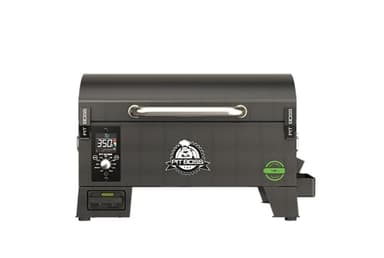
| Pit Boss® 150 Battery Powered | The genuinely off-grid pick — onboard battery, no outlet needed | 256 sq in · onboard 12V battery rated up to 15 hours · also runs on AC | |
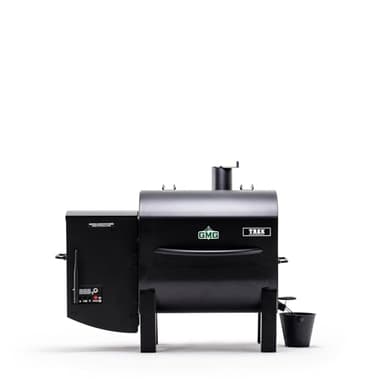
| Green Mountain Grills Trek Prime 2.0 | 12V direct power plus WiFi, for vehicle-based cooking | 274 sq in · 12V direct + AC · WiFi app control | $447.00 · View on Amazon DC cord and alligator clips are sold separately.Price as of October 12, 2026 |
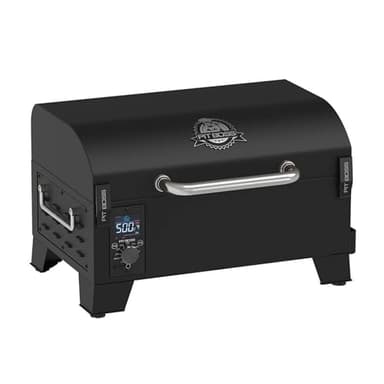
| Pit Boss® 150 Portable | The cheapest way to pair a pellet grill with a power station | 256 sq in · 110V · 7-lb hopper · our best overall portable pick | |
| Z Grills Cruiser 200A | Lowest-cost portable for an outlet or an inverter | 202 sq in · 110V · budget portable pick | $239.00 · View on Amazon Price as of October 12, 2026 |
#ad — the price buttons are affiliate links and we may earn a commission at no extra cost to you. Prices come from Amazon as of October 12, 2026; the live Amazon price always wins. See our affiliate disclosure.
Pit Boss 150 Battery Powered
Green Mountain Grills Trek Prime 2.0
Pit Boss 150 Portable
Full rankings, including what each one gives up, are in our best portable pellet grill roundup.
Extension Cords, Outlets and Surge
Three electrical details that cause real problems and are easy to get right.
Use an outdoor-rated cord, and use a thick one. The igniter's startup draw is where voltage drop bites. A thin indoor cord over 50 feet can deliver enough voltage sag that the hot rod never gets properly hot, which shows up as a grill that fails to light — a symptom owners usually blame on the igniter. A heavier gauge cord in a shorter run fixes it.
Protect the outlet. A GFCI outdoor outlet with a weatherproof cover is the correct arrangement for an appliance that sits in the rain. Keep connections off the ground and out of puddles.
Do not daisy-chain. Cord into cord into cord compounds voltage drop and is a fire risk in its own right.
If your grill lights unreliably and you are running a long cord, swap the cord before you buy an igniter. It is the cheapest diagnostic in pellet grilling, and our brand troubleshooting guides — Traeger, Pit Boss, Z Grills — all start from the same place.
If the Power Goes Out Mid-Cook
The grill simply stops. No auger, no fan, no controller; the fire dies within minutes and the chamber coasts down. Food held above 140°F is not in danger immediately, but a long outage on a long cook is a food-safety judgement call, and the safe move on a brisket that has been sitting cool is the oven rather than optimism.
The part to be careful about is restarting. If pellets were still dropping as the fire died, the fire pot may hold a bed of unburned fuel, and lighting on top of that can produce a sharp flare when it all catches at once. Open the lid, let the chamber air out, look in the pot and vacuum out unburned pellets before you restart. Our flame-out guide covers the same procedure for the more common case where the fire dies with the power still on.
For anyone who loses power often, this is also an argument for keeping a power station around: it is the same purchase that makes tailgating possible.
Frequently Asked Questions
How much electricity does a pellet grill use?
A few hundred watts for the first two to four minutes while the igniter glows, then a modest, steady load — fan, auger and controller — that stays well under 100 watts on most grills.
How much does it cost to run a pellet grill for 12 hours?
Roughly 10 to 25 cents of electricity at typical US residential rates. The pellets for the same cook cost far more.
Can you run a pellet grill on a generator or power station?
Yes. A 500-watt or larger unit covers any pellet grill we track; size for the igniter surge and prefer a pure sine wave inverter.
Can you use a pellet grill without electricity?
Only if the grill carries its own power. The Pit Boss 150 Battery Powered (onboard 12V battery, rated up to 15 hours) and the GMG Trek Prime 2.0 (12V direct) are the genuinely off-grid options.
What happens if the power goes out during a cook?
The fire dies within minutes. Before restarting, open the lid, air out the chamber and clear any unburned pellets from the fire pot to avoid a flare.
The Bottom Line
Electricity is the cheapest input in pellet grilling and the one people worry about most. The real figure to care about is the igniter surge in the first few minutes, because that is what decides whether your extension cord is adequate and what size power station you need. Everything after that is a lightbulb.
If cooking away from an outlet is the point, buy the capability rather than working around it: the Pit Boss® 150 Battery Powered is the only grill in our registry with a usable onboard battery, and the GMG Trek Prime 2.0 is the 12V-direct answer if you cook from a vehicle. For everything else, a 500-watt-plus power station and an outdoor-rated cord cover it.
Check the live price on our off-grid pick
The button reads the current Amazon price, stamped with the date it was read.
#ad — the buttons on this page are affiliate links and we may earn a commission at no extra cost to you. See our affiliate disclosure.
Explore more: Best Portable Pellet Grill | How Many Pellets Does a Pellet Grill Use | Pellet Grill Flame-Out | Pellet Grill Cold Weather Guide