
Pellet Grill Temperature Swings: What's Normal and What's Not (2026)
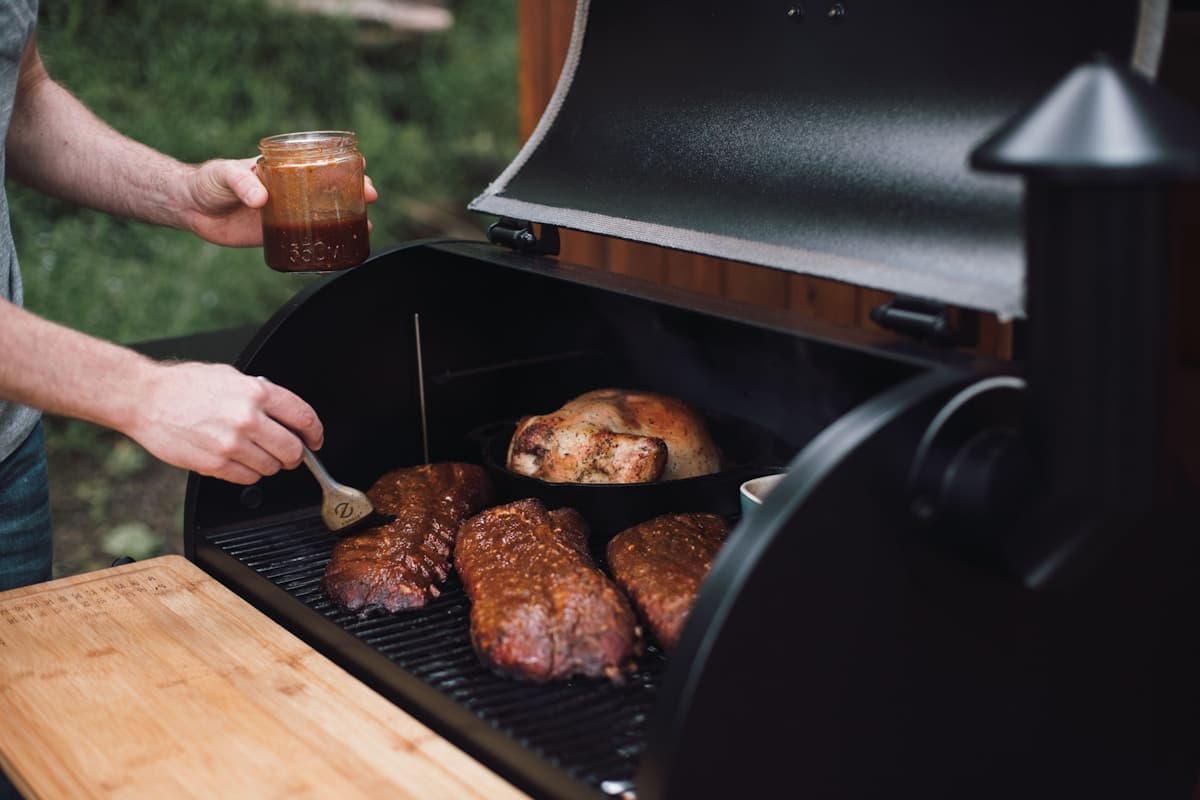
Watching a pellet grill's temperature display is a great way to ruin a good cook. The dial climbs 20 degrees past your set point, sags 20 below it, climbs again — and you start wondering whether your grill is broken. Here is the answer up front: swings of roughly plus or minus 20-25degF around the set point are normal on every brand of pellet grill, and the manufacturers say so in their own documentation. A pellet grill is not an oven, and it is not supposed to behave like one.
This guide covers what the brands themselves define as normal, why the swinging happens, which swings actually signal a problem, and the fixes ranked by impact. (Traeger owners: our dedicated Traeger temperature swings guide has model-specific steps — this page covers behavior common to every pellet grill.)
What the Manufacturers Themselves Call Normal
Before you troubleshoot anything, check your grill against what its own manufacturer considers acceptable. These figures come straight from official manufacturer documentation:
| Brand | Official position on temperature swings |
|---|---|
| Pit Boss | Plus or minus 25degF around the set point "is completely normal" (official FAQ) |
| Z Grills | Plus or minus 20degF is normal; overshoots up to ~35degF are expected in the first 20-30 minutes, after setting changes, and after lid openings |
| Camp Chef | Swings are intentional for smoke production — "your grill will not have the same temperature readout like an oven" |
| recteq | Publishes no blanket number; official guidance #1 is "Leave it alone!" — startup takes 20-30 minutes to stabilize |
| Traeger | See our Traeger temperature swings guide for Traeger-specific ranges and fixes |
A few details behind those numbers:
Pit Boss is the most direct: a 25-degree wobble in either direction is, in their words, completely normal. If your Pit Boss swings wider than that at low smoking temperatures, the P setting — which controls the pause between auger feed cycles — is the first thing to check. See our Pit Boss P setting guide.
Z Grills explains why: pellets drop into the fire pot in batches every 1-2 minutes, so the temperature cycles up and down by design. They also set overshoot expectations — up to about 35degF above set point is normal during the first 20-30 minutes, after setting changes, and after lid openings. For issues beyond swings, see our Z Grills troubleshooting guide.
Camp Chef frames the swings as a feature. Their controller deliberately lets the flame die back and smolder, because smoldering pellets are what produce smoke — an oven-steady grill would barely smoke at all. For problems beyond normal cycling, see our Camp Chef troubleshooting guide.
recteq publishes no normal-swing number. Their number-one official guidance for temperature complaints is blunt: leave it alone. Opening the lid causes the PID controller to overcompensate, and startup takes 20-30 minutes to stabilize. One marketing caveat: recteq advertises plus or minus 5degF for its X-Fire controller in Smoke mode, but owners report wider swings in the real world — as on every brand. Treat tight advertised tolerances as best-case lab numbers.
The takeaway: if your grill is oscillating 20-ish degrees around the set point, it is doing exactly what its manufacturer designed it to do. Nothing is broken.
Why Pellet Grills Swing by Design
A pellet grill does not burn fuel continuously the way a gas grill does. It feeds fuel in pulses: the auger turns, dumps a batch of pellets into the fire pot, and stops. The fresh pellets ignite, the fire flares, and the temperature climbs. Then the fire decays as those pellets burn down, and the temperature falls — until the next auger cycle drops the next batch.
On top of that, the controller makes its decisions from a single data point: one RTD temperature probe at one spot inside a big steel box. It sees one reading, reacts, waits, and reacts again.
Put those two facts together and the result is inevitable: the temperature traces a wave around your set point rather than a flat line. A plus-or-minus 20degF sine wave around 225degF is the system working correctly. And the part that matters for your food: the average temperature is what cooks it. A grill oscillating between 205degF and 245degF delivers an average of 225degF to your brisket — exactly what you asked for.
When a Swing Is NOT Normal
Normal swings are rhythmic, centered on your set point, and self-correcting. Here are the four patterns that are not:
The reading is pinned way off — hundreds of degrees high or low. Suspect a grease fire or a failed RTD probe. If the display is spiking toward its maximum, treat it as a possible grease fire: keep the lid shut (opening it feeds the fire oxygen), shut the grill down, and let it burn out before inspecting. If the grill is clearly cool but the reading is absurd, the RTD has failed.
The temperature climbs steadily past the set point and keeps climbing. The controller has lost the ability to throttle the fire. The usual culprits are a stuck auger overfeeding pellets, or a grease fire adding fuel the controller did not put there. Shut down and inspect once cool.
The temperature drops and never recovers. This is a flame-out in progress — the fire is dying faster than the controller can save it, usually from an empty hopper, a fuel feed problem, or ash smothering the fire pot. Our pellet grill flame-out guide covers the diagnosis and the safe restart procedure.
The readings are erratic and jumpy rather than smoothly cyclic. Suspect the probe before the fire. A dirty RTD is a classic cause of false swings — both Pit Boss and Z Grills specifically call out a gunked-up probe in their troubleshooting, and the fix is a free wipe-down. Check that the wiring connections are snug, and check the probe's position: recteq advises keeping the RTD upright and keeping sear plates away from it. A probe touching the barrel wall or shadowed behind cast iron is measuring the wrong thing.
The Fix List, Ranked by Impact
If your swings are wider than your manufacturer's normal range, work through these in order — the cheap, boring fixes at the top solve most cases.
- Stop opening the lid. The single biggest self-inflicted cause of wild swings. Every lid opening dumps heat, and the controller overcompensates with a pellet surge that overshoots once the lid closes. recteq made "leave it alone" their number-one guidance for a reason.
- Clean the fire pot and the RTD probe. Ash in the fire pot smothers combustion; grease on the RTD makes the controller act on bad data. Ten minutes with a shop vacuum and a cloth fixes both.
- Use fresh, dry pellets — and sift out the dust. Moisture-swollen pellets burn as a weak, smoldering fire the controller constantly fights, producing wide swings, and sawdust fines feed inconsistently. Fresh pellets from a sealed container are a night-and-day difference.
- Shelter the grill from wind and direct sun. Wind pulls heat out of the barrel faster than the controller can respond. Direct sun does the opposite — it heats the barrel and raises the probe reading, a quirk both Z Grills and Pit Boss note. A shaded, wind-protected spot is worth more than any accessory.
- Set the chimney cap per your manual. The exhaust gap affects how the grill breathes. Camp Chef, for example, specifies roughly a 1.5-inch gap, closed down further in winter. Check your manual — and never close a chimney completely.
- Let startup fully stabilize before judging. Every manufacturer agrees on the 20-30 minute window, and overshoots during it are normal on all brands. Do not chase the temperature with setting changes while the grill is finding its rhythm — each change restarts the clock.
- In cold weather, insulate. A cold barrel bleeds heat, forcing aggressive feed cycles and wider swings. An insulated grill blanket is the most effective cold-weather fix; our cold weather pellet grilling guide covers the rest.
- On an older grill that still swings after all of the above: replace the RTD probe. It is a cheap, user-replaceable part on most models, and an aging probe that drifts or responds slowly causes instability no amount of cleaning fixes.
Cook to the Meat, Not the Dial
Here is the mindset shift that ends temperature-swing anxiety for good: the number that matters is the internal temperature of your food, not the number on the controller.
Your brisket does not care about a 15-degree wobble in pit temperature. Over a long cook the oscillations average out — the meat experiences the mean, not the wave. What ruins cooks is pulling the meat at the wrong internal temperature, or opening the lid every twenty minutes to stare at a dial (see fix #1).
A wireless meat thermometer tells you the truth from inside the meat, on your phone, without ever lifting the lid — and our best wireless meat thermometer roundup compares the options. Set the grill, close the lid, trust the average, and cook to temp.
Frequently Asked Questions
How much temperature swing is normal on a pellet grill?
Roughly plus or minus 20-25degF around your set point, according to the manufacturers themselves. Pit Boss's official FAQ says plus or minus 25degF "is completely normal"; Z Grills says plus or minus 20degF, with overshoots up to about 35degF during the first 20-30 minutes. Pellet grills feed fuel in pulses, so the temperature cycles by design — the average is what cooks your food.
Why does my grill overshoot after startup?
Startup is the most volatile phase of the cook — the controller is building a fire from nothing in a cold steel box. Z Grills states that overshoots up to about 35degF are normal in the first 20-30 minutes, after setting changes, and after lid openings; recteq gives the same 20-30 minute stabilization window. Do not judge the grill — or start changing settings — until that window has passed.
Why does opening the lid make temperature swings worse?
Opening the lid dumps heat, and the controller responds by feeding extra pellets — building a bigger fire than the closed grill needs. The temperature overshoots, the controller cuts back, and it takes several cycles to settle again. That overcompensation loop is why recteq's number-one official guidance is simply "leave it alone."
When should I replace the temperature probe?
Only after cleaning it and checking its connections. A grease-coated RTD is a classic cause of false swings — Pit Boss and Z Grills both call it out — and cleaning it costs nothing. Make sure the probe is upright, not touching the wall, and not blocked by cast iron or sear plates (recteq's specific advice). If readings are still erratic or pinned wildly off afterward, replace the RTD — a cheap part and an easy swap on most grills.
Stop Watching the Dial
The MEATER Plus reads your food's internal temperature wirelessly, so you can close the lid, ignore the wobble, and cook to temp.
Explore more: Traeger Temperature Swings | Pellet Grill Flame-Out | Cold Weather Pellet Grilling | Pit Boss P Setting | All Guides