
Traeger Pro 575 Review: Reliable Entry-Level Pellet Grilling
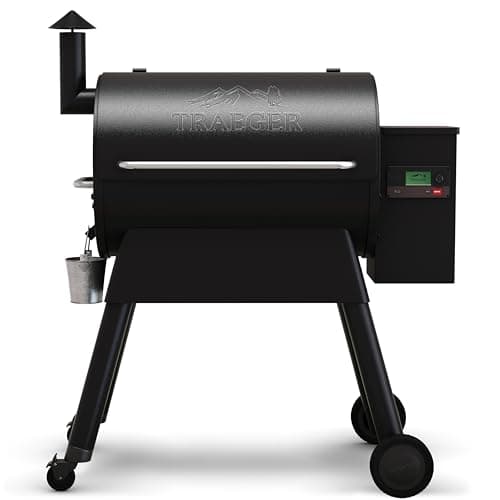
Traeger® Pro 575 Pellet Grill
Check the live Amazon price
Quick Verdict: Traeger Pro 575
The Traeger® Pro 575 is a known quantity. It has been in the market for years, and the thousands of owners who use it every weekend can attest to its reliability, consistent performance, and hassle-free WiFIRE connectivity. At $799.99, it delivers genuine pellet grill convenience with Traeger's ecosystem of app control, recipes, and accessories.
But here is the honest assessment in 2026: the Pro 575 is competing against Traeger's own newer lineup, and the comparison is not flattering. The Woodridge — at just $100 more — offers 860 square inches (vs. 575), a 10-year warranty (vs. 3 years), the EZ-Clean grease system, P.A.L. accessory rails, and a modernized design. The Pro 575 is still a good grill. It is just no longer the best value in Traeger's catalog.
The Pro 575 earns a 4.3 out of 5. It does everything a pellet grill should do — hold temperature, connect to WiFi, and produce authentic wood-fired flavor — without fuss or drama. The rating reflects the reality that for $100 more, the Woodridge does everything better with a warranty that is three times longer.
Check the current price on Traeger.comKey Specifications
| Spec | Detail |
|---|---|
| Cooking Area | 575 sq in |
| Temperature Range | 165°F - 450°F |
| Controller | Digital PID controller |
| WiFi | WiFIRE enabled (Traeger App) |
| Meat Probe | 1 wired probe included |
| Hopper Capacity | 18 lbs |
| Grease System | Standard drip tray and bucket |
| Max Temperature | 450°F |
| Warranty | 3 years limited |
| Price | $799.99 MSRP |
PID Controller: Proven and Reliable
The Pro 575 uses Traeger's standard PID (Proportional-Integral-Derivative) controller, which has been the backbone of Traeger's mid-range lineup for years. It does what a PID controller is designed to do: maintain your target temperature by adjusting the auger feed rate and fan speed in response to temperature readings from the RTD sensor.
PID controllers in this class typically hold temperature within plus or minus 10-15 degrees of the target at low temperatures (225 degrees) and within plus or minus 5-10 degrees at higher settings (350-450 degrees). This is standard performance for a pellet grill in this price range — not as precise as the Ironwood's Smart Combustion, but consistent enough for reliable results across the vast majority of cooks.
The controller handles the basics well: set your temperature, place your food, and monitor through the app. Temperature swings are gradual rather than abrupt, which means your food is not subjected to sudden heat spikes that could affect quality. For a weekend warrior smoking pork butts, grilling burgers, or roasting chicken, the Pro 575's controller is more than adequate.
One honest note: the 450-degree maximum temperature is lower than the 500 degrees available on the Woodridge, Ironwood, and Timberline. For searing steaks and high-heat grilling, that 50-degree difference matters. It is not a dealbreaker — 450 degrees handles burgers, vegetables, and most grilling tasks fine — but it limits the Pro 575's versatility at the top end.
WiFIRE: The Same App Experience
The Pro 575's WiFIRE connectivity delivers the same Traeger App experience as every other WiFIRE-equipped model. You can:
- Monitor and adjust grill temperature from anywhere
- Track meat probe temperature in real time
- Set target temperature alerts
- Access Traeger's 1,600+ recipe library
- Start the shutdown cycle remotely
The app pairing process requires a 2.4GHz WiFi connection, which can be tricky if your router broadcasts a combined 2.4/5GHz network. Once connected, the experience is reliable and responsive. Owners generally report a stable connection with few dropouts, and the app updates probe temperatures in near-real-time.
For pellet grill newcomers, WiFIRE is genuinely transformative. Load your pork butt at 7 AM, go about your day, and check your phone periodically. When the probe hits target, the app alerts you. It turns what used to be an all-day babysitting job into a hands-off cooking experience.
This is the one area where the Pro 575 matches the Woodridge: the app experience is identical. If WiFIRE is your primary reason for choosing Traeger, the Pro 575 delivers the full experience.
575 Square Inches: What Actually Fits
The Pro 575's cooking area is, by modern standards, modest. Here is what fits in practice:
- Brisket cook: 1 packer brisket (12-14 lbs max, tight for larger cuts)
- Rib cook: 2-3 racks of baby back ribs on the main grate
- Chicken cook: 4-6 chicken breasts or 2 spatchcocked chickens
- Burger night: 10-12 burgers simultaneously
- Mixed cook: 1 pork butt OR 2 racks of ribs (not both comfortably)
For a household of 2-4 people, 575 square inches handles most meals without issue. It gets tight when you want to cook multiple proteins simultaneously or prep for a gathering of 6 or more. If you have ever found yourself wishing for "just a little more space" on a grill, the Pro 575 will have that moment.
For comparison, the Woodridge provides 860 square inches — 50% more — for $100 more. That is a hard value proposition for the Pro 575 to overcome. The only scenario where 575 square inches is an advantage is physical space: the Pro 575 has a smaller footprint and fits on tighter patios and balconies where a larger grill would not.
Build Quality and the Warranty Gap
The Pro 575's build quality is solid for an $800 pellet grill. The powder-coated steel body is durable, the grates are porcelain-enameled, and the overall construction feels stable. It does not flex, wobble, or feel cheap. Traeger's manufacturing consistency on the Pro series has been proven over years and hundreds of thousands of units.
However, the 3-year warranty is the Pro 575's biggest disadvantage in 2026. The Woodridge series ships with a 10-year limited warranty — more than three times the coverage — at a comparable price point. That warranty upgrade signals Traeger's confidence in the new platform and provides buyers with substantially more long-term protection.
A 3-year warranty is standard in the pellet grill industry, so the Pro 575 is not below average. But when Traeger itself offers 10 years on the Woodridge for $100 more, the Pro 575's warranty feels like a reason to upgrade rather than a reason to buy.
The grease management system is also a generation behind. The Pro 575 uses a standard drip tray and grease bucket — functional but messy compared to the Woodridge's EZ-Clean Grease and Ash Keg system. Keep drip tray liners stocked and clean the bucket after every greasy cook to prevent buildup and potential flare-ups.
Cooking Performance
Low and Slow Smoking
The Pro 575 delivers honest, reliable low-and-slow performance. A typical pork butt cook — 8 pounds at 225 degrees for 12 hours — produces a well-developed bark and tender, pull-apart meat with clean wood-fired flavor. Temperature holds within a reasonable range, and the cook proceeds without any intervention beyond monitoring through the app.
The Pro 575 does not include Super Smoke Mode, which is available on the Woodridge Pro ($1,149) and above. Standard smoke output produces authentic wood flavor, but it is milder than what Super Smoke delivers. For most home cooks — especially those coming from gas grills — the standard smoke is plenty flavorful. For experienced pitmasters chasing heavy smoke rings and intense bark, the lack of Super Smoke is a limitation.
Pellet choice matters for maximizing smoke flavor on the Pro 575. Traeger® Hickory pellets produce the boldest flavor on beef and pork. Signature Blend is an excellent all-purpose option that works across every protein. Our wood pellet flavor guide covers all the options in detail.
High Heat Grilling
The Pro 575's 450-degree maximum handles burgers, chicken, vegetables, and most grilling tasks adequately. Burgers develop good browning and grill marks. Chicken thighs crisp reasonably well. Vegetables char nicely at the highest setting.
For steaks, 450 degrees is limiting. You can produce grill marks, but the crust development falls short of what 500-degree grills achieve. The reverse-sear method works well here: smoke the steak at 225 degrees until 10 degrees below your target internal temperature, then finish in a preheated cast-iron skillet over a gas burner for the best possible sear. A Thermapen ONE is essential for nailing the timing.
Baking and Roasting
The PID controller's temperature stability makes the Pro 575 a capable outdoor oven. Pizzas at 425 degrees on a stone produce good results — not as crisp as what you get at 500 on the Woodridge, but satisfying. Whole chickens roasted at 350 degrees come out evenly cooked with wood-kissed flavor.
Pros
- Affordable entry point to WiFIRE-connected pellet grilling
- 575 sq in of cooking space handles family-sized cooks
- Reliable PID controller with proven track record
- Proven platform with years of real-world performance data
- Compact and portable-ish size fits smaller patios
- WiFIRE app connectivity for remote monitoring
Cons
- Smaller cooking area than Woodridge at the same price
- No Super Smoke Mode — standard smoke output only
- 3-year warranty vs. Woodridge's 10-year warranty
- Older design lacks EZ-Clean, P.A.L., and modern aesthetics
Who Should Buy the Pro 575
Buy the Pro 575 if you:
- Find it on a meaningful discount (below $650) that makes the value compelling
- Need the smaller footprint specifically for a tight patio, balcony, or storage constraint
- Prefer a proven platform with years of community support and aftermarket accessories
- Are buying a secondary or travel grill alongside a larger primary unit
- Value simplicity and do not need EZ-Clean, P.A.L., or the latest features
Who Should Skip
Skip the Pro 575 if you:
- Can afford $100 more — the Woodridge is the better buy in virtually every dimension
- Cook for 6 or more people regularly — 575 sq in will feel limiting
- Want Super Smoke Mode — it is not available on the Pro series
- Care about long-term warranty protection — the Woodridge's 10-year warranty is a significant advantage
- Want high-heat searing — the 450-degree max is limiting compared to 500-degree models
Assembly and First Cook
Assembly is straightforward and takes about 45-60 minutes with basic tools. The Pro 575 is lighter and simpler than the larger models, making it a manageable solo assembly project — though a helper still makes things easier.
Season the grill at 450 degrees for 45 minutes before your first cook to burn off manufacturing residues. Our seasoning guide covers the full process and common mistakes to avoid.
Set up WiFIRE during the seasoning cycle — the process takes about 5 minutes and requires your WiFi password and a 2.4GHz network. Once connected, the Traeger App handles everything from temperature monitoring to recipe guidance.
Essential accessories: drip tray liners (the Pro's grease system relies on them), a grill brush, and a grill cover to protect against the elements. A Thermapen ONE is our top recommendation for temperature verification alongside the included meat probe.
How It Compares to the Woodridge
This is the comparison every Pro 575 shopper needs to see, because the Woodridge has fundamentally changed the value proposition.
| Feature | Pro 575 ($799) | Woodridge ($899) |
|---|---|---|
| Cooking Space | 575 sq in | 860 sq in |
| Max Temperature | 450°F | 500°F |
| Warranty | 3 years | 10 years |
| Grease System | Standard drip tray | EZ-Clean Keg |
| Accessory System | None | P.A.L. Pop-And-Lock |
| Hopper | 18 lbs | 24 lbs |
| WiFIRE | Yes | Yes |
| Super Smoke | No | No |
| Price Difference | — | +$100 |
For $100 more, the Woodridge provides: 50% more cooking space, 50 more degrees of max temperature, a warranty that is 7 years longer, a modern grease management system, an accessory rail system, and a 33% larger hopper. The Pro 575 has no feature advantage over the Woodridge.
Our recommendation: Unless you find the Pro 575 at a substantial discount or specifically need its smaller footprint, spend the extra $100 on the Woodridge. It is the better grill by every measurable metric.
Pro 575 vs. Pro 780: Need More Space?
If you are committed to the Pro series, the Pro 780 provides 780 square inches for $999 — 36% more cooking area for $200 more. It shares the Pro 575's controller, WiFIRE, and feature set in a larger package.
However, the same logic applies: the Woodridge ($899) offers more cooking space than the Pro 780 (860 vs. 780 sq in) at a lower price ($899 vs. $999) with a better warranty (10 years vs. 3), better grease management, and a newer design. The Pro 780, like the Pro 575, faces an uphill battle against Traeger's own newer lineup.
Frequently Asked Questions
Should I buy the Pro 575 or the Woodridge?
For most buyers in 2026, the Woodridge is the better purchase. For $100 more ($899 vs. $799), the Woodridge offers 860 sq in (vs. 575), a 10-year warranty (vs. 3 years), the EZ-Clean grease system, P.A.L. accessory compatibility, and a modernized design. The Pro 575 makes sense only if you find it on a significant discount, need the smaller footprint specifically, or prefer the proven older platform.
Is the Pro 575 big enough for a family of four?
Yes, for standard family meals. 575 square inches comfortably fits 4 chicken breasts, a rack of ribs, 10-12 burgers, or a single pork butt. It gets tight when cooking for more than 6 people or running multiple large proteins at once. If you entertain regularly, the larger Woodridge (860 sq in) or Pro 780 (780 sq in) provides more breathing room.
Does the Pro 575 have WiFi?
Yes. The Pro 575 includes WiFIRE connectivity, which pairs with the Traeger App on iOS and Android. You can monitor grill temperature, check meat probe readings, adjust temperature, and start the shutdown cycle remotely. WiFi setup requires a 2.4GHz connection. The app experience is identical to what you get on the Woodridge and other WiFIRE-equipped Traeger® models.
What is the warranty on the Pro 575?
The Pro 575 comes with a 3-year limited warranty, which covers the grill against defects in materials and workmanship. This is significantly shorter than the 10-year warranty on the Woodridge series. For a grill in the $800 price range, a 3-year warranty is standard in the industry but underwhelming compared to what Traeger® now offers on its newer models.
Can the Pro 575 sear steaks?
The Pro 575 reaches 450 degrees (vs. 500 on the Woodridge), which limits searing performance. You can produce grill marks and some browning, but the results will not match a dedicated gas grill or even the Woodridge's 500-degree capability. For the best steak results, use the reverse-sear method: smoke at 225 until near target, then finish in a preheated cast-iron skillet on a gas burner.
Final Verdict
The Traeger® Pro 575 earns a 4.3 out of 5. It is a good pellet grill — reliable, WiFIRE-connected, and proven by years of real-world use. It delivers honest wood-fired flavor, consistent temperature control, and the convenience of app-based monitoring at a sub-$800 price point.
The challenge is context. In 2026, the Woodridge exists — and it offers substantially more grill for just $100 more. More cooking space, a longer warranty, better grease management, a modern accessory system, higher max temperature, and a larger hopper. The Pro 575 does not do anything wrong, but the Woodridge does almost everything better.
If you find the Pro 575 at a compelling discount, need its smaller footprint, or simply prefer the proven older platform, it remains a solid purchase. But for full-price buyers, we recommend spending the extra $100 on the Woodridge. The value difference is too significant to ignore.
Looking at the Pro 575?
The Traeger Pro 575 delivers reliable WiFIRE pellet grilling at $799. Compare it against the newer Woodridge ($899) before you decide — the $100 difference gets you substantially more grill.
Explore more: Ultimate Traeger Grill Guide | All Reviews | Woodridge Review | Pro 780 Review | How to Season a New Traeger