
Best BBQ Gloves in 2026: 6 Pairs That Actually Protect Your Hands
Almost nobody plans to buy BBQ gloves. You buy them after the moment you needed them — reaching past a 400°F grate for a probe, lifting a drip tray that turned out to be heavier and hotter than it looked, or taking hold of a foil-wrapped pork butt and discovering that the foil had a leak in it. That is the whole category in one sentence: cheap insurance that people buy one incident too late.
The frustrating part is that the listings make it almost impossible to choose. Every pair claims a temperature that sounds like it came off a foundry spec sheet, the photos all look identical, and none of it tells you the thing that actually decides whether a glove works on a pellet grill: what the glove is made of, how long the cuff is, and what happens when it gets wet.
So this guide is built around those questions instead of the marketing numbers. Every pick below was verified live and buyable on August 31, 2026, every specification quoted is what the manufacturer itself publishes on the listing, and every entry says plainly where it falls short. We have deliberately kept prices out of the prose — this category discounts constantly, and the cards below show the live figure rather than a number that will be wrong in a week.
What Actually Matters in a BBQ Glove
Five things separate a glove you will keep from one that lives in a drawer:
- Material, because it decides everything else. Neoprene is insulated and waterproof — the default for handling hot, greasy, wet things. Silicone is waterproof and easy to rinse but thin and clumsy. Aramid or cotton knit is breathable and dexterous but soaks up grease and liquid, and a saturated fabric glove will burn you. Nitrile over a cotton liner is not a heat glove at all; it is the food-handling setup pitmasters use for shredding.
- Cuff length. This is the most underrated spec on the page. A short glove protects your palm and leaves your forearm to hang over the hot grate you are reaching across. A 13 to 14 inch sleeve is what you want on any grill deep enough that you reach into it — which is most of them.
- Waterproofing. Grease, marinade, and steam are the real hazards on a pellet grill, not glowing metal. Liquid conducts heat far better than air does, so a wet glove is a worse glove regardless of what temperature the box claims. Anything you use around wrapped meat or a water pan should shed liquid.
- Dexterity. Can you pick up a thermometer probe? Open a foil packet? Grip a rib bone? A glove so bulky that you take it off to do the actual work is a glove that is off your hand at the moment you need it.
- How it cleans. Wipe-clean beats machine-washable beats spot-clean-only, in that order, because a glove that is dirty or still damp from the last cook is one you will skip.
About Those 932°F and 1472°F Numbers
They are real material figures, and they are close to useless for choosing a glove.
These ratings come from testing a material against a heat source, typically for a brief contact interval — and the listings almost never publish that interval. A glove rated at 932°F does not mean you can hold 932°F steel; it means the material survived a defined short exposure. Hold anything hot for long enough and heat gets through every glove on this list.
There is one claim on this page with a published standard behind it. EN 407 is the European standard for gloves protecting against thermal risks, and certification means a pair was tested to a defined protocol across a range of heat hazards rather than assigned a number by whoever wrote the listing. It is not a promise of invincibility either, but it is a meaningfully different kind of claim.
Worth noticing: the most credible brand in this roundup, Hey Grill Hey, publishes the lowest number of the six. That is not a weakness. A brand that stakes its name on the product tends to quote something closer to a working expectation than a laboratory ceiling.
Quick Picks: Best BBQ Gloves
| Award | Pick | Best For | What the brand states |
|---|---|---|---|
| Best Overall | RAPICCA BBQ Grill Gloves | Almost everyone with a pellet grill | 14 in neoprene, waterproof, 932°F rated, XL |
| Best Dexterity | Hey Grill Hey Pitmaster Gloves | Fine work — probes, foil, rib bones | Fabric, waterproof, washable, up to 500°F, sized M-XXL |
| Best Certified Protection | EN407-Certified Cut-Resistant Gloves | Trimming and handling in one glove | EN407 certified, cut resistant, cotton lined, silicone grip |
| Best Budget Insulated | Aillary 14 in Neoprene Gloves | The same job for less money | 14 in neoprene coating, waterproof, oil resistant, 932°F rated |
| Best for Shredding | SWIFTLITE BBQ Gloves Kit | Pulling pork and food handling | 6 cotton liners plus 100 disposable nitrile gloves |
| Cheapest That Works | Comsmart Silicone BBQ Gloves | Wet, greasy, occasional use | Silicone, non-slip, long cuff, 1472°F rated |
RAPICCA BBQ Grill Gloves (14 in Neoprene)
Hey Grill Hey Pitmaster Gloves
EN407-Certified Cut-Resistant Grill Gloves
Aillary 14 in Waterproof Neoprene Pit Grill Gloves
SWIFTLITE BBQ Gloves Kit (6 Cotton Liners + 100 Nitrile)
Comsmart Silicone BBQ Gloves
How We Judged These
We do not run a lab and we are not going to pretend otherwise. This ranking is built from three things we can stand behind: the materials and specifications each manufacturer publishes itself, verified live retail listings checked the day this was published, and years of running pellet grills — which is where the practical judgment about cuff length, grease, and dexterity comes from.
The score attached to each pick is our own editorial rating, not an average of customer stars. It weighs four things: whether the material suits the job, whether the cuff is long enough for a real cook chamber, how the glove behaves when it gets wet or greasy, and whether the price buys anything the cheaper option does not. Specialist picks were scored as specialists rather than penalized for being narrow.
1. RAPICCA BBQ Grill Gloves — Best Overall
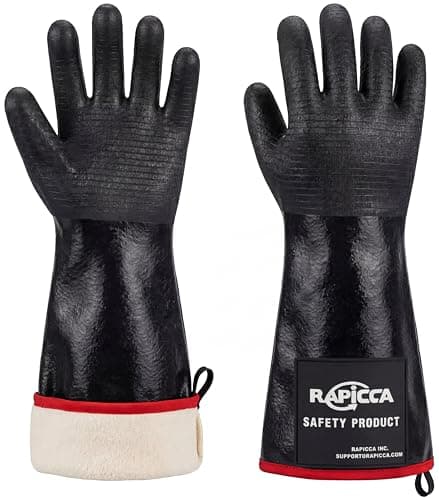
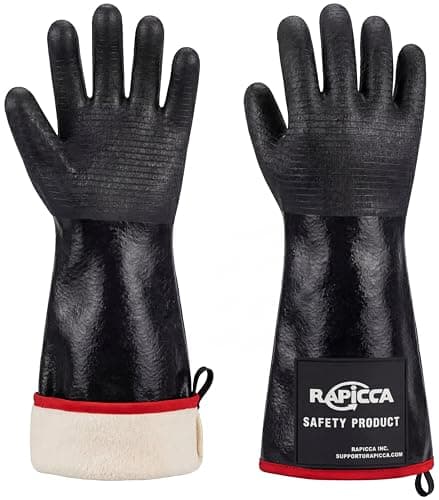
The RAPICCA BBQ Grill Gloves are the pair we would put in almost anyone's hands, and the reason is that they get the two things right that most gloves get half right. RAPICCA states neoprene construction with a 14-inch sleeve and a 932°F heat rating. The neoprene is what makes them work on a pellet grill specifically: grease runs off it, marinade runs off it, and a splash of hot liquid does not turn the glove into a conductor the way it does with a knit fabric.
The 14-inch sleeve is the other half. A pellet grill is a deep box — reaching for a probe on the far side of a Traeger® or moving a drip tray means your forearm crosses hot metal, and a short glove leaves that skin exposed. These come well past the wrist, which is exactly what the job needs. They also have enough texture and give to grip a grate or a foil-wrapped brisket without the wobble you get from silicone, which is why they are the glove that stays on your hand instead of coming off halfway through the task.
The honest catches. They are bulky, and fine work is genuinely awkward — picking up a thermometer probe or unwrapping foil usually means taking one off. Sizing runs large: the listing we link is XL, and smaller hands will find them roomy, which costs you grip. And neoprene stiffens in the cold, so if you smoke through the winter — worth reading alongside our pellet grill cold weather guide — they feel noticeably less nimble in January than in July.
Pros
- Waterproof neoprene sheds grease, marinade, and hot liquid
- 14-inch sleeve covers the forearm you reach across the grate with
- Enough grip and give to actually hold a grate or a wrapped butt
- Wipes clean with soapy water in under a minute
Cons
- Bulky — fine work like handling a probe usually means taking one off
- Sizing runs large; the linked pair is XL
- Neoprene stiffens noticeably in cold weather
2. Hey Grill Hey Pitmaster Gloves — Best Dexterity
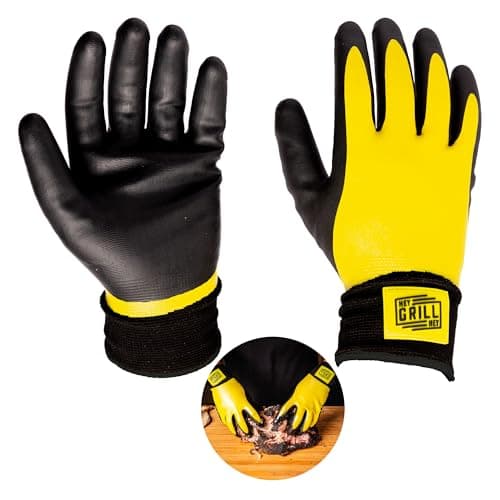
The Hey Grill Hey Pitmaster Gloves solve the problem the RAPICCA creates. They are a fitted fabric glove rather than an insulated gauntlet, and Hey Grill Hey states they are waterproof, machine washable, and rated for heat protection up to 500°F. The fit is the point: you can grip a rib bone, work a foil packet, or move a probe without stripping a glove off first, which in practice means the glove is on your hand during the moments that actually cause burns.
The 500°F figure deserves credit rather than criticism. It is a fraction of what the unbranded gloves on this page claim, and it comes from a brand with a name to protect — which makes it the number on this page most likely to describe what you can actually expect. Waterproofing is the other reason these earn their spot over the many fabric gloves that do not have it: a fabric glove that wicks hot grease is worse than no glove, and this one is built specifically not to.
Also worth knowing before you order: these come in real sizes — M, L, XL, and XXL — and on Amazon each size is its own listing. We link the Large. Check the size selector before you check out.
The cons are straightforward. The rated temperature is genuinely lower, so these are not the glove for lifting a searing-hot grate or reaching into a fire pot — keep an insulated pair for that. They cost more than a competent neoprene gauntlet that offers more raw protection, so you are paying for control, not coverage. And fabric takes hours to air dry after a wash, which means owning one pair is a mistake if you cook two days in a row.
Pros
- Fitted fabric gives real dexterity — probes, foil, and bones are all workable
- Waterproof, so hot grease does not wick through to skin
- Machine washable and sold in four real sizes
- Brand publishes a credible working temperature instead of a lab ceiling
Cons
- Rated to 500°F — not the glove for a searing grate or a fire pot
- Costs more than a neoprene pair that offers more raw protection
- Fabric takes hours to dry; one pair is not enough for back-to-back cooks
3. EN407-Certified Cut-Resistant Grill Gloves — Best Certified Protection
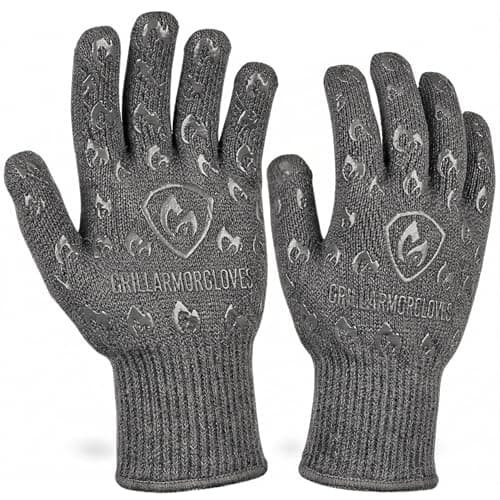
These are the only gloves in the roundup whose main claim is a standard rather than a number. The EN407-certified pair is listed as a five-finger glove that is EN407 certified, cut resistant, cotton lined, and finished with a non-slip silicone grip, rated at 932°F. Amazon lists it without a brand in the title, which is why we describe it by what it is rather than naming a manufacturer we cannot verify.
The combination is genuinely unusual and genuinely useful. Cut resistance matters more in barbecue than people expect: trimming the fat cap off a packer brisket is a slow job with a very sharp knife, and it happens right next to the same grill you are about to reach into. A glove that covers both means one pair at the counter and at the grill. The five-finger construction also puts these ahead of the mitt-style gloves for anything requiring a grip, and the silicone grip pattern helps with the smooth stainless handles that pellet grills are full of.
The trade-off is the one that comes with every knit glove, and it is important. These are not waterproof. A cotton-lined knit will absorb grease and liquid, and once saturated it transfers heat rather than blocking it — so keep them away from a leaking foil wrap, a water pan, or anything simmering. They cannot be properly washed either: grease that gets into the knit stays there, so these are spot-cleaned and eventually replaced rather than laundered. And cut resistance is not cut proof — it buys you time against a slip, not immunity.
Pros
- EN407 certification means a defined test protocol, not a marketing number
- Cut resistance covers brisket trimming and grill work with one pair
- Five-finger design with silicone grip handles smooth stainless well
- Cotton lining is comfortable enough to wear for a long prep session
Cons
- Not waterproof — a soaked knit glove conducts heat instead of blocking it
- Absorbed grease cannot be washed out; these are a wear item
- Cut resistant is not cut proof
4. Aillary 14 in Waterproof Neoprene Pit Grill Gloves — Best Budget Insulated
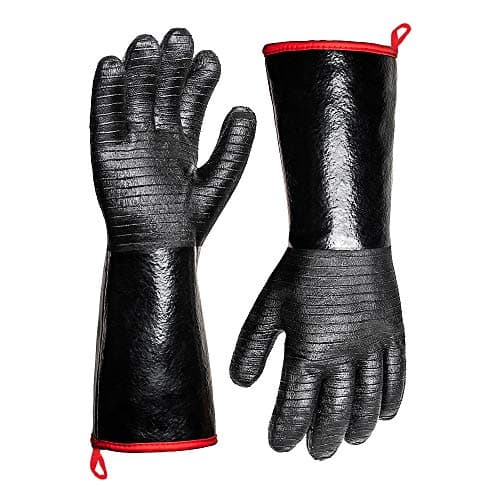
If the RAPICCA is the right type of glove but you would rather not spend that much, the Aillary 14-inch pit gloves are the honest cheaper version of the same idea. The listing states neoprene coating, a 14-inch long sleeve, waterproof and oil resistant construction, and the same 932°F rating, aimed at grill, smoker, fryer, and oven use.
That is the same specification sheet as our top pick at a meaningfully lower price, and we are not going to pretend the difference is dramatic. This is the pick for a second pair to keep in the grill cabinet, for a gift, or for anyone who wants the neoprene-and-long-cuff formula without paying for the better-known name. The fryer use case is a real one too — anything that involves hot oil wants a glove that liquid cannot get into, and these qualify.
Where the money shows. The finish is less refined: seams, cuff construction, and the consistency of the coating are where a budget neoprene glove saves money, and that is where wear appears first. There is no meaningful brand behind it — no warranty conversation, and listings in this corner of Amazon change hands. And like every insulated gauntlet here, dexterity is limited; if fine control is what you actually needed, the fabric pick above is the better spend even though it costs more.
Pros
- Same neoprene-and-14-inch-cuff formula as the top pick for less
- Waterproof and oil resistant — rated for fryer work as well as the grill
- Cheap enough to buy a second pair for the cabinet or as a gift
- Wipes clean; no drying time between cooks
Cons
- Finish and seam quality are where the savings come from
- Generic listing with no real brand or warranty behind it
- Bulky like every gauntlet — poor for probes and foil
5. SWIFTLITE BBQ Gloves Kit — Best for Shredding
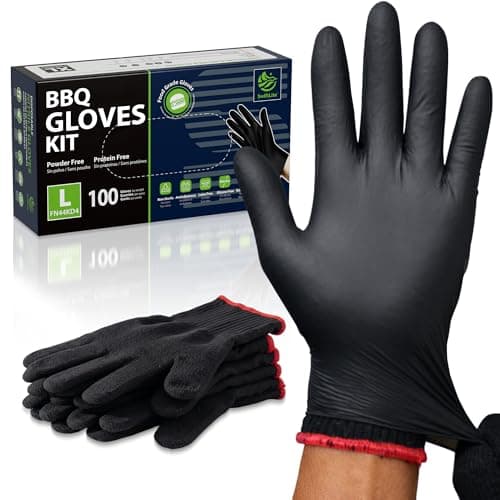
This is the one pick on the list that is not a heat glove, and including it is deliberate — because the job people most often reach for a heat glove to do is the job a heat glove is worst at. The SWIFTLITE BBQ Gloves Kit is 6 cotton liners plus 100 disposable nitrile gloves, which is the setup competition cooks use for pulling pork: a cotton liner takes the residual heat, the nitrile glove over it keeps everything food-safe and clean, and you strip the nitrile off and bin it when you are done.
Try shredding a pork butt in neoprene gauntlets and you will immediately understand the problem — you cannot feel the meat, you cannot separate it, and you smear rendered fat over a glove you now have to wash. This kit fixes the whole sequence, and it covers every other food-contact job in barbecue too: saucing ribs, mixing a rub, handling raw poultry, portioning. If your weekend involves smoked pulled pork, this is the single most useful thing on this page.
Be clear about what it is not. This will not protect you from hot metal — a cotton liner and a thin nitrile glove are no defense against a grate or a fire pot, and using it that way is how people get hurt. The nitrile gloves are consumable, so there is a small recurring cost and, honestly, a waste footprint. And the liners need washing after use, which means keeping the whole system usable is one more small chore.
Pros
- The setup competition cooks actually use for pulling pork
- Cotton liner handles residual heat; nitrile keeps food contact clean
- Covers saucing, rub mixing, raw poultry, and portioning too
- 6 liners plus 100 gloves lasts a long season
Cons
- No protection against hot metal — this is not a grill glove
- Nitrile gloves are consumable, with the cost and waste that implies
- Liners need washing to stay usable
6. Comsmart Silicone BBQ Gloves — Cheapest That Works
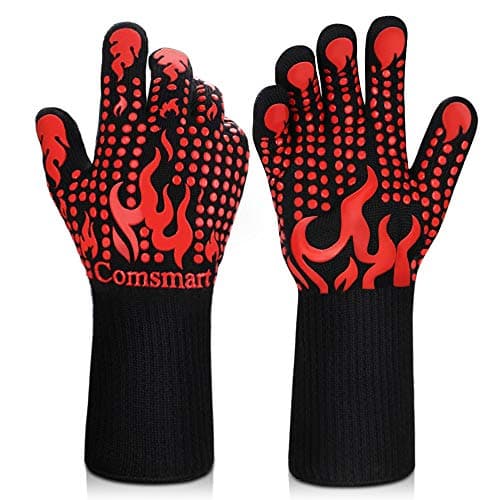
The Comsmart silicone gloves are the cheapest thing here that we would still call a real glove. Comsmart lists them as silicone, non-slip, with a long cuff, and rates them at 1472°F — the highest number on this page, which is exactly the sort of claim the section above should make you skeptical of.
What they are genuinely good at is wet and filthy work. Silicone does not absorb anything, so boiling liquids, a greasy water pan, and a scrubbing session in the sink are all comfortable in a way they are not in fabric. They rinse clean under a tap in seconds and dry instantly, which makes them the pair you will actually reach for when the job is messy. At this price they are also a reasonable way to find out whether you use grill gloves at all before spending more.
The limits are real and you should know them before ordering. The insulation is thin, whatever the rating says — these are fine for a quick grab and unpleasant for sustained contact with hot metal. Dexterity is the worst on this list: silicone is slippery-stiff, and fine work is close to impossible. And hands sweat inside them, because nothing breathes, which is a nuisance on a long summer cook.
Pros
- Completely waterproof — ideal for greasy pans and wet cleanup
- Rinses clean in seconds and dries instantly
- Non-slip texture grips smooth handles well
- Cheap enough to find out whether you use grill gloves at all
Cons
- Thin insulation despite the highest claimed rating on the page
- Worst dexterity here — fine work is essentially off the table
- Hands sweat; nothing about silicone breathes
Which Glove for Which Job
- Lifting grates, moving a drip tray, hauling a wrapped butt: insulated neoprene with a 14-inch cuff. The RAPICCA if you want the better-made version, the Aillary if you want the cheaper one.
- Probes, foil, rib bones, anything needing fingers: the fabric pitmaster glove. Keep an insulated pair nearby for the hot-metal moments it is not rated for.
- Trimming a brisket and then working the grill: the EN407 cut-resistant pair, as long as you keep them out of standing grease and liquid.
- Shredding, saucing, raw meat, portioning: cotton liner plus nitrile. Not a heat glove, and not meant to be one.
- Greasy pans, water pans, and cleanup: silicone. Waterproof, rinses instantly, and you will not care when it gets ugly.
- Cleaning out a cold grill: any of them, honestly — but nitrile over a liner keeps ash and old grease off your hands best, which is worth knowing before you tackle our how to clean a Traeger grill walkthrough.
What About Disposable Gloves on Their Own?
Plenty of people skip the liner and just buy a box of thicker disposables, and it is a legitimate approach for food handling. The Oklahoma Joe's Disposable BBQ Gloves are a 50-count box from an established grill brand and were verified in stock alongside everything else on this page — a straightforward option if you want the food-safety half without the liners.
The honest caveat is the same one that applies to the kit above, only more so: a disposable glove alone gives you effectively no heat protection. Bare nitrile against a just-rested pork butt is uncomfortable fast, and against anything metal it is nothing at all. Disposables are for cleanliness. Buy them for that, and buy something insulated for heat.
Mistakes That Get People Burned
- Using a wet glove. This is the big one. Water and grease conduct heat far better than the air trapped in a dry glove, so a soaked glove of any material is a worse glove than the one you took off. If it is wet, it is out of service until it is dry.
- Buying short cuffs for a deep grill. The burn people actually get on a pellet grill is a forearm against the grate or the lid edge, not a palm on a grate. Cuff length is protection.
- Wearing knit or leather around liquid. Fabric wicks, leather saturates. Neither belongs near a leaking foil wrap or a water pan.
- Treating the printed rating as a duration. Every glove here will get through the seconds it takes to move a pan. None will get through a minute of holding hot steel.
- Using a heat glove for food contact. Neoprene and silicone gloves that have spent a season around ash and grease do not belong in direct contact with cooked meat. That is the whole reason the nitrile-over-liner setup exists.
- Owning exactly one pair. Cooks come in pairs of tasks — one hot, one messy. Two cheap pairs beat one expensive one more often than people expect.
The Bottom Line
For most pellet grill owners, the RAPICCA BBQ Grill Gloves are the pair to buy: waterproof neoprene, a 14-inch cuff that covers the forearm you actually reach across the grate with, and enough grip to hold a grate or a wrapped brisket. If the money matters more than the finish, the Aillary 14-inch pit gloves deliver the same formula for less.
If your frustration is that gauntlets are too clumsy, the Hey Grill Hey Pitmaster Gloves are the answer — and the fact that they publish the lowest heat number here is a mark in their favor, not against them. Trimming a lot of brisket? The EN407-certified cut-resistant pair is the only one on this page whose main claim rests on a real standard, as long as you keep them dry.
And the pick most people are actually missing is the SWIFTLITE cotton-liner-and-nitrile kit. It costs very little, it is what competition cooks use, and it turns pulling a pork butt from a greasy wrestling match into a two-minute job. Pair it with the Comsmart silicone gloves for wet cleanup and you have the whole job covered for less than one premium pair.
Whichever you pick, check the live price on the button before ordering — this category discounts constantly. And if you are still filling out the setup around the grill, our best pellet grill accessories roundup covers what to buy next, while the best wireless meat thermometer guide handles the accessory that changes your cooking more than any other.
Our Top Pick: RAPICCA BBQ Grill Gloves
Waterproof 14-inch neoprene that sheds grease and covers your forearm — the pair that handles almost everything a pellet grill asks of your hands.
Explore more: Best Pellet Grill Accessories | Best Wireless Meat Thermometer | Best Smoke Tube for Pellet Grills | How to Clean a Traeger Grill | All Best-Of Guides