
How to Store Wood Pellets (and How to Tell If Yours Are Bad)
The Short Answer
Wood pellets do not go bad with age — they go bad with moisture, and they do it fast. Stored dry and sealed, a bag of hardwood cooking pellets is good for years. Left in a humid garage with the bag open, or in the grill's hopper over a wet month, the same pellets swell, crumble into sawdust and become the most common cause of auger jams and flame-outs in pellet grilling.
So the whole subject reduces to three rules: keep pellets sealed, keep them off concrete, and keep them out of the hopper between cooking sessions. Everything below is the detail behind those three rules, including how to tell whether the bag in your garage is still usable.
Why Moisture Destroys a Pellet
A cooking pellet is not a glued product. It is hardwood sawdust compressed under enough heat and pressure that the wood's own lignin melts and re-sets as a binder, which is why a good pellet has a hard, slightly glassy surface and snaps rather than bends.
Wood is hygroscopic — it pulls moisture out of the air. When a pellet absorbs water, the lignin bond releases, the compressed fibres expand, and the pellet swells and softens. Three things then happen in your grill:
- The auger jams. Swollen pellets bridge in the hopper and bind in the auger tube. The motor either stalls or keeps turning against a plug, and the cook is over. Our pellet grill auger jam guide covers clearing it.
- The fire goes out. Damp fuel burns poorly and inconsistently, and a fire pot fed sawdust rather than pellets smothers. See pellet grill flame-out.
- Ash and fines multiply. Degraded pellets produce much more ash and dust, which clogs the fire pot and means more frequent cleaning.
None of this is a grill defect, and all of it is attributed to the grill by the person it happens to. If your pellet grill has been unreliable, the pellets are the first thing to check.
Should You Leave Pellets in the Hopper?
No, not between cooking sessions. This is the part most owners get wrong, and it is understandable — the hopper is right there and it has a lid.
The problem is that a hopper is a vented box on an appliance that sits outdoors. Air moves through it, humidity moves with the air, and the pellets at the bottom rest against a metal auger tube where condensation forms on cool nights. A hopper is a fine place for pellets during a cook and for a day or two after. It is a bad place for pellets for a month, and a genuinely destructive place over a wet winter.
The routine that prevents almost all pellet problems:
- Cooking this week? Leave them. Keep the hopper lid closed and latched.
- Not cooking for a week or more? Empty the hopper back into a sealed container. Most modern grills have a hopper clean-out chute; if yours does not, a shop vac with a clean hose empties it in a minute.
- Putting the grill away for winter? Empty the hopper completely, run the auger until it stops feeding, and store the pellets indoors. This is on our maintenance schedule for a reason.
- Changing wood species? Empty first, or you will spend a cook burning the last of the mesquite you forgot about.
How to Tell If Your Pellets Are Bad
Four tests, in the order they are worth doing. Any failure means do not load them.
The snap test. Take one pellet and break it in half. A good pellet is hard and snaps cleanly with an audible crack. A compromised pellet bends, crushes, or crumbles between your fingers.
The bag-bottom test. Tip the bag and look at what is in the bottom corner. A small amount of fine dust is normal in any bag — a thick layer of sawdust means the pellets have already begun breaking down, and that dust is what packs into an auger.
The feel test. Pour a handful. Good pellets feel smooth, hard and slightly slick, and they rattle. Degraded pellets feel soft or chalky and leave dust on your hand.
The smell test. Fresh hardwood pellets smell like the wood they are made from — hickory smells like hickory. Pellets that have taken on moisture smell musty, sour or like wet cardboard. That is the clearest signal of all, and the one worth trusting.
If the pellets fail, throw them out. They cannot be dried back into usable fuel, because the compression that held them together is gone. They do make a reasonable absorbent for oil spills on a garage floor, which is the best end a ruined bag can come to.
The Storage Setup That Works
What to look for in a pellet storage solution, before any product recommendation:
- A genuine airtight seal. A gasket lid, not a loose snap-on lid. This is the only feature that actually matters.
- Capacity that matches a bag. A 20-pound or 40-pound bag should go in whole, in its own bag, without decanting.
- Something to raise it off concrete. Concrete wicks moisture continuously. A pallet, a shelf, a couple of bricks — anything that breaks contact.
- Out of direct sun and temperature swings. Heat cycling drives condensation inside a sealed container. A garage corner or a shed shelf beats a sunny patio.
- A way to keep track of species. Keep each bag inside the bin rather than pouring loose pellets in, so that in three months you still know whether that is cherry or competition blend.
Two small additions are worth the money in a humid climate: food-safe desiccant packs in the bin, and a scoop so you are not tipping a 40-pound bag over an open hopper.
Our Picks: Storage and Pellets Worth Storing
| Pick | Best for | Key specs | Price |
|---|---|---|---|
| Gamma2 Sealed Pellet Storage | The storage container itself — a real gasket seal in bag-sized capacity | Sealed gasket lid · holds a full bag · keeps humidity out of stored pellets | Listing varies by size — check the capacity against your usual bag. |
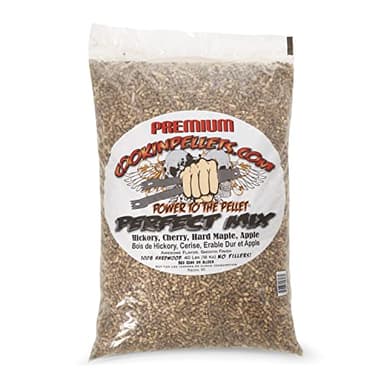
| CookinPellets Perfect Mix (40 lb) | The house pellet to buy in bulk and store properly | 40 lb · hickory, cherry, hard maple and apple · no filler wood | $41.99 · View on Amazon Price as of October 12, 2026 |
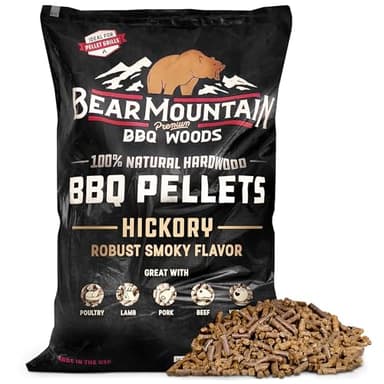
| Bear Mountain Hickory Pellets | A single assertive hardwood for beef and pork | 100% hickory hardwood · widely stocked · low moisture content claimed by the brand | |
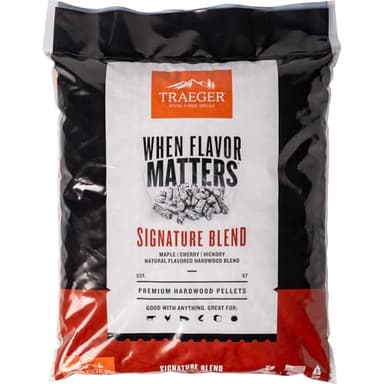
| Traeger® Signature Blend Pellets | The all-purpose bag for a Traeger owner who wants one flavor on hand | Hickory, maple and cherry blend · all-purpose across proteins | $19.99 · View on Amazon Price as of October 12, 2026 |
#ad — the price buttons are affiliate links and we may earn a commission at no extra cost to you. Prices come from Amazon as of October 12, 2026; the live Amazon price always wins. See our affiliate disclosure.
CookinPellets Perfect Mix (40 lb)
Bear Mountain Hickory Pellets
Traeger Signature Blend Pellets
Full flavor rankings are in our best wood pellets for smoking roundup, and the wood pellet flavor guide pairs species to proteins.
How Much Should You Buy at Once?
Storage capacity should decide this, not the price per pound. A pellet grill burns roughly 1-2 pounds per hour at 225°F and 3-4 pounds per hour at 400-500°F, so a single long cook can consume 15-20 pounds — the arithmetic is in our pellet consumption guide.
The sensible rule: buy what you can store sealed, plus one bag. Bulk buying only saves money if the pellets survive to be burned, and a pallet of bags sitting on a damp garage floor is a slow-motion loss. If you cook most weekends, two or three 40-pound bags in sealed bins is a comfortable supply. If you cook a few times a season, buy 20-pound bags and buy them more often.
One seasonal note: late autumn is when pellet pricing and promotion are at their best, which coincides with the broader end-of-season window covered in our when to buy a pellet grill guide. It is also exactly when humidity and temperature swings are worst in an unheated garage, so buy the storage before you buy the bulk.
Heating Pellets Are Not Cooking Pellets
Worth saying because the price difference is tempting. Heating pellets are made for pellet stoves and may contain softwoods, bark, or blended species that are fine for a furnace and not intended for food. Cooking pellets are food-grade hardwood, and the bag states the species. The storage rules are identical; the use is not. Only put cooking pellets in a grill.
Frequently Asked Questions
Do wood pellets go bad?
Not with age, only with moisture. Sealed and dry, they last years. Damp pellets swell, crumble and jam augers.
Should you leave pellets in the hopper?
Not between cooking sessions. A hopper is a vented box outdoors — empty it into a sealed container if you will not cook for a week or more, and always before winter storage.
How do you tell if wood pellets have gone bad?
Snap one (good pellets crack, bad ones bend), check the bag bottom for sawdust, feel for a smooth hard surface, and smell for musty odour.
What is the best container for storing wood pellets?
Anything genuinely airtight with a gasket lid, raised off concrete and out of direct sun. Keep pellets in their original bag inside the bin so you can still identify the wood.
Can you use pellets that got wet?
No. The compression that held them together is gone and cannot be restored by drying. Throw them out rather than risk a jam mid-cook.
The Bottom Line
Pellets are the cheapest part of pellet grilling and the most common cause of its failures, and the fix costs less than one ruined brisket: a sealed container with a gasket lid, raised off the concrete, with each bag kept intact inside it — and an empty hopper whenever the grill is not in use that week. Buy a pellet you like in a size you can store, such as the 40-pound CookinPellets Perfect Mix, and snap-test a pellet from any bag that has been sitting since last season before you load it.
Check the live price on sealed pellet storage
Sealed storage is the cheapest reliability upgrade in pellet grilling — the button reads the current Amazon price.
#ad — the buttons on this page are affiliate links and we may earn a commission at no extra cost to you. See our affiliate disclosure.
Explore more: Best Wood Pellets for Smoking | Wood Pellet Flavor Guide | Pellet Grill Auger Jam | Traeger Maintenance Schedule