
Smoked Chili on a Pellet Grill
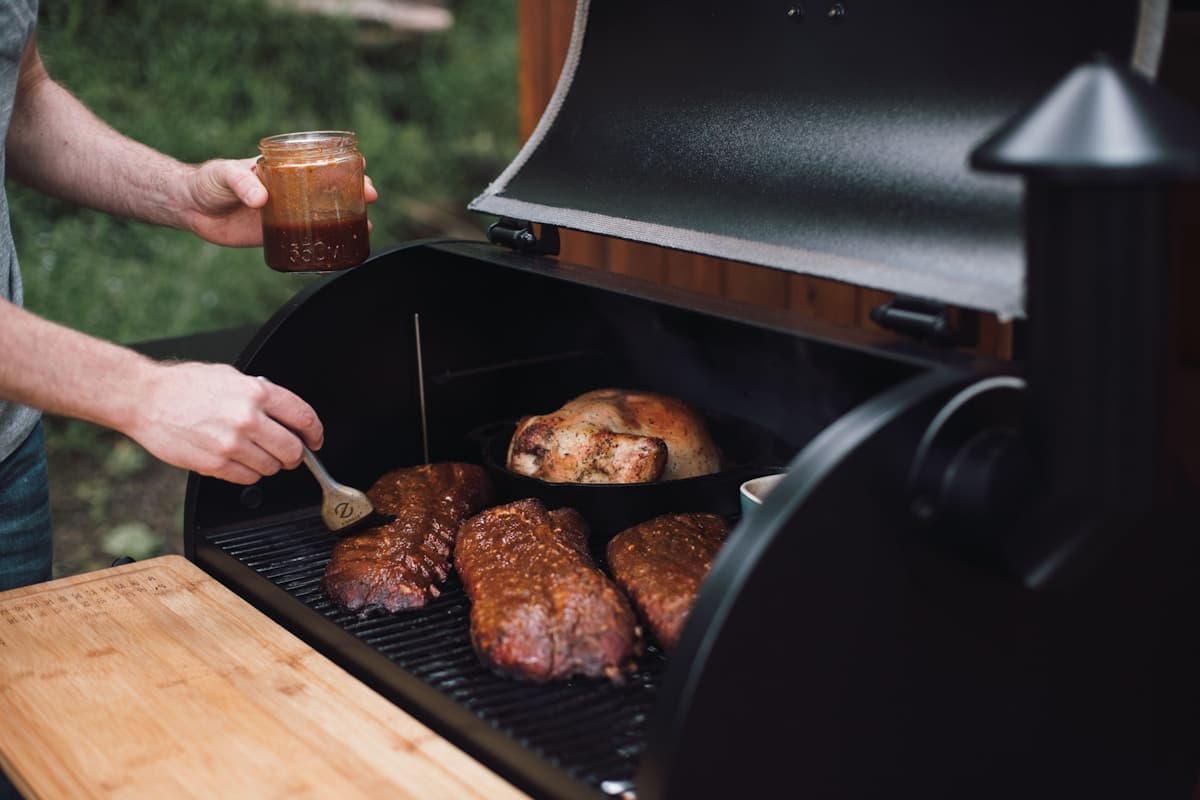
Smoked chili is what happens when you stop treating a pellet grill as a meat-only appliance. Instead of browning beef in a pan, you smoke a whole chuck roast to 165°F, cube it bark and all, and let it finish inside the pot — then simmer the whole thing uncovered on the grill so it keeps taking on smoke for another two hours.
The result tastes nothing like stovetop chili, and it gets there without a drop of liquid smoke.
Start With Chuck, Not Ground Beef
Chuck roast is the right cut. It has the marbling and connective tissue that break down into a rich, almost gelatinous chili over a long simmer, and at three pounds it is cheap enough to justify tying up the grill for three hours.
Two alternatives worth knowing:
- Leftover smoked brisket — if you have point left over from a brisket cook, cube it and skip straight to the pot. This is the best chili on the list and the reason to always cook a bigger brisket than you need.
- Ground beef — works, but you lose most of the smoke surface and the texture goes thin. If you go this route, smoke it spread out in a foil pan for 45 minutes first.
Season the roast whole, not cubed. A whole roast develops a bark; cubes just dry out.
Stage One: Smoke the Chuck to 165°F
- Fill the hopper with a strong hardwood. Beef and chili spice both stand up to real smoke, so hickory pellets or oak are the right call. Our wood pellet flavor guide covers the alternatives.
- Season the chuck heavily on all sides. A salt-pepper-garlic blend is all it needs — the chili powder and cumin come later, and a sweet BBQ rub would fight them.
- Set the grill to 250°F and smoke the roast directly on the grates for about 3 hours.
Pull it at 165°F. This trips people up, because 165°F on a chuck roast is nowhere near tender — and that is the point. The bark has set, but the meat still has plenty of breakdown left in it, and it does that breakdown in the pot while soaking up the chili. Smoke it to 203°F first and by the time the chili is done, the beef is mush.
Check the center of the roast with a fast instant-read like the ThermoWorks Thermapen ONE; a chuck roast is an irregular shape and the thick center lags well behind the edges, so one reading in the thin end will send you to the cutting board 20 minutes early.
Stage Two: Build the Base (While the Beef Smokes)
In a large Dutch oven on the stove:
- Heat 2 tbsp bacon fat or oil. Cook 1 diced onion and 1 diced poblano until soft, about 8 minutes.
- Add 1 minced jalapeño (optional) and 4 cloves minced garlic; cook 1 minute.
- Add 3 tbsp chili powder, 1 tbsp cumin, 2 tsp smoked paprika, 1 tsp oregano and toast 30 seconds until fragrant. Toasting the spices in fat is the difference between chili that tastes layered and chili that tastes dusty.
- Add 1 can (6 oz) tomato paste and cook it 2 minutes, stirring, until it darkens to brick red.
- Deglaze with a dark beer (or 1.5 cups broth), scraping the bottom clean.
- Add 1 can (28 oz) crushed tomatoes, 2 cups beef broth, and 1 tbsp brown sugar. Bring to a simmer.
Stage Three: Cube, Combine, Simmer
Pull the chuck off the grill and cut it into 1/2-inch cubes — bark and all. Do not trim the bark off; it is where the smoke flavor lives, and it dissolves into the chili over the next two hours. Add the cubes and every drop of accumulated juice to the pot.
Set the Dutch oven uncovered on the grill at 275°F and simmer 2 hours, stirring every 30 minutes.
Uncovered is deliberate. The open surface keeps absorbing smoke for the entire simmer, which is the second flavor layer that makes this recipe worth the trouble. Moving a heavy cast iron Dutch oven on and off a 275°F grill is a two-hand job — a pair of heat-resistant gloves beats folded kitchen towels on a pot this heavy.
Add drained beans during the final 30 minutes if you use them (Texas will not approve, and it is your chili). Top up with broth if it reduces further than you want.
Season at the End
Taste and adjust at the end, not the beginning. Chili concentrates dramatically over two uncovered hours, and a pot seasoned to taste at the start will be too salty at the finish.
At the end, adjust in this order: salt first, then heat (cayenne or more jalapeño), then acid (a splash of vinegar or lime), then sweetness if it needs rounding.
Rest 15 minutes off the heat. And if you can wait, make it the day before — smoked chili is genuinely better on day two, once the smoke settles into the whole pot instead of sitting on top of it.
Gear for This Recipe
What this cook actually leans on:
ThermoWorks Thermapen ONE
Bear Mountain Hickory Wood Pellets (40 lb)
Lane's SPG Salt Pepper Garlic Seasoning (12 oz)
RAPICCA Heat Resistant BBQ Gloves
Serving and Storage
Top with sharp cheddar, sour cream, diced onion, pickled jalapeños, or crushed tortilla chips. It is excellent over smoked baked potatoes and outstanding on nachos.
Storage: 5 days refrigerated, 3 months frozen. Reheat gently — a hard boil breaks the beef down further than you want.
Frequently Asked Questions
What cut of beef is best for smoked chili?
Chuck roast, for its marbling and connective tissue. Leftover smoked brisket point is even better. Ground beef works but gives you far less smoke surface.
Why smoke the beef to only 165°F before cubing it?
Because the bark has set but the meat has not gone tender yet — it finishes breaking down in the pot. Smoke it to 203°F first and the two-hour simmer turns it to mush.
How long does it take to make smoked chili?
About 5 to 5.5 hours: 3 hours to smoke the chuck at 250°F, then 2 hours simmering at 275°F. The base comes together while the beef smokes.
Do you simmer the chili on the grill or the stove?
The grill, uncovered — that is a second two-hour layer of smoke. A stovetop simmer makes good chili, just without it.
Do you need liquid smoke in smoked chili?
No. The smoke comes from the bark dissolving into the pot and from two uncovered hours in the grill.
What to Cook Next
- Smoked Chuck Roast Recipe — the same cut taken all the way to 205°F.
- Traeger® Brisket Recipe — cook a big one and turn the leftovers into this chili.
- Traeger® Smoked Mac and Cheese — the side that belongs under a ladle of this.
- Smoked Baked Potatoes — chili-topped baked potatoes, both cooked on the same grill.
Explore more: Complete Pellet Grill Smoking Guide | Wood Pellet Flavor Guide | All Recipes