
Traeger Woodridge Pro Review: Worth the Upgrade Over the Base Model?
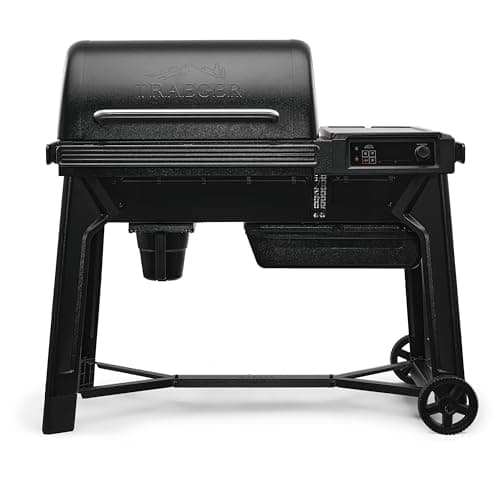
Traeger® Woodridge™ Pro Pellet Grill
Sold on Amazon
Quick Verdict: Traeger Woodridge Pro
The Traeger® Woodridge™ Pro takes everything that makes the base Woodridge a great value grill and adds the features that serious pellet grill users actually want: Super Smoke Mode, a built-in side shelf, a pellet sensor, and locking casters. At $1,149.99, you are paying $250 more than the base model for a meaningfully better cooking experience — and getting 110 additional square inches of cooking space (970 vs. 860) as a bonus.
Evaluated against its design, specifications, and the experiences owners consistently report across briskets, pulled pork, ribs, and high-heat grilling sessions, the Woodridge Pro earns a 4.5 out of 5. It is the model we recommend most frequently in the Woodridge family because the upgrades over the base are all features you will actually use, not cosmetic upsells. Super Smoke Mode alone justifies the $250 step-up for anyone who takes their smoking seriously.
Check the current price on Traeger.comKey Specifications
| Spec | Detail |
|---|---|
| Cooking Area | 970 sq in |
| Max Temperature | 500°F |
| Controller | Digital controller |
| WiFi | WiFIRE enabled (Traeger App) |
| Super Smoke | Yes |
| Meat Probe | 1 wired probe included |
| Hopper Capacity | 24 lbs |
| Grease System | EZ-Clean Grease & Ash Keg |
| Accessory System | P.A.L. Pop-And-Lock |
| Side Shelf | Yes (included) |
| Pellet Sensor | Yes |
| Casters | Locking casters |
| Warranty | 10 years limited |
| Price | $1,149.99 MSRP |
Super Smoke Mode: The Headline Upgrade
Super Smoke Mode is the single most important reason to choose the Woodridge Pro over the base Woodridge, and it is the feature that draws the clearest line between the two models.
When engaged, Super Smoke Mode manipulates the fan and auger cycle to produce significantly more smoke at low cooking temperatures without raising the grill temperature. The result is denser smoke exposure during the critical early hours of a cook — the window when meat is most receptive to absorbing smoke flavor.
The difference is noticeable. By driving denser smoke at low temperatures, Super Smoke Mode produces a deeper smoke ring and a more pronounced smoky flavor than the base Woodridge delivers on the same cook — a contrast owners who have used both models consistently describe.
Here is the honest context: Super Smoke Mode is most effective at temperatures below 225 degrees. The optimal technique is to start your cook in Super Smoke Mode at 180-200 degrees for the first 2-3 hours, then raise the temperature for the remainder of the cook. This works exceptionally well for brisket, pork butt, ribs, and anything benefiting from a long, slow smoke.
If you primarily cook at higher temperatures — burgers, chicken thighs, steaks — Super Smoke will not factor into most of your cooks. But if low-and-slow smoking is even part of your rotation, this feature pays for the $250 upgrade many times over in flavor.
970 Square Inches: Room for Serious Cooks
The Woodridge Pro provides 970 square inches of cooking space, which is 110 more than the base Woodridge's 860 square inches. That extra space translates directly into practical capacity.
Here is what 970 square inches looks like loaded up:
- Brisket cook: 1 full packer brisket + 3 racks of ribs with room to spare
- Rib feast: 6-7 racks of baby back ribs on the main grate
- Mixed cook: 2 pork butts + 2 racks of ribs simultaneously
- Chicken day: 5 spatchcocked chickens or 12+ leg quarters
- Burger night: 25+ burgers at once
For families who regularly host gatherings of 15-25 people, the 970 square inches means doing everything in a single cook session. The extra 110 square inches over the base model often makes the difference between fitting that last rack of ribs on the grate versus running a second batch.
On a space-per-dollar basis, the Woodridge Pro is competitive: $1.19 per square inch compared to $1.05 per square inch for the base Woodridge. You are paying a modest premium per square inch, but you are also getting four significant feature upgrades that the base model lacks.
Built-In Side Shelf: Practical Prep Space
The base Woodridge relies on the P.A.L. Pop-And-Lock system for accessories, including shelving. The Woodridge Pro includes a built-in side shelf as standard equipment, and it makes a noticeable difference in the cooking workflow.
The shelf is positioned next to the hopper and provides enough surface area for a cutting board, a few rubs, your thermometer, and a beverage. It is sturdy enough to handle actual prep work — slicing, seasoning, plating — without flexing or feeling unstable.
If you have ever cooked on a pellet grill without a side shelf and found yourself constantly walking back to the kitchen or balancing plates on the grill lid, the integrated shelf solves that problem. It sounds like a minor addition, but once you have it, you will not want to go back.
The P.A.L. Pop-And-Lock rails are still present on the Woodridge Pro, so you can add additional accessories beyond the included shelf. The Pro gives you the most-wanted accessory out of the box and leaves room for further customization.
Pellet Sensor: Peace of Mind on Long Cooks
Running out of pellets mid-cook is one of the most common problems in pellet grilling, and it can ruin hours of work. If the fire goes out, the grill temperature drops, and depending on when it happens, your food can end up in the temperature danger zone.
The Woodridge Pro includes a pellet sensor in the hopper that monitors pellet levels and sends alerts through the Traeger App when you are running low. Combined with the 24-pound hopper capacity and WiFIRE connectivity, this means you can confidently run overnight cooks without setting alarms to physically check the hopper.
The base Woodridge does not have this sensor. If you plan to do long, unattended smokes — especially overnight brisket or pulled pork cooks — the pellet sensor is one of those features that saves your cook at least once, and that single save is worth the price difference.
Locking Casters: Stability Where It Counts
The Woodridge Pro comes with locking casters on all wheels. This keeps the grill firmly in position during cooking and prevents unintended rolling on sloped decks, patios, or uneven surfaces.
The base Woodridge does not include locking casters. On a perfectly level surface, this is a non-issue. But decks and patios are rarely perfectly level, and a loaded pellet grill rolling even a few inches during a cook — especially when you have the lid open and are handling hot food — is a safety concern.
Locking casters also make it easier to position the grill precisely relative to your house, fence, or outdoor kitchen setup. Lock the wheels, and the grill stays exactly where you put it.
WiFIRE, EZ-Clean, and Shared Features
The Woodridge Pro shares several core features with the base Woodridge:
WiFIRE Connectivity: Full app control through the Traeger App — remote temperature adjustment, meat probe monitoring, alerts, recipe library access, and shutdown cycle control. The experience is identical to the base model.
EZ-Clean Grease & Ash Keg: The same consolidated cleanup system that makes post-cook maintenance a two-minute job. Keep drip tray liners stocked for the easiest possible cleanup.
Digital Controller: Same controller as the base Woodridge — reliable temperature management with 500-degree max capability.
P.A.L. Pop-And-Lock: The modular accessory rail system for adding shelves, hooks, and accessories.
24-lb Hopper: Identical hopper capacity to the base model — enough for 12-24 hours at low-and-slow temperatures.
Wired Meat Probe: One probe included, same as the base model. We recommend pairing it with a ThermoWorks Thermapen ONE for instant spot-checks.
10-Year Limited Warranty: Same industry-leading coverage as the base Woodridge.
Cooking Performance
Low and Slow with Super Smoke
This is where the Woodridge Pro separates itself. Start a cook in Super Smoke Mode at 180 degrees, let the meat absorb dense smoke for 2-3 hours, then bump the temperature to 225-250 for the remainder. The result is a deeper smoke ring and more complex flavor than what the base Woodridge can achieve.
This protocol suits a full packer brisket especially well, and owners who run it consistently report a significant difference: more pronounced bark development, a smoke ring that extends deeper into the meat, and an overall flavor profile with more layers. For brisket enthusiasts and competition-style cooks, this is the feature that matters.
The 970 square inches of space also means you can run larger cooks without compromising airflow. There is room for two pork butts and two racks of ribs at once, with airflow that stays even across the entire grate.
High Heat Performance
At 500 degrees max, the Woodridge Pro handles grilling tasks the same way the base model does. Burgers, steaks, chicken, and vegetables all cook well. The larger grate means you can grill for bigger groups without running batches — 25+ burgers at once is genuinely useful for cookouts.
Pellet Consumption
With the 24-pound hopper and pellet sensor, long cooks become stress-free. At 225 degrees, expect 1-2 pounds per hour. At 400-500 degrees, consumption rises to 3-4 pounds per hour. The pellet sensor provides a meaningful safety net — you will get an app alert well before the hopper runs dry.
Traeger's Signature Blend pellets are our all-purpose recommendation. For beef, Mesquite delivers bold flavor. For poultry and pork, Apple or Cherry provide a sweeter, milder smoke.
Build Quality
The Woodridge Pro uses the same powder-coated steel construction as the base model, with porcelain-enameled steel grates and robust overall build quality. The addition of locking casters gives it a more planted, premium feel when set up.
Like the base Woodridge, the Pro uses single-walled construction. It does not have the double-wall insulation found on the Ironwood series. In moderate climates, this is not a concern. If you grill year-round in harsh winters, expect higher pellet consumption in cold weather and consider whether the Ironwood's insulation is worth the significant price premium ($2,000 vs. $1,150).
A Traeger grill cover is a smart investment regardless of your climate. Protecting the finish from UV, rain, and debris extends the grill's life and keeps it looking good.
Pros
- Super Smoke Mode for enhanced wood-fired flavor
- 970 sq in of cooking space for large cooks
- Built-in side shelf for prep space
- Pellet sensor alerts you before running out
- Locking casters for stable positioning
- WiFIRE connectivity with all smart features
- 10-year limited warranty
Cons
- $250 premium over base Woodridge
- No insulated lid (Elite only)
- No side sear station (Elite only)
- Still single-walled construction
Who Should Buy the Traeger Woodridge Pro
Buy the Woodridge Pro if you:
- Want Super Smoke Mode and are willing to pay $250 for meaningfully better smoke flavor
- Plan to do long, unattended cooks and need the pellet sensor for peace of mind
- Cook for groups of 10-20 regularly and need the extra 110 sq in over the base model
- Want a side shelf included without buying accessories separately
- Want locking casters for a stable, secure setup on your deck or patio
Skip the Woodridge Pro if you:
- Primarily grill at high heat (burgers, steaks) and rarely smoke low-and-slow — the base Woodridge saves you $250
- Are on a strict budget — the base Woodridge delivers 90% of the experience for $250 less
- Want double-wall insulation for cold-weather performance — the Ironwood is the answer, but at a steep premium
- Need a side sear station or insulated lid — those features are reserved for the Woodridge Elite
Assembly and First Cook
Assembly is similar to the base Woodridge — plan for 60-90 minutes with a helper. The side shelf adds a few extra steps, but the instructions are clear. A socket set or power drill speeds things up considerably.
Season the grill before your first real cook. Our complete Traeger seasoning guide covers the process, which takes about 45 minutes and burns off manufacturing residues. This step is especially important before engaging Super Smoke Mode — you want the grill fully broken in so the smoke flavor is clean from the start.
For temperature verification, pair the built-in wired Traeger meat probe with an independent ThermoWorks Thermapen ONE. Cross-referencing ensures accuracy and food safety on every cook.
Woodridge Pro vs. Base Woodridge: The $250 Question
This is the decision most buyers are wrestling with, so here is the straightforward breakdown:
| Feature | Woodridge ($899) | Woodridge Pro ($1,149) |
|---|---|---|
| Cooking Space | 860 sq in | 970 sq in |
| Super Smoke Mode | No | Yes |
| Side Shelf | No (P.A.L. add-on) | Yes (included) |
| Pellet Sensor | No | Yes |
| Locking Casters | No | Yes |
| WiFIRE | Yes | Yes |
| EZ-Clean System | Yes | Yes |
| Hopper | 24 lbs | 24 lbs |
| Max Temp | 500°F | 500°F |
| Warranty | 10 years | 10 years |
For $250, you gain four functional upgrades and 110 square inches. If you value even one of those upgrades enough to pay extra for it, the Pro is the smarter buy because you get all four. The base Woodridge is only the better choice if you genuinely do not need any of the Pro's additions.
Read the full Woodridge vs. Woodridge Pro comparison for a deeper dive.
How the Woodridge Pro Compares Beyond the Woodridge Family
- vs. Ironwood ($1,999): The Ironwood costs $850 more and offers 616 sq in — 354 fewer square inches. It adds Smart Combustion technology, a WiFIRE touchscreen, and double-wall insulation. If you prioritize precision technology and cold-weather performance, the Ironwood is premium for a reason. If cooking space and value matter more, the Woodridge Pro wins decisively. See our full Ironwood vs Woodridge Pro comparison for the cold-weather and controller details.
- vs. Woodridge Pro Plus: The Pro Plus adds additional features above the Pro tier. Check Traeger's site for the latest Pro Plus specifications and pricing if you want to step up further within the Woodridge family.
Frequently Asked Questions
Is the Woodridge Pro worth $250 more than the base Woodridge?
For most buyers, yes. Super Smoke Mode is a genuine flavor upgrade that you will use on every low-and-slow cook. The pellet sensor prevents ruined cooks. The side shelf improves your workflow. And 110 extra square inches of cooking space means fewer compromises when loading the grill for a big cook. If you can stretch the budget, the Pro delivers meaningful value for the premium.
Does the Woodridge Pro have WiFIRE?
Yes. The Woodridge Pro includes full WiFIRE connectivity, just like the base model. You get remote temperature control, meat probe monitoring, alerts, recipe access, and shutdown control through the Traeger App.
How is the Woodridge Pro different from the Woodridge Pro Plus?
The Woodridge Pro is the middle tier in the Woodridge family. The Pro Plus sits above it with additional features. Check Traeger's current lineup for exact Pro Plus specifications — the product range may evolve. The key differentiators at the Pro level are Super Smoke Mode, side shelf, pellet sensor, and locking casters.
Can the Woodridge Pro handle cold-weather smoking?
It can, but with caveats. The Woodridge Pro uses single-walled construction, which means it is more susceptible to temperature fluctuations in cold weather and will burn through pellets faster when ambient temperatures drop. For moderate climates and occasional cold-weather cooks, it handles fine. For frequent winter smoking in sub-freezing conditions, the Ironwood's double-wall insulation is specifically designed for that use case.
What pellets work best with Super Smoke Mode?
Super Smoke Mode works with any Traeger-compatible hardwood pellets, but the effect is most noticeable with stronger wood flavors. Hickory and Mesquite produce bold, intense smoke when paired with Super Smoke Mode. For a more balanced profile, Traeger's Signature Blend is a versatile choice that pairs well with anything.
Final Verdict
The Traeger Woodridge Pro earns a 4.5 out of 5 — the highest rating in the Woodridge family. It takes the strong foundation of the base Woodridge and adds exactly the features that matter most for pellet grill enthusiasts: Super Smoke Mode, a pellet sensor, a side shelf, and locking casters. All for $250 more.
The compromises that remain — single-walled construction, no insulated lid, no side sear station — are features reserved for higher tiers in the Woodridge lineup. At $1,149.99, the Pro is priced fairly for what it delivers, and it competes favorably against grills from other brands at significantly higher price points.
For the pellet grill buyer who wants the best balance of features, cooking space, and price in Traeger's 2026 lineup, the Woodridge Pro is our top recommendation.
Get the Best of the Woodridge Family
The Traeger Woodridge Pro adds Super Smoke Mode, a pellet sensor, and 970 sq in of cooking space for $1,149. Check the latest pricing and availability.
Explore more: Ultimate Traeger Grill Guide | All Reviews | Woodridge vs. Woodridge Pro | How to Season a New Traeger