
Pellet Grill vs Electric Smoker: Which One Should You Actually Buy?
The Bottom Line
Buy a pellet grill if you want better smoke flavor and one cooker that does more than smoke. Buy an electric smoker if you want the cheapest, simplest way to put smoked food on the table. That is the whole comparison in two sentences, and most of the rest of this page is about making sure you know which of those two people you are.
The structural difference is worth understanding, because every other difference flows from it. A pellet grill burns hardwood pellets as its heat source — the fire that cooks your food is the fire that makes the smoke, continuously, for as long as the cook runs, under PID control, at anything from 180°F up to 450-600°F depending on the model. An electric smoker heats with an electric element and makes smoke separately, by smoldering wood chips in a tray, with a ceiling usually around 275°F.
So: the pellet grill smokes harder and also grills, roasts and bakes. The electric smoker costs less to buy, costs less to run, takes up less patio, and asks almost nothing of you. If you are upgrading from an electric and want the shortest path, a vertical pellet smoker keeps the cabinet shape you already know — picks are further down this page, after the comparison.
Pellet Grill vs Electric Smoker at a Glance
| Pellet grill | Electric smoker | |
|---|---|---|
| Heat source | Burning hardwood pellets | Electric heating element |
| Smoke source | The same fire that cooks | Wood chips smoldering in a tray |
| Typical temperature range | ~180-500°F (some to 600°F+) | ~100-275°F |
| Smoke intensity | Continuous, stronger | Intermittent, milder |
| Can it grill or sear? | Yes on most; direct-flame models sear hard | No |
| Needs an outlet? | Yes (auger, igniter, fan) | Yes (it is the heat source) |
| Fuel cost | ~1-2 lb pellets/hr at 225°F, 3-4 lb/hr at 400-500°F | Electricity plus a few chips |
| Purchase price | Higher | Lower |
| Cold-weather performance | Burns more pellets but holds temperature | Element can struggle to keep up |
| Footprint | Usually a wide barrel on a cart | Usually a narrow vertical cabinet |
| Cleanup | Grease tray or keg, periodic ash vacuum | Chip tray and water pan |
How Each One Actually Works
Pellet grill. A hopper holds hardwood pellets. An auger feeds them into a firepot where a hot rod ignites them, a convection fan circulates the heat and smoke around the chamber, and a controller — PID on better models — meters the auger to hold your set temperature. Because fuel and smoke are the same thing, you get wood smoke for the full duration of the cook, and you can push the fire hot enough to grill.
Electric smoker. An electric element heats the cabinet, a thermostat cycles it, and a small tray of wood chips sits near the element to smolder and make smoke. There is no combustion driving the cook, which is exactly why it is so simple and so consistent — and also why the smoke comes in bursts and the ceiling is low.
That difference shows up in the food. Electric-smoker barbecue tends to read as mildly smoked; pellet barbecue reads as wood-smoked. Neither matches a stick burner, and anyone who tells you a pellet grill tastes identical to an offset is overselling it — our pellet grill vs offset smoker comparison is honest about where pellets land on that spectrum.
Where the Electric Smoker Genuinely Wins
It would be dishonest to write this page as a one-sided pellet pitch, so here are the four cases where an electric smoker is the better purchase:
- Budget. Electric smokers start well below pellet grills, and if the choice is an entry electric smoker now or a pellet grill in two years, smoke something this summer.
- Running cost. No pellets to buy, and at 225°F a pellet grill will quietly consume 1 to 2 pounds of pellets an hour.
- Space. A vertical electric cabinet occupies a fraction of the patio a barrel-on-a-cart does.
- Jerky, sausage and cheese. Low, stable, unattended heat in a tall cabinet is exactly what an electric smoker is built for, and several pellet grills will not even run as low as you want for cold-ish smoking.
Where the Pellet Grill Wins
- Smoke flavor. Continuous combustion beats an intermittent chip tray. This is the most common reason people trade up.
- Temperature range. 450°F roasts poultry with crisp skin; 500°F bakes pizza; direct-flame models sear steak. An electric smoker does none of that.
- One cooker instead of two. Smoke the ribs Saturday, grill burgers Sunday.
- Cold weather. A pellet fire has headroom to burn harder when the air is cold — it costs you pellets, not control. A modest electric element can simply fail to reach temperature. Our cold-weather pellet grilling guide covers the winter routine.
- Capacity. Large pellet grills and vertical pellet smokers reach cooking areas most electric cabinets cannot approach.
What to Look For If You Are Moving to Pellets
Before the picks, the four specs that decide whether you will be happy:
- Temperature ceiling. 450°F is the practical minimum if crisp skin matters; 500°F+ if you want to bake or sear.
- Controller type. A PID controller holds a tighter line than a basic digital one, which is the difference between a predictable cook and a guessing game.
- Hopper size. Overnight cooks want 18 pounds or more. An 11-pound hopper means setting an alarm.
- Form factor. If you are used to an electric cabinet, a vertical pellet smoker gives you the same tall, rack-based layout. A barrel grill gives you grilling ability a cabinet cannot.
What to Buy: Four Pellet Grills Worth Upgrading To
| Pellet Smoker | Best for | Key specs | Price | |
|---|---|---|---|---|
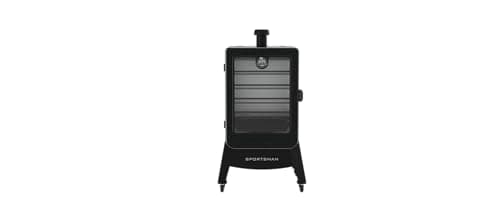
| Pit Boss Sportsman 5-Series Vertical | Closest replacement for an electric cabinet smoker — same layout, real pellet smoke | 1,679 sq in published · 60-lb hopper · 130-420°F in 5° steps · WiFi + Bluetooth · 3 probe ports · 5-yr warranty | $706as of Oct 5 | Check Price |
| Weber Smoque | Best for smoke-first cooks who want the steadiest temperatures | 594 sq in total (385 primary) · 500°F max · SmokeBoost at 180°F · 2 probes · 5-yr cookbox warranty | $699as of Oct 5 | Check Price |
| Z Grills 600D3E | Cheapest real step up — and it sears, which no electric smoker does | 750°F direct-flame searing · PID held within ~15°F in smoking-meat.com testing · 11-lb hopper · no WiFi · 3-yr warranty | $399as of Oct 5 | Check Price |
| Pit Boss Navigator 850 | Most capacity per dollar, with a direct-flame lever for grilling | 932 sq in published · 30-lb hopper · 180-500°F in 5° steps · Flame Broiler lever rated to 1,000°F · 5-yr warranty | $791as of Oct 5 | Check Price |
#ad — the Check Price buttons are affiliate links and we may earn a commission at no extra cost to you. Prices are approximate and come from our tracked price registry, last refreshed October 5, 2026; the live retailer price always wins. See our affiliate disclosure.
Pit Boss Sportsman 5-Series Vertical Pellet Smoker
Approx price — prices change often; the button shows the live price at the retailer.
Weber Smoque Pellet Smoker
Approx price — prices change often; the button shows the live price at the retailer.
Z Grills 600D3E
Approx price — prices change often; the button shows the live price at the retailer.
Pit Boss Navigator 850
Approx price — prices change often; the button shows the live price at the retailer.
Why these four. The Sportsman 5-Series is here because it is the least disruptive upgrade an electric-smoker owner can make: a tall rack-based cabinet with four locking casters, a 60-lb hopper that outlasts any overnight cook, and WiFi — though note its 420°F ceiling, which is higher than an electric but not a searing temperature. The Weber Smoque is the pick if smoke quality and steadiness are what you are chasing; Smoked BBQ Source held an overnight 210°F cook rock-steady on its XL version. The Z Grills 600D3E is the budget answer and the one that proves the point about versatility — a rotating fire-access door unlocks 750°F direct-flame searing, which is something no electric smoker can do at any price. The Pit Boss Navigator 850 is the capacity-per-dollar pick with a Flame Broiler lever for grilling.
If you want the full field rather than four, start with our best pellet grills roundup, the best vertical pellet smokers list for cabinet shapes, or how to choose a pellet grill if you would rather work through the criteria yourself.
Who Should Choose Which
Choose an electric smoker if: your budget is tight, you only want to smoke, you are short on space, you make a lot of jerky or sausage, or you want the most hands-off machine available.
Choose a pellet grill if: you want more smoke flavor, you want crisp skin and high-heat cooking, you would rather own one cooker than two, you cook in cold weather, or you need serious capacity.
Stay with what you have if: your electric smoker already makes food you are proud of and you have never once wished it got hotter. The best upgrade for that cook is a wireless meat thermometer and better wood selection, not a new machine.
How We Compared These
This is a category comparison, so it is built on how the two designs work rather than on head-to-head testing of specific units. The pellet-grill figures — temperature ranges, hopper sizes, controller behavior, warranty terms — come from manufacturer specifications, our own model reviews, and independent testing we cite by name where it exists (Smoked BBQ Source on the Weber Smoque, smoking-meat.com and GearJunkie on the Z Grills 600D3E). The pellet-consumption ranges are the figures we use site-wide. We do not sell or link electric smokers, and we are not going to invent picks for a category we have not vetted — so the only products recommended here are pellet smokers, and the electric-smoker case is argued on its merits without a buy button attached.
Frequently Asked Questions
Is a pellet grill better than an electric smoker?
For flavor and versatility, yes — continuous wood combustion and a 450-600°F ceiling against an element, a chip tray and about 275°F. The electric smoker still wins on purchase price, running cost and simplicity.
Do electric smokers give less smoke flavor than pellet grills?
Usually. A pellet grill's fire and smoke are the same event, so smoke runs the whole cook. An electric smoker smolders chips in bursts and stops when they are spent, which is why results read milder.
Can you sear or grill on an electric smoker?
No — around 275°F is the usual ceiling. That is the clearest practical gap between the two.
Which is cheaper to run, a pellet grill or an electric smoker?
The electric smoker. A pellet grill burns roughly 1-2 lb of pellets per hour at 225°F and 3-4 lb per hour at 400-500°F, so a 12-hour brisket can run through 15-20 pounds.
Do pellet grills need electricity like electric smokers?
Yes — for the auger, igniter and fan. The difference is that a pellet grill uses electricity to run the mechanism and takes its heat from burning pellets, while an electric smoker uses electricity as the heat itself.
Should I upgrade from an electric smoker to a pellet grill?
Upgrade if you have hit the ceiling: more smoke, crisp skin, higher temperatures, or one cooker that also grills. If you are happy with your food and never wish for more heat, keep what you have.
Our Recommendation
If this is your first smoker and the budget is genuinely tight, an electric smoker will make you good food this weekend and that counts for a lot. For anyone who wants real wood smoke, crisp skin, and a cooker that handles pizza and steaks as well as brisket, a pellet grill is worth the extra money and the pellets. Coming from an electric cabinet, the Pit Boss Sportsman 5-Series Vertical is the easiest switch; if you want the best-smoking barrel grill at a sane price, the Weber Smoque.
Closest Upgrade From an Electric Smoker
The Pit Boss Sportsman 5-Series Vertical keeps the cabinet layout you know — 1,679 sq in of racks, a 60-lb hopper and WiFi — with real pellet smoke.
Check Sportsman 5-Series Price#ad — the button above is an affiliate link and we may earn a commission at no extra cost to you. See our affiliate disclosure.
Explore more: Best Vertical Pellet Smokers | Pellet Grill vs Offset Smoker | Pellet Grill vs Gas Grill | How Many Pellets Does a Pellet Grill Use? | How to Choose a Pellet Grill | Best Pellet Grills