
Pellet Grill vs Offset Smoker: Which Should You Actually Buy?
Pellet Grill vs Offset Smoker: The Bottom Line
This comparison gets argued badly almost everywhere, usually because one side is defending flavor and the other is defending convenience as if those were the only two variables. They are not. The real question is how much of your attention the smoker gets to claim, and what happens to your food when it does not get enough.
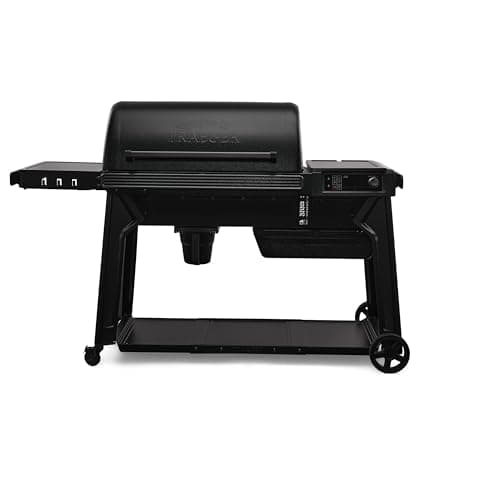
Pellet grills meter compressed hardwood pellets into a fan-fed fire pot, with a digital controller holding your set temperature automatically. They smoke, roast, bake, and grill, they run unattended overnight, and they produce good food from the very first cook. A modern grill like the Traeger® Woodridge™ Pro will hold a low temperature through the night and message your phone when the meat is ready.
Offset smokers burn whole wood splits in a firebox mounted to the side of the cook chamber, drawing heat and smoke across the food and out a stack. They produce the deepest, most traditional barbecue flavor available to a backyard cook — and they demand active fire management for the entire length of the cook, which on a brisket means most of a day and night.
Our take: the offset has the higher flavor ceiling and the much lower floor. It rewards skill and punishes inattention, and a cheap thin-walled one punishes you regardless of skill. The pellet grill gives up some of the ceiling in exchange for consistency, sleep, and a learning curve you can actually climb. For most people asking this question, that trade is worth making — and the gap is narrower than it was five years ago.
How Each One Actually Works
Nearly every practical difference between these two comes from one design decision: who controls the fire.
A pellet grill is a closed loop. A controller reads a temperature probe in the cook chamber, an auger feeds pellets into a fire pot at whatever rate holds your setpoint, and an induction fan supplies combustion air. You set a number. The machine chases it. Because the fan keeps that fire well supplied with oxygen, it burns clean — which is exactly why pellet grills are so consistent and exactly why they produce less smoke flavor than a fire that is working harder.
An offset smoker is an open loop with you inside it. A fire of wood splits burns on a coal bed in a side firebox. Air enters through an intake vent, the fire's heat and smoke are drawn through the cook chamber, and the stack pulls everything out the far end. Nothing is automated. You control temperature by how much wood you add, how big the splits are, how established the coal bed is, and how far the intake and stack dampers are open. Reverse-flow designs add a baffle plate that routes heat under the cooking surface to the far end before it travels back across the food, which evens out the temperature gradient at the cost of some responsiveness.
That gradient is worth understanding before you buy. In a traditional offset, the end of the chamber nearest the firebox runs hotter than the far end — always, by design. Experienced cooks treat that as a feature and use it as a built-in temperature zone map. Beginners usually discover it by burning one end of a rack of ribs.
The Flavor Question, Honestly
The offset wins this. It is worth saying plainly rather than dancing around it, because a guide that claims otherwise is not being straight with you.
Whole wood splits burning over a coal bed produce a fuller, more layered smoke than fine pellets fed into a fan-fed pot. There is more going on chemically, the fire is doing more work, and the result on the bark of a brisket is something pellet grills approach but do not equal. If you have eaten barbecue off a well-run stick burner and off a pellet grill back to back, you already know this.
Two enormous caveats belong immediately next to that.
First, the offset's floor is far below the pellet grill's. Clean fire is thin blue smoke you can barely see. A starved, smoldering fire produces thick grey or white smoke that deposits creosote and makes food genuinely unpleasant — acrid, bitter, and worse than anything a pellet grill will ever hand you. Learning to run a clean fire takes real practice, and until you have it, the flavor advantage runs backwards.
Second, the gap is narrower than the argument suggests, because pellet grills have three ways to add smoke:
- A smoke tube. A perforated tube of smoldering pellets that burns independently of the controller, so it keeps producing smoke at temperatures where the grill's own fire has gone clean. It is the cheapest meaningful upgrade in the entire category — our best smoke tubes for pellet grills roundup covers which ones are worth it, and the LIZZQ tube is the one we point most people at.
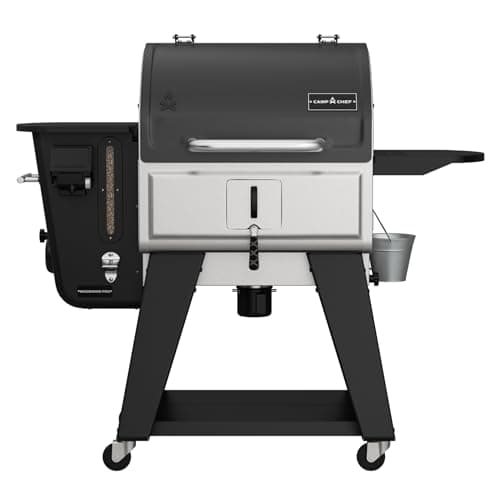
- A dedicated wood-burning compartment. The Camp Chef Woodwind Pro WiFi 24 adds a Smoke Box that burns actual wood chunks alongside the pellet fire, which is the closest a set-and-forget grill gets to offset character. Our Camp Chef Woodwind 24 review goes through what it does and does not deliver.
- An enhanced smoke mode. Most brands now offer a low-temperature setting that increases smoke output during the early hours when meat is actually absorbing it. The Woodridge Pro's Super Smoke Mode is the best-known example.
Pellet choice matters too, and it is the cheapest variable of all — hickory and mesquite push harder than fruitwoods. Our wood pellet flavor guide breaks down which wood suits which protein.
Fire Management: The Real Difference
This is the deciding factor for most buyers, and it is not close.
On an offset you are not "checking on it." You are adding splits on a cadence measured in tens of minutes rather than hours, watching the color of the smoke leaving the stack, adjusting the intake as conditions change, and maintaining a coal bed hot enough that each new split catches cleanly instead of smoldering. Wind picks up, the temperature moves. The sun goes down, the temperature moves. You respond to all of it.
On a pellet grill you set a number and go inside. An overnight brisket runs while you sleep. Most modern grills add WiFi so your phone tells you when the internal temperature hits your target — the practical difference between a 14-hour shift and a 14-hour wait.
Neither of those is objectively better. Some people find tending a fire genuinely restorative, and the craft is a real part of why they cook barbecue at all. Other people want dinner. The mistake is buying the first thing while wanting the second, which is by far the most common regret in this category.
The Gauge Problem: Why Cheap Offsets Disappoint
If you take one practical thing from this page, take this: an inexpensive offset is not a cheaper version of a good offset. It is a different and much harder machine to run.
Steel thickness is the whole story. Heavy-gauge steel carries thermal mass, and thermal mass is what buffers a live fire's natural swings — it absorbs the spike when a fresh split catches and releases heat as the fire ebbs. Thin steel has almost none of that. It sheds heat fast, reacts to every gust of wind and drop in air temperature, and on budget builds often leaks at the lid and firebox seams, which wrecks the draft the whole design depends on.
The consequence is backwards from what a beginner expects. The cheap offset demands more skill and more attention than the expensive one, because you are constantly correcting swings the steel should have absorbed for you. This is why serious offsets are heavy and cost real money, and why so many thin-wall backyard offsets end up as planters after two seasons.
The honest comparison, then, is not "pellet grill vs offset." It is:
- Entry budget: a competent pellet grill versus a thin-wall offset. The pellet grill wins clearly on food quality and on frustration.
- Serious budget: a premium pellet grill versus a heavy-gauge offset. Now it is a genuine choice about how you want to spend your time.
Temperature Control and Consistency
A pellet grill's controller is a feedback loop, and the good ones hold a tight band around the setpoint across a long cook. That consistency is the reason pellet-grilled food is so repeatable: the same recipe, the same setting, and the same result next month.
An offset holds temperature the way a skilled cook holds it. A heavy smoker in the hands of someone experienced can run remarkably steady for hours. The same smoker with a beginner will sawtooth — a spike when a split catches, a slow decline, another spike. Every one of those swings changes how the meat renders.
Weather affects both, but not equally. Cold and wind pull heat out of any smoker; a pellet grill responds by burning more pellets and holding its number, while an offset responds by making you work harder. Our pellet grill cold weather guide covers what actually helps when the temperature drops.
Cost: Purchase, Fuel, and Time
Purchase price favors the pellet grill at every level that matters to a home cook, once you exclude thin-wall offsets from consideration on quality grounds. A good pellet grill sits in the mid-range of outdoor cooking equipment; a heavy-gauge offset built to run well starts higher and climbs steeply. Check the live price on any product button here before you commit — this category moves constantly and we deliberately keep numbers out of the prose.
Fuel is closer than people assume. Pellets are convenient and priced per bag; wood splits are cheap or free if you have a source, expensive and inconvenient if you do not. An offset burns a lot of wood over a long cook, and seasoned splits of the right species are not always easy to buy. Our best wood pellets for smoking roundup covers the pellet side of that math.
Time is the cost nobody puts in the spreadsheet and the one that decides most purchases. An offset asks for your whole day. Whether that is a cost or the entire point is a personal question, and it is genuinely the one to answer before you spend anything.
Versatility
The pellet grill is meaningfully more versatile. It smokes, roasts, bakes, and grills, and it does all of it at a set temperature — which means it doubles as an outdoor oven for everything from smoked mac and cheese to a whole turkey. Its historical weakness was searing, and even that has changed: several current models now put real flame on the grate.
An offset is a specialist. It smokes superbly, the firebox will grill directly if the design allows, and that is largely the job. Nobody buys an offset to bake.
Who Should Choose Which
Buy a pellet grill if:
- You want reliably good barbecue without organizing your day around the fire.
- Overnight cooks matter to you and sleeping through them matters more.
- You are new to smoking and want to learn seasoning, wrapping, and doneness before fire management — our best pellet grills for beginners guide is the place to start.
- You want one machine that also roasts, bakes, and grills.
- Your budget lands where the only offsets available are thin-walled.
Buy an offset smoker if:
- The craft of running a fire is part of what you want out of cooking, not an obstacle to it.
- You want the highest flavor ceiling available in a backyard and will put in the practice to reach it.
- You can afford heavy-gauge steel, or you already have a source for seasoned splits.
- Your cooks are daytime events you will be present for anyway.
Own both if you have the space and the budget. Plenty of experienced cooks run a pellet grill for weeknights and long unattended overnight cooks, and fire up the offset when the cook itself is the plan for the day.
How to Get Offset-Style Results From a Pellet Grill
If you have decided on a pellet grill but the flavor argument still nags, these are the levers that actually move the needle:
- Run a smoke tube on long cooks. Light it properly — a torch, a real flame, and several minutes to build an ember bed before you blow it out. This single accessory closes more of the gap than anything else at the price.
- Smoke low first. Meat takes on most of its smoke early and cold. Start at 180-225°F for the first few hours before moving up.
- Pick a stronger wood. Hickory and mesquite carry further than apple or cherry on beef and pork.
- Do not over-smoke. More is not better — this is exactly the mistake that ruins offset cooks too. Once meat stops taking smoke, additional smoke only adds bitterness.
- Consider a grill with a wood compartment if smoke flavor is your top priority and you are still shopping. That is the Woodwind Pro's whole argument.
Our complete pellet grill smoking guide puts all of that in the context of a full cook, and the best pellet grills for brisket roundup covers the models that handle the long ones best.
How We Compared These
We do not run a lab, and we are not going to pretend we ran instrumented tests on both platforms. This comparison is built from what each design does mechanically, the specifications manufacturers publish, verified owner feedback, and real experience running pellet grills. The offset material here is deliberately kept to what is true of the design itself — draft, thermal mass, fire management, the firebox gradient — rather than claims about specific models we have not verified.
Every pellet grill named on this page was confirmed live and buyable on September 7, 2026, and prices shown on the buttons come from our price pipeline rather than from this article's text, so nothing here anchors a number that has since moved.
Frequently Asked Questions
Does an offset smoker really taste better?
A well-run one, yes — a fuller, more layered smoke than pellets produce. A badly run one tastes considerably worse than any competent pellet grill, because a starved fire deposits creosote. The offset's ceiling is higher and its floor is much lower.
How often do you feed an offset smoker?
On a cadence measured in tens of minutes rather than hours, plus continuous attention to the fire's character and the dampers. That is the core difference from a pellet grill, where an auger and controller do it for you overnight.
Is a cheap offset smoker worth buying?
Generally no. Thin steel has little thermal mass, swings with every gust of wind, and often leaks at the seams — so it demands more skill than an expensive offset, not less. At entry budgets a pellet grill will produce better food with far less frustration.
Can I add more smoke to a pellet grill?
Yes. A smoke tube is the cheapest and most effective option, a stronger wood like hickory or mesquite helps, and smoking low for the first few hours matters more than anything you bolt on.
Which holds temperature better?
A pellet grill, without qualification — that is what a closed-loop controller is for. A heavy offset in experienced hands runs impressively steady, but it is the cook holding that line, not the machine.
Our Recommendation
For most people asking this question, the pellet grill is the right buy. Not because the offset is worse — its ceiling is genuinely higher — but because the offset's advantage is only available to someone willing to spend the day earning it, on steel heavy enough to be worth the effort. If that is not the weekend you are picturing, the offset will disappoint you in a way the pellet grill will not.
If smoke flavor is what is holding you back, buy the flavor rather than the fire: a smoke tube on any grill you already own, or the Camp Chef Woodwind Pro 24 with its wood-burning Smoke Box if you are still shopping and smoke is the priority. If you want the Traeger® app ecosystem and Super Smoke, the Woodridge Pro is the mainstream pick.
And if you read all of the above and still want the stick burner — buy the heaviest one you can afford, not the cheapest one you can find. That single decision separates the people who love their offset from the people who sell it.
If the other cooker on your shortlist is ceramic rather than steel, pellet grill vs kamado covers that comparison.
Explore more: Pellet Grill vs Charcoal | Pellet Grill vs Gas Grill | Pellet Grill vs Electric Smoker | Best Pellet Grills | Best Smoke Tubes | All Comparisons