
Pellet Grill Covers: The Complete Fitment and Buying Guide (2026)
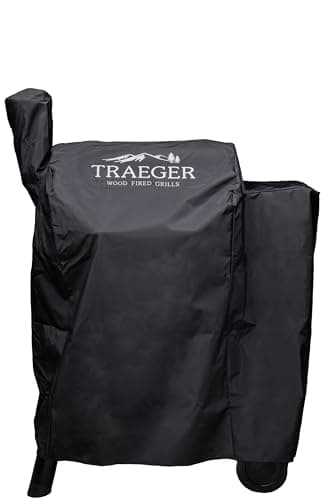
A pellet grill cover is the least interesting thing you will ever buy for your grill, and close to the most important. It is also the accessory people most reliably get wrong — not by buying a bad one, but by buying one that does not fit, or by using a good one in a way that causes the exact damage it was meant to prevent.
This guide is organized the way people actually shop for covers: by what your grill is. Every cover named below was verified live and in stock in August 2026, and every specification quoted comes from what the manufacturer or seller publishes on the listing itself. We have deliberately kept prices out of the prose — this category discounts constantly and a number written today is wrong by next month. Follow any link to see what it currently costs.
Why a Cover Matters More on a Pellet Grill Than a Gas Grill
Gas grill owners can be casual about weather. A gas grill is a steel box with burners and a valve; leave it uncovered through a wet winter and you get surface rust and a grubby lid.
A pellet grill is a different machine. It is an outdoor appliance with a circuit board, an auger motor, a combustion fan, a temperature probe, and an igniter — and it carries its own fuel in an open-topped hopper. That changes the stakes in two specific ways:
- Water and electronics. The controller is the brain of the grill and the single most expensive part to replace. Moisture that works its way into the controller housing or the wiring loom behind it produces exactly the symptoms owners spend weeks chasing: erratic readings, ignition failures, error codes that come and go with the weather. If your grill is already behaving strangely, our error code guides are the place to start, but prevention is cheaper than diagnosis.
- Water and pellets. Wood pellets are compressed sawdust held together by the wood's own lignin. Add moisture and they swell, crumble, and revert to sawdust — which packs the auger tube and starves the fire pot. A jammed auger is a genuinely miserable repair, and it is nearly always a moisture story. Our auger jam guide walks through clearing one.
A cover is the cheapest insurance against both.
What Actually Separates a Good Cover From a Bad One
Four things matter. The marketing on the box mostly discusses the fifth.
Fitment is the whole ballgame. This is not a category where "close enough" works. Pellet grills have an awkward outline — a hopper bolted to one side, usually a chimney, often a front shelf or a sear box hanging off the other end. A cover cut for a different model either will not close around the hopper or hangs loose everywhere it does close. Loose is the failure mode that matters: a flapping cover abrades the lid finish in wind, works itself off over a week of gusts, and sags into pockets that hold standing water directly against the metal it was supposed to protect. Before you buy anything below, confirm your grill's model number — not just the brand, and not just "the 850."
Denier tells you about yarn, not quality. You will see 600D and 1000D quoted constantly. Denier is the weight in grams of 9,000 meters of the yarn used to weave the fabric, so a 1000D cover genuinely is woven from thicker stuff and generally resists abrasion and tearing better. But denier says nothing about the waterproof coating on the underside, the UV inhibitors in the fabric, or whether the seams are stitched and sealed — and in practice those are what fail first. A well-made 600D cover with good seams will outlive a poorly-made 1000D one. Use denier to break a tie, not to make the decision.
"Waterproof" and "water-resistant" are not the same claim. Most covers in this category are a polyester shell with a coated backing. That combination sheds rain well and is genuinely fine for the overwhelming majority of owners. What defeats it is not the fabric but the geometry: water that collects in a sagging panel will find the stitch holes eventually, because thread holes are holes. This is another argument for a properly-fitted cover — a taut cover sheds, a slack one ponds.
UV is what actually kills covers. Owners expect covers to die of rain. In practice, in sunny climates, they die of sunlight: the fabric chalks, stiffens, and starts shedding its coating, usually on the one side that faces the afternoon sun. Listings that specifically claim UV or fade resistance are worth a small premium if your grill lives in the open. If it lives under a deck roof or in shade, this matters much less.
Straps, vents, and handles are the difference between using it and not using it. A cover you have to fight is a cover you will skip on a drizzly evening. Bottom straps or a drawcord keep it on in wind. Handles make it a two-second job. Vents let trapped humidity escape — which is the one design feature that addresses the failure mode we discuss at the end of this guide.
Find Your Grill
| Your grill | Cover that fits it |
|---|---|
| Traeger® Pro 575 / Pro 22 | Traeger BAC503 full-length |
| Traeger Pro 780 | Traeger BAC504 full-length |
| Traeger Timberline 850 / Ironwood 650 / Silverton 620 | ZJYWSCH full-length cover |
| Pit Boss 820 Deluxe / Pro 850 (and Z Grills 700) | Comnova 600D cover |
| Pit Boss 850 / 820, budget option | QuliMetal cover |
| Pit Boss Austin XL | GuardKove 1000D cover |
| Camp Chef Woodwind 24 / Woodwind Pro 24 / SmokePro SG24 / DLX 24 | Comnova 600D Camp Chef cover |
| recteq Flagship 1100 / RT-700 / RT-1250 | QuliMetal recteq cover |
| Z Grills 700D / 450A / 550B series | Heavy-duty 600D Z Grills cover |
The Picks, By Brand
Traeger
Traeger® sells covers by model number, and the numbers are not interchangeable. The BAC503 is the full-length cover for the Pro 575 and Pro 22; the BAC504 is the equivalent for the Pro 780. Buying the wrong one of those two is the single most common cover mistake we see, because the model names are one digit apart and the grills are not the same size.
The case for the OEM covers is straightforward: they are cut for the exact grill, they carry Traeger's own branding and support, and the fit is not a compromise. The honest case against them is price. Traeger's covers sit well above the third-party covers cut for the same silhouette, and Traeger does not publish a denier rating for them — so you are paying for guaranteed fitment and the brand relationship, not for a documented fabric advantage.
Cons: noticeably more expensive than third-party alternatives for the same grill; no published fabric specification; strictly model-locked, so the 575 cover will not serve a 780.
For the Timberline 850, Ironwood 650, and Silverton 620, the ZJYWSCH full-length cover is the value option, sold as a waterproof replacement for Traeger's own BAC359, BAC505, and BAC592 parts.
Cons: one pattern covering three grills of different sizes means the fit is a compromise on at least one of them — expect it to be more generous on the smaller models than a dedicated cover would be. It is also a seller-brand product rather than a manufacturer part, so long-term replacement availability is less certain.
Pit Boss
The Comnova 600D cover is the sensible default for the Pit Boss 820 Deluxe and Pro 850, and the listing also covers the Z Grills 700 — those two grills share a very similar barrel-and-hopper footprint. It states 600D fabric and a waterproof, heavy-duty construction.
Cons: 600D rather than the thicker 1000D fabric some rivals use, and a fitment list broad enough that it is cut to accommodate a family rather than one exact grill.
If you want the cheapest thing that works, the QuliMetal cover fits the Pit Boss 850/820 and Z Grills 700 series and is the lowest-priced pick in this guide.
Cons: the listing does not state a denier rating, so you are buying on price and fitment rather than on a documented fabric spec.
Owners of the big Austin XL should look at the GuardKove 1000D cover — the only pick here that states the heavier 1000D fabric.
Cons: Austin XL only, so it is no help if you own a smaller Pit Boss; and heavier fabric is stiffer to wrestle over a grill in cold weather, which is a genuine everyday annoyance rather than a defect.
Camp Chef
The Comnova 600D Camp Chef cover fits the 24-inch family — Woodwind 24, Woodwind Pro 24, PG24, PG24WWSB, SmokePro SG24, and DLX 24 — in 600D waterproof fabric.
Cons, and this one is important: this is the cover for 24-series grills without a Sidekick attachment. If your Camp Chef has a Sidekick sear box or flat top bolted to the side, this cover will not close over it and you need the separate with-Sidekick version instead. Check your grill before ordering. Our Camp Chef Woodwind 24 review covers which configurations ship with the Sidekick.
recteq
The QuliMetal recteq cover is cut for the large end of the recteq range — the Flagship 1100, RT-700, and RT-1250.
Cons: it is sized for the big cabinet-style grills, so it is the wrong cover for an RT-590 or a Deck Boss 590, which take a separate, smaller pattern. If you own the 590, do not order this one hoping it cinches down. Our recteq RT-590 review and Flagship 1600 review cover the size difference between those families.
Z Grills
The heavy-duty 600D Z Grills cover spans the 700D series, the 450 and 550 series (ZPG-450A, ZPG-550B), and the 10502B, and specifically claims UV fade resistance — worth having if the grill sits in open sun.
Cons: covering that many models with one pattern means it is cut for the largest of them, so on a 450A it will be distinctly roomy. Roomy is tolerable if you use the straps; it is a problem if you leave it slack in a windy spot.
OEM vs Third-Party: The Honest Verdict
There is no universal answer, but there is a reliable test: look at the size of the price gap for your specific grill.
Where the gap is small, buy the manufacturer's cover. Guaranteed fitment is worth a modest premium, and you have one company to talk to if a seam fails.
Where the manufacturer's cover costs several times a third-party cover cut for the same silhouette — which is the situation on most mainstream pellet grills today — the third-party cover is the better buy, and it is not close. These grills are common enough that multiple manufacturers have measured them properly. Buy the third-party cover, use the straps, and put the difference toward pellets or a wireless meat thermometer.
The exception worth naming: if your grill has genuinely unusual geometry — a sidekick, an unusual chimney, a bolt-on shelf — fitment stops being a commodity and the manufacturer's cover becomes worth more.
How to Use a Cover Without Causing the Damage It Prevents
A cover used badly traps moisture instead of excluding it, and trapped moisture rusts a grill faster than honest rain does. Four rules:
- Never cover a warm grill. Residual heat drives moisture out of the metal and the grease; a sealed cover condenses it straight back onto the surfaces. Wait until the grill is fully cool — which after a long cook means hours, not minutes.
- Do not treat the cover as a reason to leave pellets in the hopper. A cover slows humidity; it does not exclude it, and pellets pull moisture from the air whether or not it rains. Store pellets sealed and separate, and empty the hopper before any long layoff. This is the same discipline that keeps augers clear.
- Let it breathe periodically. On a dry day, pull the cover off for a few hours. If you live somewhere humid, prioritize a cover with vents.
- Clean before you cover for the season. Grease left on the grates and in the barrel goes rancid and attracts pests under a cover all winter. Our cleaning guide and maintenance schedule cover the end-of-season routine, and the cold weather guide handles grills that keep working through winter.
The Bottom Line
Buy for your exact model, not your brand. That one rule prevents most of the disappointment in this category.
For Traeger owners, the OEM BAC503 and BAC504 are the no-thought answers for the Pro 575 and Pro 780 if you are comfortable with the price; Timberline and Ironwood owners get better value from the ZJYWSCH cover. Pit Boss owners are well served by the Comnova 600D, with the QuliMetal as the budget pick and the GuardKove 1000D for the Austin XL. Camp Chef 24-series owners want the Comnova — after checking whether they have a Sidekick. recteq Flagship and RT-700 owners want the QuliMetal, and Z Grills owners the UV-resistant 600D cover.
Then use it properly: cool grill, dry pellets stored elsewhere, straps done up, and an occasional airing. A cover is not a force field — it is a maintenance habit with fabric attached. If you are still assembling the rest of the setup, the best pellet grill accessories roundup covers what to buy next, and the complete pellet grill smoking guide puts all of it in the context of actually cooking.
Most-Bought Pick: Traeger BAC503 Full-Length Cover
The OEM full-length cover for the Traeger Pro 575 and Pro 22 — guaranteed fitment on the most common Traeger in backyards today.
Explore more: Best Pellet Grill Accessories | Best Traeger Accessories | Traeger Maintenance Schedule | Cold Weather Guide | Complete Pellet Grill Smoking Guide | All Guides