
Best BBQ Rub for Brisket in 2026: 5 Store-Bought Bottles That Build Real Bark
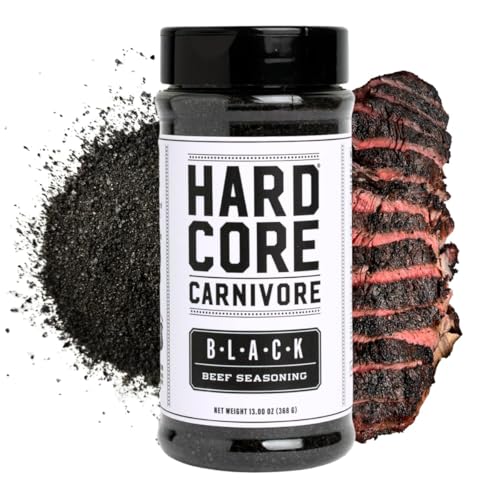
The verdict: for brisket, buy Hardcore Carnivore Black — a beef-specific, savory blend whose whole purpose is the near-black bark a 12-hour cook is judged on. It is the right bottle for the cook who wants their brisket to look like a Texas barbecue joint's. If you want that classic Central Texas flavor instead, Lane's SPG is salt, pepper and garlic in sane proportions for about the same money. Budget pick: the Traeger® Rub with Garlic & Chili Pepper is the cheapest bottle here that will still give you a respectable bark on a packer.
This page is about bottles you can buy, which is a different question from the one our brisket rub recipe answers. If you would rather mix salt and pepper yourself — and on brisket, that is a genuinely strong option — start there instead. If you want a bottle in the cabinet, read on.
Every pick below is a rub we have listed and tracked on this site, every price in the table comes from our live price layer with an "as of" date rather than a number typed into the prose, and every bottle is a real listing rather than a slot we invented to round the list out to five.
Quick Picks: Best BBQ Rubs for Brisket
| Rub | Best for | Key specs | Price |
|---|---|---|---|
| 1. Hardcore Carnivore Black | Best overall — for the cook who wants near-black bark on a packer | 13 oz · beef-specific · savory, not sugar-forward · activated charcoal for color | $14.99 · View on Amazon Price as of November 7, 2026 |
| 2. Lane's SPG | Best Texas-style — salt, pepper and garlic and nothing to burn | 12 oz · salt-pepper-garlic · no sugar · safe at any cook temperature | $14.99 · View on Amazon Price as of November 7, 2026 |
| 3. Killer Hogs The BBQ Rub | Best sweet layer — the competition look, if you cook at the low end | 11 oz · sugar-forward competition blend · published ingredient list · mahogany color | $13.49 · View on Amazon Price as of November 7, 2026 |
| 4. Bad Byron's Butt Rub | Best big bottle — multiple briskets a year with no sugar in the mix | 26 oz · no sugar · best cost per ounce here · also fine on pork and poultry | $20.99 · View on Amazon Price as of November 7, 2026 |
| 5. Traeger Rub with Garlic & Chili Pepper | Budget pick — the cheapest bottle here that still builds a decent crust | Garlic and chili pepper base · widely stocked · mild heat | $9.99 · View on Amazon Price as of November 7, 2026 |
#ad — the price buttons are affiliate links and we may earn a commission at no extra cost to you. Prices come from Amazon as of November 7, 2026; the live Amazon price always wins. See our affiliate disclosure.
How We Chose
These rankings are research-based. We read the published ingredient lists, we weigh bottle size against price to get cost per ounce, we check the listing is live and stocked before a bottle goes on a list, and we lean on the patterns in verified owner reviews rather than on our own imagined taste test. We do not run a test kitchen and we do not claim to.
Four things decide the order for brisket specifically:
1. Sugar content. Brisket is the longest cook most people ever do on a pellet grill. Sugar caramelizes and then scorches well below searing temperature, so a sugar-forward rub on a 12-hour cook is a choice you make deliberately, not a default. Three of the five picks below are sugar-free.
2. Grind and texture. Bark is a physical structure, not just a flavor. Coarse salt and coarse pepper sit up on the surface and give the smoke and the rendering fat something to build on. Fine powders bake flat.
3. Beef-appropriate flavor. Brisket is a big, mineral, fatty cut. It wants pepper, salt, garlic, maybe chili and coffee notes. It does not want the fruit-and-honey profile that makes a rib rub good.
4. Cost per ounce, because brisket eats rub. A packer takes half a cup or more. A 26-ounce bottle at a sensible price is a different proposition from an 11-ounce specialty bottle, and we say which is which.
1. Hardcore Carnivore Black — Best for Brisket Overall
Hardcore Carnivore Black
Hardcore Carnivore Black is the one bottle on this page that was designed around beef rather than adapted to it. It is a savory blend — salt, pepper, garlic and spices rather than sugar first — and the ingredient everyone talks about is activated charcoal, which is in there for color. On a long cook it produces the deep, almost black crust that reads as "serious brisket" in a photograph and, more usefully, means you can see where your bark has set and where it has not.
Who it is for: the cook doing two or three briskets a year who wants them to look and taste like a Texas joint's without building a spice cabinet. It is also our pick for beef ribs and chuck roast, which behave much like brisket on a pellet grill.
The honest caveats: it is a specialty bottle rather than an everyday all-rounder, the black color surprises people the first time they open it, and because it is savory it will not give you the sweet mahogany finish a competition cook is after.
Pros
- Built specifically for beef — salt, pepper, garlic and spice rather than sugar first
- Activated charcoal drives the near-black bark that a long brisket cook is judged on
- No sugar to scorch across a 10-14 hour cook
- Works just as well on beef ribs, chuck roast and tri-tip
Cons
- A specialty beef bottle, not an all-purpose rub for the whole cabinet
- The black color looks alarming before it cooks
- No sweetness at all — wrong bottle if you want a competition-style finish
- 13 oz, so cost per ounce is higher than the big-bottle picks
2. Lane's SPG — Best Texas-Style
Lane's SPG
Lane's SPG is salt, pepper and garlic — the Central Texas formula, pre-mixed in proportions that do not oversalt. There is no sugar in it at all, which makes it the most forgiving rub here: it is as happy on a 275°F brisket as it is on a steak over a direct-flame sear zone, and it will not go bitter if your grill runs hot for an hour while you sleep.
Who it is for: anyone who believes brisket needs two ingredients and does not want to buy, grind and store them separately. It is also the right answer if you cook hot and fast, or if your pellet grill has a sear mode you actually use.
The caveats are the flip side of the virtue: there is nothing clever in the bottle, so you are paying for convenience and consistency rather than a blend you could not make yourself. Our brisket rub recipe is the DIY version if that bothers you.
Pros
- No sugar — safe at any temperature, including a direct-flame sear
- The classic Central Texas profile without mixing anything
- Doubles as an everyday steak and burger seasoning
- 12 oz bottle at a sensible price per ounce
Cons
- You are paying for a blend you could mix at home for less
- No sweetness or color-building ingredients
- Salt-forward enough that a heavy hand shows on a lean flat
3. Killer Hogs The BBQ Rub — Best Sweet Competition Layer
Killer Hogs The BBQ Rub
Killer Hogs The BBQ Rub is the competition blend from Malcom Reed's Killer Hogs team, and the brand publishes its full ingredient list: brown sugar and sugar first, then paprika, salt, red and black pepper, garlic, orange peel and natural flavor. On brisket that sweetness is a deliberate style choice — it is how you get the glossy mahogany finish rather than the matte black one.
Who it is for: the cook who likes a sweeter bark and runs their brisket at the low end of the range, 225-250°F, where sugar caramelizes instead of scorching. It is also the single most useful all-rounder here if you only want one bottle for brisket, ribs, pork and chicken.
Be clear about the trade: if your grill drifts to 300°F, or you finish a brisket hot to push through the stall, a sugar-forward rub is the one most likely to taste bitter at the edges.
Pros
- Published ingredient list — you know exactly what you are putting on a $90 packer
- Builds the glossy mahogany bark competition cooks are after
- The best single all-purpose bottle here: brisket, ribs, pork and chicken
- Sweet-savory-with-a-kick balance that most people simply like
Cons
- Sugar first on the label — needs a disciplined 225-250°F cook
- 11 oz, the smallest bottle on this page
- Not the Texas flavor if that is what you are chasing
4. Bad Byron's Butt Rub — Best Big Bottle, No Sugar
Bad Byron's Butt Rub
The name says pork, but Bad Byron's Butt Rub is a sugar-free savory blend and that makes it perfectly at home on beef. The reason it is here is the 26-ounce container: if you cook several briskets and pork butts a year, this is the best cost per ounce on the page by a wide margin, and a packer takes a lot of rub.
Who it is for: the high-volume cook, and anyone who wants one no-sugar bottle that works across brisket, pork butt and chicken without thinking about burn temperatures.
The caveats: it is a generalist, so it is not tuned for beef the way the Hardcore Carnivore is, and 26 ounces of any ground spice will start fading before you finish it unless you keep it sealed and out of the light.
Pros
- 26 oz — much the best cost per ounce here
- No sugar, so it cannot scorch on a long cook or a hot finish
- Genuinely all-purpose: brisket, pork butt, poultry, vegetables
- Long-established blend with a deep owner-review record
Cons
- A generalist, not a beef-specific blend
- Ground spices fade over 6-12 months and this is a big bottle
- No color-building ingredients, so bark stays matte
5. Traeger Rub with Garlic & Chili Pepper — Budget Pick
Traeger Rub with Garlic & Chili Pepper
The Traeger® Rub with Garlic & Chili Pepper is the cheapest bottle on this page and the one most likely to be on a shelf near you. It is a garlic-and-chili base with mild heat — not a specialist brisket rub, but a competent savory coating that will build a usable crust on a packer.
Who it is for: the first-time brisket cook who does not want to spend on a specialty bottle before they know whether they like doing this, and anyone who needs a rub today rather than in two days.
It is ranked last for a reason: it is a grocery-aisle backup, the flavor is milder and less distinctive than anything above it, and its owner-review record is the weakest of the five.
Pros
- Cheapest bottle here — the lowest-risk way to season a first brisket
- Widely stocked, including in stores
- Savory garlic-and-chili base with no sugar problem to manage
Cons
- Mild and unremarkable next to the specialist blends above
- Weakest owner-review record of the five
- Small bottle for how much rub a packer needs
Using a Brisket Rub Properly
Season the night before. Salt needs hours to penetrate past the surface, and a brisket left uncovered on a rack in the refrigerator overnight also dries its exterior, which helps bark set. Twelve to twenty-four hours ahead is the window.
Use a binder, or do not — it barely matters. Mustard, hot sauce or plain oil helps rub stick to a trimmed fat cap. It cooks off completely and you will not taste it. Water on your hands works nearly as well.
Coat evenly, not heavily. You should still see beef through the seasoning. Roughly half a cup to three-quarters of a cup covers a full packer on all sides.
Match the rub to your cook temperature. This is the whole point of the list above. Sugar-free blends — Lane's SPG, Bad Byron's, Hardcore Carnivore Black — tolerate a hot finish or a grill that drifts. Killer Hogs wants 225-250°F and your attention.
Never shake the bottle over a hot grill. Steam gets back into the shaker and turns the rub into a brick. Pour into a bowl or a shaker and season away from the cooker.
For what happens after the rub goes on, our brisket cooking guide covers temperatures and timings, and our Traeger brisket recipe walks the whole cook end to end.
Frequently Asked Questions
What is the best store-bought rub for brisket?
Hardcore Carnivore Black — beef-specific, savory rather than sweet, and built to produce near-black bark. For the classic Texas profile, Lane's SPG instead.
Should a brisket rub contain sugar?
It does not need any, and across a 10-to-14-hour cook sugar is the ingredient most likely to go bitter at the edges. Use a sweet rub deliberately and keep the pit at 225-250°F if you do.
What is the right salt-to-pepper ratio?
Around 50/50 coarse salt to coarse black pepper, with some cooks pushing to 60/40 in favor of pepper. Grind size matters more than the exact ratio.
How much rub does a brisket take?
Roughly half to three-quarters of a cup for a full packer, applied so you can still see meat through it.
Can I use the same rub on a pellet grill as on charcoal?
Yes. A rub does not know what fuel is under it. What changes is the temperature you are likely to run — and sugar is the only ingredient that cares.
Is homemade better?
For brisket, homemade is more defensible than for any other cut, because the classic rub is two ingredients. Our brisket rub recipe has the build.
Our Recommendation
Buy Hardcore Carnivore Black if you want your brisket to come off the grill looking like it came out of a Texas pit, and Lane's SPG if you want the flavor that pit actually uses. If you cook a lot of beef and a lot of pork and want one sugar-free bottle to cover both, Bad Byron's Butt Rub is the cheapest way to do it per ounce. And if this is your first packer, the Traeger Rub with Garlic & Chili Pepper will not let you down badly enough to ruin the cook.
Our Pick: Hardcore Carnivore Black
Beef-specific, sugar-free, and built around the activated charcoal that gives brisket its near-black bark. Check the live price.
#ad — the buttons on this page are affiliate links and we may earn a commission at no extra cost to you. See our affiliate disclosure.
Explore more: Best BBQ Rub | Best BBQ Rub for Ribs | Best Brisket Rub Recipe | Best Pellet Grill for Brisket | Best Wood Pellets for Brisket | Traeger Brisket Recipe | Current Deals