
Smoking Time and Temperature Chart for Pellet Grills (2026)
How to Use This Chart
Smoke low for anything you want to pull apart, hot for anything with skin, and decide doneness by internal temperature rather than by the clock. That is the whole chart in one sentence. Every time figure below is a planning estimate — two pork butts of the same weight can finish two hours apart — and every internal temperature is the number that actually decides when the meat comes off.
A pellet grill makes this easier than any other smoker because the chamber temperature holds itself. The controller measures the air inside the barrel and adjusts pellet feed and fan speed to keep your setting, which removes the variable that makes charcoal timing unpredictable. What it does not do is tell you anything about the inside of the meat — that is your job, and it needs a thermometer.
Print this page or bookmark it. Each cut below links to our full recipe where we have one.
Smoking Time and Temperature Chart
| Cut | Smoker temp | Pull at (internal) | Rough time |
|---|---|---|---|
| Brisket (whole packer) | 225-250°F | 200-205°F, probe-tender | 1-1.5 hr per lb + rest |
| Pork butt / shoulder (pulled pork) | 225-250°F | 203°F, probe-tender | 1.5-2 hr per lb |
| Spare ribs / St. Louis ribs | 225-250°F | 195-203°F, bend test | 5-6 hr |
| Baby back ribs | 225-250°F | 195-203°F, bend test | 4-5 hr |
| Beef short / plate ribs | 250-275°F | 203-207°F, probe-tender | 6-8 hr |
| Chuck roast | 250°F | 200-205°F for shredding | 1.5-2 hr per lb |
| Tri-tip | 225°F, then sear hot | 130-135°F for medium-rare | 1.5-2 hr + sear |
| Prime rib | 225-250°F | 120-125°F rare, 130-135°F medium-rare | 25-35 min per lb |
| Whole chicken | 275-325°F | 165°F breast / 175°F thigh | 2.5-4 hr |
| Chicken thighs | 275-325°F | 175-185°F for texture | 1.5-2 hr |
| Chicken wings | 250°F, then 400°F+ to crisp | 175-185°F | 1-1.5 hr + crisping |
| Whole turkey | 275-325°F | 165°F breast / 175°F thigh | 20-30 min per lb |
| Turkey breast | 275-300°F | 165°F | 2.5-4 hr |
| Pork tenderloin | 225-250°F | 145°F + 3 min rest | 1.5-2.5 hr |
| Pork chops | 225-250°F, then sear | 145°F + 3 min rest | 1-1.5 hr |
| Pork belly burnt ends | 250°F | 195-203°F | 5-6 hr |
| Sausage and brats | 225-250°F | 160-165°F | 1.5-2 hr |
| Meatloaf | 250-275°F | 160°F | 2.5-3.5 hr |
| Burgers | 225°F, then sear | 160°F for ground beef | 45-60 min + sear |
| Salmon | 225°F | 135-145°F | 45-90 min |
| Shrimp | 225-250°F | Opaque and firm, about 120°F | 20-30 min |
| Beef jerky | 160-180°F | Dry and pliable, not brittle | 4-6 hr |
| Smoked cream cheese | 225-250°F | Softened and browned at the edges | 2 hr |
| Baked potatoes | 250-275°F | 205-210°F for fluffy flesh | 2-2.5 hr |
| Mac and cheese | 325-350°F | Bubbling and browned | 45-60 min |
USDA safe minimum internal temperatures
| Food | Safe minimum |
|---|---|
| All poultry, whole or ground | 165°F |
| Ground beef, pork, lamb, veal | 160°F |
| Whole cuts of beef, pork, lamb, veal | 145°F + 3-minute rest |
| Fish and shellfish | 145°F |
| Leftovers and casseroles | 165°F |
These are food-safety floors, not barbecue targets. Most of the cuts in the main chart are taken far past them because you are waiting on texture, not safety: ribs at 145°F are perfectly safe and completely inedible.
Why Temperature Beats Time, Always
Three variables make time estimates unreliable on any smoker, including a pellet grill.
The stall. Large cuts of pork and beef plateau for hours somewhere around 150-170°F while moisture evaporates off the surface and cools the meat as fast as the smoker heats it. Two briskets of identical weight can stall for different lengths of time. This is normal, it is not a grill fault, and wrapping in foil or butcher paper is how most cooks push through it.
Collagen, not heat, is the clock. Brisket, pork butt, short ribs and chuck are tough because of connective tissue, and that tissue only converts to gelatin in the 195-205°F range held over time. That is why those cuts are pulled 50-60 degrees past food-safe and why "probe-tender" is a better instruction than any number.
Weather and load. A cold or windy day, a single-wall barrel, a grill opened repeatedly, or a full grate of cold meat all extend a cook. Our cold weather guide covers how much that can add in winter.
So use the chart to plan your day, and use a thermometer to decide when to eat. The practical habit: start earlier than the estimate, and hold finished meat wrapped in a cooler or at a Keep Warm setting rather than rushing the last 10 degrees.
The Thermometers We Recommend
Your grill's controller reads the air in the chamber. These read the meat — and the difference decides every cook on the chart above.
| Thermometer | Best for | Key specs | Price |
|---|---|---|---|
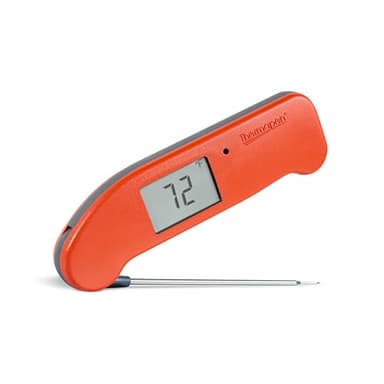
| ThermoWorks Thermapen ONE | The one to own if you buy only one — instant spot checks anywhere in the cut | Instant-read · our highest-rated thermometer pick | $125.00 · View on Amazon Price as of October 12, 2026 |
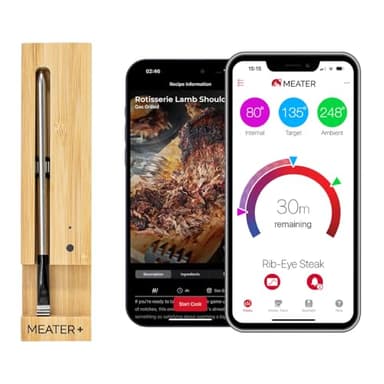
| MEATER Plus | Leave-in monitoring of a long cook without opening the lid | Fully wireless probe · internal + ambient · app alerts | |
| ThermoWorks Signals | Multiple cuts at once, with alarms you can set per channel | Multi-channel probe thermometer · app alerts · our best multi-channel pick | $259.00 · View on Amazon Price as of October 12, 2026 |
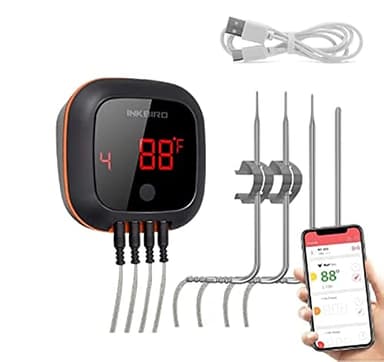
| Inkbird IBT-4XS | The cheapest way to stop guessing | Budget Bluetooth multi-probe unit · our best budget pick | $49.99 · View on Amazon Price as of October 12, 2026 |
#ad — the price buttons are affiliate links and we may earn a commission at no extra cost to you. Prices come from Amazon as of October 12, 2026; the live Amazon price always wins. See our affiliate disclosure.
ThermoWorks Thermapen ONE
MEATER Plus
Inkbird IBT-4XS
Full rankings and the trade-offs between them are in our best wireless meat thermometer guide.
Choosing Your Smoker Temperature
225-250°F — the barbecue window. Everything with connective tissue goes here: brisket, pork butt, spare ribs, beef ribs, chuck. Lower means more time for smoke to accumulate and more time at the temperatures where collagen converts. There is nothing magic about 225°F specifically; 250°F finishes faster with very little difference in the result, and plenty of competition cooks run hotter still.
275-325°F — poultry and anything with skin. Chicken and turkey have no collagen worth breaking down, and skin needs real heat to render fat and crisp. Smoking a chicken at 225°F is the classic beginner mistake that produces rubbery skin. Start the bird hot, or finish it hot.
325-400°F+ — finishing and crisping. Wings, pizza and anything you want browned. Most pellet grills top out between 450°F and 500°F; a handful go higher. If high-heat work matters to you, see best pellet grill for searing.
160-180°F — jerky and very low smoking. The bottom of most pellet grills' range, used for drying rather than cooking.
One pellet-specific note: smoke accumulates fastest at the low end of the range. Traeger's Super Smoke mode operates at 165-225°F, Pit Boss lists its SMOKE setting at 180-210°F, and Z Grills says its SMOKE setting swings between roughly 160°F and 195°F. If smoke flavor is your priority, run the first hours low and raise the heat to finish — and consider a smoke tube. Our best pellet grill for smoke flavor guide explains why pellet combustion is milder than a stick burner's.
Where to Put the Probe
Most bad readings are placement, not equipment.
- Brisket: the thickest part of the flat, horizontally, avoiding the fat seam between flat and point.
- Pork butt: the centre of the roast, away from the bone. Bone conducts heat and reads high.
- Ribs: do not rely on a probe at all — use the bend test, or probe between bones in the thickest meat.
- Whole poultry: the thickest part of the breast for the 165°F reading, and the thigh away from bone for 175°F.
- Steaks, chops, tenderloin: from the side, into the geometric centre, so the tip is not passing through to the grate.
And calibrate occasionally. A chamber probe that has drifted makes every number on this page wrong — our temperature swings guide covers how to spot a drifted RTD probe.
Frequently Asked Questions
What temperature should you smoke at on a pellet grill?
225-250°F for anything you want to pull apart, 275-325°F for poultry and anything with skin, 160-180°F for jerky. Decide doneness by the meat's internal temperature, not the clock.
How long does it take to smoke a brisket?
Roughly 1 to 1.5 hours per pound at 225-250°F, plus a rest of one to four hours. Pull when a probe slides through the flat with no resistance, usually 200-205°F.
What internal temperature should pulled pork be?
203°F is the usual target, because a pork butt only shreds after its collagen breaks down in the 195-205°F window. Probe for feel as well as number.
Do you need a separate thermometer for a pellet grill?
Yes. The grill measures the air in the chamber; a thermometer measures the food. Most cooks end up with one instant-read and one leave-in wireless probe.
What are the USDA safe minimum internal temperatures?
165°F for all poultry, 160°F for ground meat, and 145°F with a three-minute rest for whole cuts and fish. Those are floors, not barbecue targets.
The Bottom Line
Set the grill in the right window for the cut — low for collagen, hot for skin — then stop watching the clock and start watching the meat. A ThermoWorks Thermapen ONE for spot checks and a MEATER Plus or ThermoWorks Signals for leave-in monitoring cover every cook in the chart above, and between them they eliminate the only variable a pellet grill cannot manage for you. If you want the full method rather than the numbers, our complete pellet grill smoking guide walks through a cook end to end, and the Traeger recipe collection has the recipes behind every row.
Check the live price on our top thermometer pick
The chart above only works with a thermometer — the button reads the current Amazon price.
#ad — the buttons on this page are affiliate links and we may earn a commission at no extra cost to you. See our affiliate disclosure.
Explore more: Complete Pellet Grill Smoking Guide | How Long to Smoke a Brisket | Best Wireless Meat Thermometer | Traeger Recipe Collection