
Best Grill Grates for Pellet Grills in 2026: Sear Upgrades and Replacements
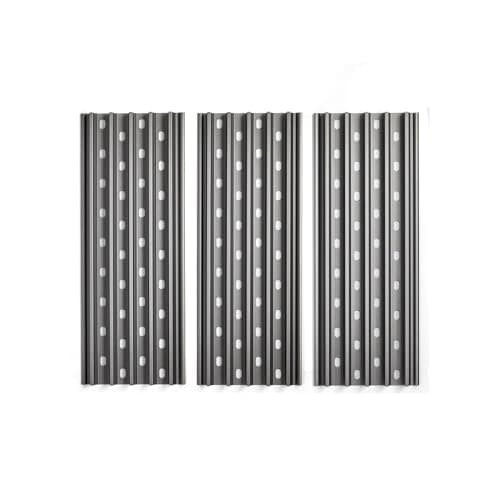
There are two completely different people searching for pellet grill grates, and they need opposite products.
The first has a grill that smokes beautifully and sears like a warm oven. They want more grate-level heat — a sear panel that puts real marks on a steak without buying a new grill. The second has a five-year-old grill with grates that are flaking, pitted, or warped, and they want the same part their grill shipped with, in metal that will not do that again.
Most guides mash those together and end up recommending expensive sear panels to someone whose actual problem is a rusted-through rod. So this one splits them, and it is built on the two things that decide either purchase: what the metal does when it gets hot, and whether the thing actually fits your grill. Every pick below was verified live and buyable on September 3, 2026, every specification quoted is what the manufacturer or seller publishes on the listing, and every entry says plainly where it falls short. Prices are deliberately kept out of the prose — this category discounts constantly, and the cards show the live figure.
First: Do You Actually Need New Grates?
Before spending anything, be sure you are solving a real problem. Most grates that look finished are only filthy. Carbonized grease reads as corrosion at a glance, and a discolored porcelain grate is usually still perfectly serviceable.
Replace the grate when the metal has failed:
- Flaking that exposes bare steel underneath a porcelain coating — once the coating breaks, that spot rusts fast and keeps spreading.
- Rust that has pitted through a rod, not just surface bloom you can scrub off.
- Warping bad enough that the grate no longer sits flat, which turns into food sliding and uneven contact.
- A rod that has burned through — usually directly over the fire pot on an older grill.
Anything short of that, start with a real clean. Our how to clean a Traeger grill walkthrough covers the method, and the best pellet grill degreasers roundup covers what to clean it with. Twenty minutes of work settles the question for free.
What Actually Separates a Good Grate From a Bad One
Material is the whole decision. Four show up on pellet grills, and they behave very differently:
- Hard anodized aluminum (GrillGrate). Aluminum conducts heat faster than any other grate material in common use, and the anodized surface is far harder than raw aluminum. The design matters as much as the metal: raised rails concentrate heat where the food touches, while the valleys between them catch drippings and vaporize them instead of dropping fat into the fire pot. This is the sear-upgrade material. The catch is that it is soft compared to steel — wire brushes and metal spatulas mark it, which is why the panels ship with a dedicated grate tool.
- Cast iron. The heat-retention champion. It takes a long time to warm up and then holds that heat when you open the lid, which is exactly what searing needs and exactly what a lightweight rod grate cannot do. The price is maintenance: cast iron must be kept seasoned and dry, and it will rust if you put it away wet or store the grill uncovered.
- Stainless steel. The low-maintenance option. It does not rust, needs no seasoning, weighs a fraction of cast iron, and cleans easily. It holds less heat than cast iron, so sear marks are lighter — a fine trade on a grill that mostly runs at 225°F.
- Porcelain-coated steel. What most pellet grills ship with. Cheap, initially nonstick, and fine until the coating chips — after which the exposed steel rusts quickly. This is the material people are usually replacing, not buying.
Fitment is the second decision, and it fails more often than material does. Grate dimensions change between model years and between variants in the same family, and third-party sellers list compatibility generously. Pull your grate, measure width and depth, and cross-check the part number your manufacturer stamps or lists (Traeger® uses codes like HDW443, HDW436, and KIT0451). Buying on model name alone is how people end up with a grate that sits proud of the frame.
Coverage is the third. A full-grate conversion is not automatically better. Replacing everything with sear panels costs several times as much and removes your indirect zone, which you still want for finishing, resting, and holding. A single panel or half-grate insert gives you both.
Quick Picks: Best Grill Grates for Pellet Grills
| Award | Pick | Best For | What the seller states |
|---|---|---|---|
| Best Sear Upgrade | GrillGrate Sear Station | Adding a hot zone to any grill 15 in deep or more | Hard anodized aluminum, 15 in deep x 15.375 in wide, universal |
| Best Budget Sear Insert | Reversible Anodized Aluminum Sear Grate | Traeger owners who want the BAC772 pattern for less | Reversible, anodized aluminum, 18.25 x 11.5 in |
| Best Full-Grate Conversion | GrillGrate 5-Panel Set | Cooks who sear more than they smoke | 12 in deep x 25.5 in wide, 5 interlocking panels, GrateTool included |
| Best Stainless Replacement | Boloda Stainless Grates | Traeger Pro 575 / Pro 22 owners | Stainless steel, 21.75 in cooking grid |
| Best Cast Iron Replacement | Unidanho Cast Iron Grates | Traeger Ironwood 885 / Pro 780 owners | Cast iron, listed for HDW443 / HDW436 / KIT0451 |
| Best for Pit Boss | Hiorucet Cast Iron Grates | Pit Boss 850 / 820 series owners | Cast iron, 2-pack, listed for PB820 and PB850PS2 variants |
GrillGrate Sear Station (15 in Deep x 15.375 in Wide)
Reversible Anodized Aluminum Sear Grate (BAC772 Pattern)
GrillGrate 5-Panel Set (12 x 25.5 in)
Boloda Stainless Steel Grates for Traeger Pro 575 / Pro 22
Unidanho Cast Iron Grates for Traeger Ironwood 885 / Pro 780
Hiorucet Cast Iron Grates for Pit Boss 850 / 820 Series (2-Pack)
How We Judged These
We do not run a lab and we are not going to pretend otherwise. This ranking is built from three things we can stand behind: the materials and dimensions each manufacturer or seller publishes itself, verified live retail listings checked the day this was published, and years of running pellet grills — which is where the practical judgment about preheating, cleaning, and partial versus full coverage comes from.
The score attached to each pick is our own editorial rating, not an average of customer stars. It weighs four things: whether the material suits the job it is sold for, how specific and trustworthy the stated fitment is, maintenance burden over a season of real use, and whether the price buys anything a cheaper option does not. Replacement parts were scored as replacement parts rather than penalized for not being sear upgrades.
1. GrillGrate Sear Station — Best Sear Upgrade
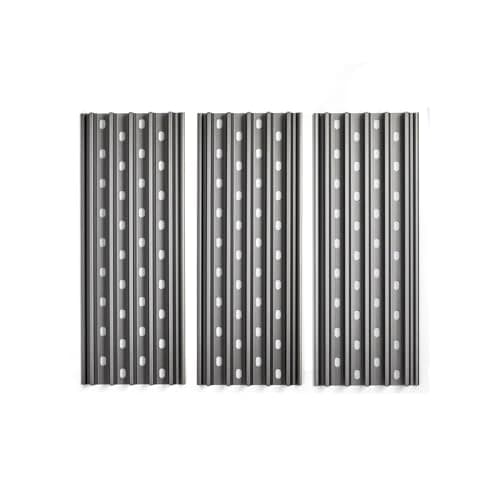
If you own a pellet grill without a flame zone and you want it to sear, the GrillGrate Sear Station is the answer that has been solving this problem the longest. GrillGrate lists it as hard anodized aluminum, 15 inches deep by 15.375 inches wide, and sold specifically as a universal sear panel for pellet grills 15 inches deep and up.
The reason it works is physics rather than marketing. Aluminum moves heat far faster than the thin porcelain-coated rod most pellet grills ship with, so the raised rails run hotter than the air around them and put down genuine sear marks at chamber temperatures where a stock grate just bakes. The valleys between the rails do the other half of the job: drippings land in them and vaporize back into the food instead of falling through onto the drip tray, which is both a flavor benefit and one less grease path into the fire pot. Sizing it as a station rather than a full conversion is the right call for most people — you get a hot zone for the reverse sear and keep the rest of the grate indirect.
The honest catches. It is expensive for a grate accessory, comfortably more than a full set of replacement grates for many grills, and you are buying one zone rather than a whole cooking surface. Anodized aluminum is softer than steel — wire brushes and metal spatulas will mark it, and the brand sells a dedicated tool precisely because normal grill tools are wrong for it. And it does not raise your chamber temperature: a grill that stops at 450°F still stops at 450°F, so if you expected a new maximum temperature rather than better grate-level heat, this is not that.
Pros
- Hard anodized aluminum moves heat far faster than a stock rod grate
- Raised rails put down real sear marks without a flame zone
- Valleys vaporize drippings instead of dropping fat into the fire pot
- Universal sizing fits any grill 15 in deep or more — no model lock-in
Cons
- Expensive for one zone — often more than a full replacement grate set
- Soft surface; wire brushes and metal spatulas mark it
- Improves grate-level heat only, not the grill's maximum temperature
2. Reversible Anodized Aluminum Sear Grate — Best Budget Sear Insert
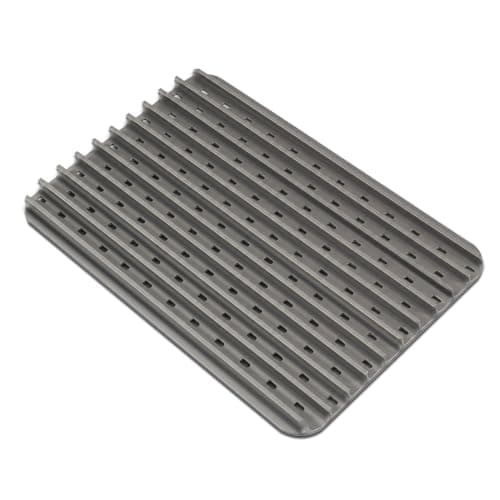
Traeger® sells a sear grate of its own under the part number BAC772, and the aftermarket has built the same pattern for less. The reversible anodized aluminum sear grate is listed as 18.25 by 11.5 inches and reversible — rails on one face for sear marks, a flatter surface on the other for small or delicate food that would fall through.
That reversibility is the practical argument for it over a rail-only panel. Rails are excellent for steak, burgers, and chops and actively bad for shrimp, vegetables, and fish, so a panel you can flip covers noticeably more of what people actually cook. Sized as a drop-in insert, it takes a portion of the grate rather than the whole thing, which keeps the indirect zone intact. If your interest in searing is real but you are not certain it justifies the premium panel above, this is the cheaper way to find out on the same material.
The trade-offs are the ones that come with the aftermarket. Amazon lists it by part-number pattern rather than a brand name, which is why we describe it as the pattern rather than naming a manufacturer we cannot verify — there is no brand support conversation behind it. Fitment is expressed as compatibility with a Traeger part number, so it is on you to confirm your grill takes that pattern before ordering. And it is still soft anodized aluminum, with the same tool restrictions as any panel in this material.
Pros
- Reversible — rails for steak, flat side for fish and vegetables
- Same anodized aluminum family as the premium panels, for less
- Insert sizing keeps an indirect zone on the rest of the grate
- Matches a documented Traeger part-number pattern rather than a vague fit
Cons
- Listed without a brand name — no manufacturer support behind it
- You must confirm the BAC772 pattern fits your grill before ordering
- Soft surface, same no-wire-brush rule as every aluminum panel
3. GrillGrate 5-Panel Set — Best Full-Grate Conversion
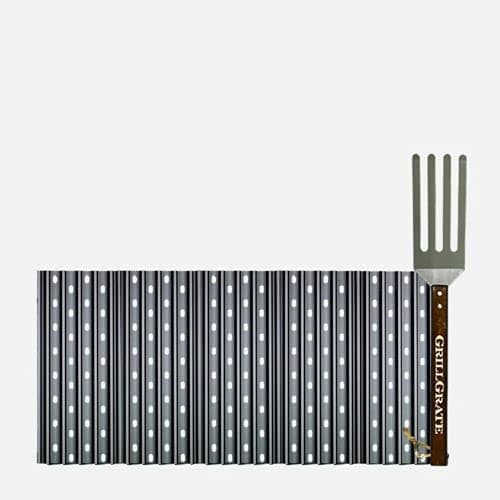
For the minority who sear more than they smoke, the GrillGrate 5-panel set converts a whole cooking surface instead of one zone. GrillGrate lists it as 12 inches deep by 25.5 inches wide across five interlocking panels, with the GrateTool included, and describes it as universal across gas, charcoal, pellet, and kamado grills.
The interlocking design is what makes a full conversion practical: the panels lock into a continuous surface rather than sliding apart when you push food across them, and because the set is modular you can pull panels out to reopen an indirect area or move them to a different grill. Including the GrateTool is not a token gesture either — a purpose-made spatula that lifts food out of the valleys is genuinely necessary on this surface, and having it in the box means you are not discovering that after the first cook.
Now the honest assessment, because this is the pick where price matters most. It costs multiples of a replacement grate set for the same grill, which is a lot for a searing improvement on a machine you bought for smoking. A full conversion removes your gentle zone unless you deliberately pull panels, and that is a real loss on a grill whose main talent is indirect heat. And five panels are five things to clean and store, which is more upkeep than a single insert. Most people should buy the Sear Station instead; this is for the cook who has decided searing is the primary job.
Pros
- Interlocking panels form a continuous surface that will not slide apart
- Modular — pull panels to reopen an indirect zone or move them to another grill
- GrateTool included, which this surface genuinely requires
- Universal across gas, charcoal, pellet, and kamado grills
Cons
- Costs several times what a replacement grate set for the same grill does
- Full coverage removes the indirect zone a pellet grill is best at
- Five separate panels to clean, store, and keep track of
4. Boloda Stainless Steel Grates — Best Stainless Replacement
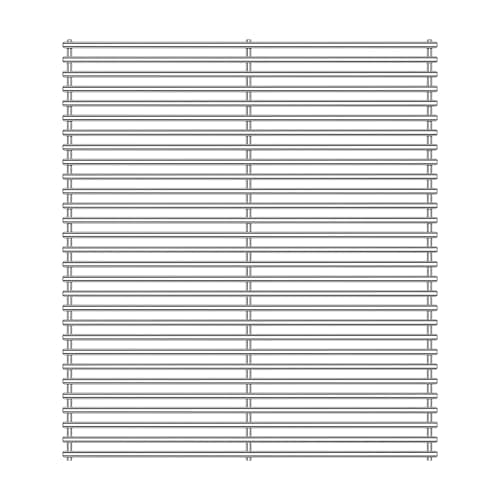
When the problem is a worn grate rather than a weak sear, this is the low-maintenance fix. The Boloda stainless steel cooking grid is listed at 21.75 inches as a replacement for the Traeger Pro 575 and Pro 22 — two of the most common pellet grills in American backyards, and both old enough now that original grates are reaching the end of their coating.
Stainless is the sensible material for a grill that mostly smokes. It does not need seasoning, it does not rust when you close the lid on a damp evening, it weighs a fraction of a cast iron set, and it cleans without ceremony. On a Pro 575 running 225°F for most of its life, the extra heat retention of cast iron buys you very little, while the maintenance it demands is a real ongoing cost. This is also the cheapest pick in the roundup, which makes it an easy call against nursing a flaking porcelain grate through another season — see where the Pro 575 lands overall in our Traeger Pro 575 review.
The honest limits. Sear marks are lighter than cast iron and always will be — stainless simply holds less heat, so if searing is your motivation, buy a sear panel instead. "Stainless steel" on a marketplace listing covers a wide range of gauges and grades, and this listing does not publish either. And it is a seller-brand part, not a Traeger part, so long-term replacement availability is less certain than with an OEM grate.
Pros
- No rust, no seasoning, no maintenance ritual
- Much lighter than cast iron — easy to lift out for cleaning
- Cheapest pick here, and cheaper than most OEM replacements
- Fitment stated for two of the most common Traeger models
Cons
- Lighter sear marks than cast iron — not a searing upgrade
- Neither steel gauge nor grade is published on the listing
- Seller-brand part, so future replacement stock is less certain
5. Unidanho Cast Iron Grates — Best Cast Iron Replacement
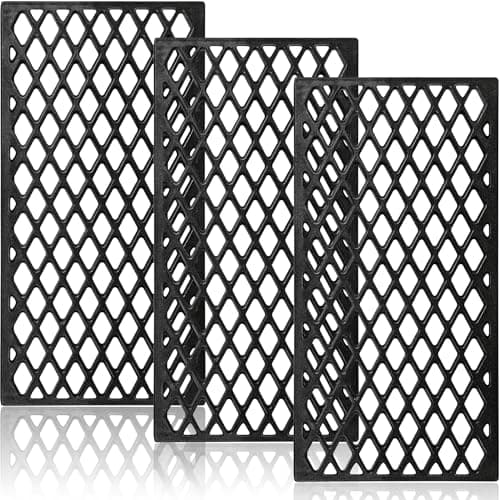
If you want the replacement grate to also be an upgrade, cast iron is how you do it in one purchase. The Unidanho cast iron cooking grates are listed for the Traeger Ironwood 885 and Pro 780, and — unusually for a marketplace part — the listing names the specific Traeger part numbers it replaces: HDW443, HDW436, and KIT0451.
Those part numbers are the reason this pick scores where it does. Fitment is where third-party grates fail, and a seller that publishes the exact OEM codes rather than a vague model list is giving you something checkable before you spend anything. The material does the rest: cast iron holds enough heat that it keeps searing when you open the lid, which is precisely the moment a lightweight rod grate gives up. On a big grill like an 885, that thermal mass also steadies the cooking surface through the temperature dips that come with lid-opening on a long cook — a different fix for the same annoyance our pellet grill temperature swings guide addresses at the controller end.
The cons are the classic cast iron ones, and they are not small. It must be seasoned and kept dry — put it away wet or leave the grill uncovered through a wet week and you will have rust. It is heavy, which you notice every time you lift a full set out to clean underneath. And it needs a genuinely long preheat, because cast iron in a hot chamber is still cold cast iron for the first stretch; the usual ten minutes is not enough.
Pros
- Listing names the exact Traeger part numbers it replaces — checkable fitment
- Cast iron keeps searing when you open the lid
- Thermal mass steadies the cooking surface on long cooks
- Replacement and searing upgrade in a single purchase
Cons
- Needs seasoning and must be kept dry or it will rust
- Heavy to lift out for cleaning, especially in a full set
- Wants a long preheat — ten minutes leaves you cooking on cold metal
6. Hiorucet Cast Iron Grates — Best for Pit Boss
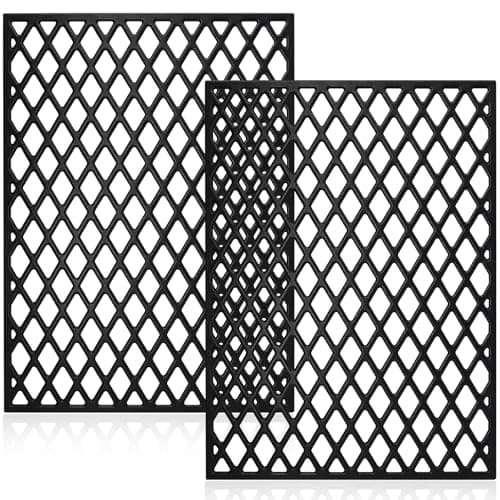
Pit Boss owners are the other large group whose original grates are wearing out, and the Hiorucet cast iron grates are the pick for them. It is a 2-pack of cast iron grates listed for the Pit Boss 850 and 820 series, with the compatibility spelled out across a long list of specific variants — PB820, PB820PS1, PB820D, PB0820D3, PB820FB, PB820XL, PB820D3, and PB850PS2 among them.
That variant list is the useful part. Pit Boss has shipped a lot of superficially similar 820 and 850 grills over the years, and "fits Pit Boss 850" from a seller who will not name the SKUs is a coin flip. Naming eight of them is a much better sign. Cast iron also pairs well with how these grills are used: the Pit Boss flame broiler already gives you a direct-flame option, and heavy grates over that slider are what turn it into a genuine sear rather than a hot draft. If you are still deciding between models, our best Pit Boss pellet grills roundup decodes the series naming.
The honest catches. A 2-pack may or may not be your whole grate surface depending on which grill you own, so measure before assuming it covers everything. Cast iron maintenance applies in full — season it, dry it, cover the grill. And this is a seller-brand part, with the same caveats about support and long-term stock as any marketplace replacement.
Pros
- Names eight specific Pit Boss SKUs rather than a vague series claim
- Cast iron over the flame broiler turns a hot draft into a real sear
- 2-pack costs less than most single OEM replacement grates
- Heat retention that survives the lid opening mid-cook
Cons
- A 2-pack may not cover your full grate surface — measure first
- Seasoning, drying, and covering are non-negotiable with cast iron
- Seller-brand part with no manufacturer support behind it
Fitment: Which Grate for Which Grill
Every grate below was verified live and buyable on September 3, 2026. Measure your existing grate before ordering any of them — model names are a starting point, not a guarantee.
| Your grill | Grate that fits it |
|---|---|
| Traeger® Pro 575 / Pro 22 | Boloda stainless 21.75 in grid |
| Traeger Ironwood 885 / Pro 780 | Unidanho cast iron (HDW443 / HDW436 / KIT0451) |
| Traeger Woodridge | FlameDuty stainless 2-pack |
| Pit Boss 850 / 820 series | Hiorucet cast iron 2-pack |
| Pit Boss Pro 1000 / Austin XL | Cast iron replacement grates |
| Weber Searwood 600 / Spirit 300 series | Cast iron Searwood grates |
| Weber Searwood XL 600 / SmokeFire EX6 | GORGERILA cast iron grate |
| Any grill 15 in deep or more (sear zone) | GrillGrate Sear Station |
Two notes on that table. The Weber picks are worth flagging because the Searwood 600 and the Searwood XL 600 do not take the same grate despite the near-identical names — this is exactly the trap the measuring rule exists for, and it is the same one-digit-apart problem we called out in the pellet grill cover buying guide. And the Traeger Woodridge option is stainless rather than cast iron, which suits a newer grill still under warranty better than a heavy upgrade does.
Getting the Most Out of New Grates
- Preheat longer than feels necessary, especially with cast iron. The chamber reaching temperature and the metal reaching temperature are two different events. Give heavy grates fifteen to twenty minutes at your target before food goes on.
- Season cast iron before the first cook, and after deep cleans. A thin coat of high-smoke-point oil baked on at a moderate temperature is the whole ritual. Skipping it is how a new grate rusts in its first month.
- Never take a wire brush to anodized aluminum. Use the tool the panels ship with, or a nylon brush. Steel wool and wire bristles mark the surface permanently.
- Dry everything before the lid goes down. Water sitting on cast iron overnight is the single most common way these parts die.
- Keep the grill covered. A cover does more for grate life than any material choice — the pellet grill cover buying guide covers fitment by model.
- Do not bin the old grates immediately. If they still sit flat, they make a useful second tier for overflow or for resting.
The Bottom Line
If your problem is a weak sear, the GrillGrate Sear Station is the pick: hard anodized aluminum, raised rails that put down real marks at ordinary pellet grill temperatures, and universal sizing so it moves with you to your next grill. If you want that effect for less and would like a flat side for fish and vegetables, the reversible anodized aluminum sear grate in the BAC772 pattern is the cheaper way in. Full conversion with the GrillGrate 5-panel set is the right call only if you sear more than you smoke — for most pellet grill owners it is more money and less indirect zone than the job needs.
If your problem is a worn grate, pick by how you cook. Boloda's stainless grid is the low-maintenance answer for a Traeger Pro 575 or Pro 22 that mostly runs low and slow, and it is the cheapest thing here. Unidanho's cast iron is the upgrade-while-you-replace option for an Ironwood 885 or Pro 780, and it is the rare marketplace part that publishes the OEM codes it replaces. Pit Boss 850 and 820 owners get the same deal from Hiorucet's 2-pack.
And if none of the above describes you, the honest answer may be that your grates are fine and just need cleaning. Check that first. If you are building out the rest of the setup, our best pellet grill accessories roundup covers what to buy next, and the best pellet grills for searing guide is the place to start if you have decided the grill itself is the limitation.
One thing no grate fixes: food small enough to fall between the bars. Chopped vegetables, shrimp, and wing segments need a basket rather than a different grid — our best grill baskets for pellet grills guide covers which ones clear a closed lid and which hole sizes hold what.
Our Top Pick: GrillGrate Sear Station
Hard anodized aluminum rails that put a real crust on a steak at ordinary pellet grill temperatures — the cheapest meaningful searing upgrade for a grill without a flame zone.
Explore more: Best Pellet Grills for Searing | Best Pellet Grill Accessories | How to Clean a Traeger Grill | Pellet Grill Cover Buying Guide | All Best-Of Guides