
Best Wood Pellets for Ribs in 2026: 7 Bags Ranked for Pork and Beef
Ribs are the cook where pellet choice shows up fastest. A brisket runs 12 hours and forgives almost any wood you put under it; a rack of ribs is done in four to six, is thinner than a packer brisket, and carries a sweet rub that either marries the smoke or fights it. Get the pellets right and you get mahogany bark, a clean fruity-savory finish, and the kind of rack people photograph. Get them wrong and you get either a pale, under-smoked rack or a bitter one.
This is a ranking of the seven bags worth putting in the hopper for ribs specifically — pork spares, St. Louis cuts, baby backs, and beef ribs — judged on what the manufacturer says is actually inside the bag, how the smoke behaves across a short cook, and what it costs to run. Every bag below was verified in stock through our product pipeline when this page was published, and the buttons always show the live retailer price rather than a number we typed in.
Quick Picks: Best Wood Pellets for Ribs
| Award | Bag | What's In It | Roughly Per Pound |
|---|---|---|---|
| Best Overall for Ribs | CookinPellets Perfect Mix (40 lb) | Hickory, cherry, hard maple, apple — no oak filler | ~$1.05 |
| Best for Color and Sweetness | Bear Mountain Cherry (40 lb) | All-natural cherry hardwood | ~$0.78 |
| Best for Heavy Smoke and Bark | Lumber Jack Competition Blend (40 lb) | Published 33/33/33 maple-hickory-cherry | ~$1.09 |
| Cheapest Bag Worth Buying | Kingsford Craftsmoke Grillmasters Choice (20 lb) | Cherry, hickory, oak | ~$0.85 |
| Best Price Per Pound | Pit Boss Competition Blend (40 lb) | Hickory, cherry, maple, oak | ~$0.65 |
| Best for Blending Your Own | Bear Mountain Hickory (40 lb) | 100% hickory | ~$0.82 |
| Best for Baby Backs | Kingsford Craftsmoke Applewood (20 lb) | 100% natural applewood | ~$0.90 |
Per-pound figures are approximate and move around more than grill pricing does — check the live price on each button before you order.
CookinPellets Perfect Mix (40 lb)
Approx price — prices change often; the button shows the live price at the retailer.
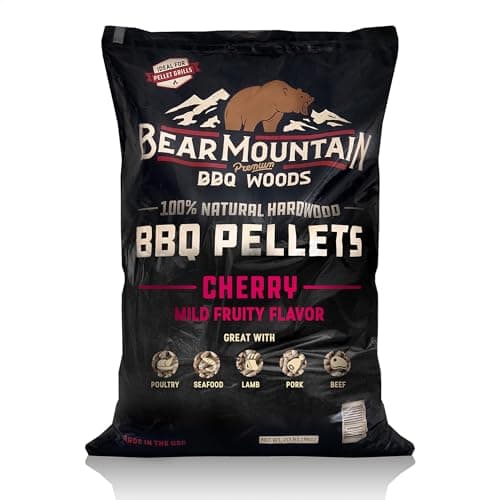
Bear Mountain Cherry (40 lb)
Approx price — prices change often; the button shows the live price at the retailer.
Lumber Jack Competition Blend (40 lb)
Approx price — prices change often; the button shows the live price at the retailer.
Kingsford Craftsmoke Grillmasters Choice (20 lb)
Approx price — prices change often; the button shows the live price at the retailer.
Pit Boss Competition Blend (40 lb)
Approx price — prices change often; the button shows the live price at the retailer.
Bear Mountain Hickory (40 lb)
Approx price — prices change often; the button shows the live price at the retailer.
Kingsford Craftsmoke Applewood (20 lb)
Approx price — prices change often; the button shows the live price at the retailer.
How We Judged Pellets for Ribs
"Best pellets" is a different question for ribs than it is for beef, so the criteria below are the ones that actually decide a rack. We do not run a lab — this is research plus verified owner feedback plus real grilling experience, and where a claim comes from a manufacturer we say so.
- The flavor has to fit a short cook. Ribs take four to six hours, so the smoke does not have 12 hours to mellow. Woods that are merely assertive on brisket can read as sharp on pork. We favored blends that lead with fruitwood and keep the strong wood in a supporting role.
- Color counts on ribs more than on any other cut. A rack is judged by eye before anyone tastes it. Cherry-forward bags earn points because the mahogany tint they leave on the bark is most of what "looks finished" means.
- What the label actually promises. Many flavored pellets are an oak or alder base carrying a minority share of the named wood. We rewarded brands that either publish their proportions or state outright that there is no filler, and we flag the ones that do not.
- Cost per pound, not cost per bag. Rib cooks are short, so you will do a lot of them per bag. A 20-pound bag that is easy to carry can still be poor value next to a 40-pound bag at two-thirds the per-pound price.
- Honest cons on every pick. Every bag here has a real drawback, including the winner. They are listed.
1. CookinPellets Perfect Mix — Best Overall for Ribs
The CookinPellets Perfect Mix is the bag we would hand to anyone who just wants good ribs without a pellet education. It is four woods — hickory, cherry, hard maple, and apple — and that combination is almost exactly the profile competition cooks build by hand for pork: hickory for the savory backbone that reads as barbecue, cherry for sweetness and color, maple and apple to round off the edges.
What earns it the top spot, though, is the claim CookinPellets makes about what is not in the bag. The company states the pellets contain no oak or alder filler, no bark, and no added oils or flavorings. That is a stronger statement than most of the category makes, and on a short cook where the named wood has to do its work quickly, it matters more than it does on a long brisket.
Pros
- Hickory-cherry core is the classic pork rib profile, already blended for you
- Company states no oak or alder filler, no bark, no added oils
- Apple and maple keep a 5-hour cook from turning sharp
- 40-pound bag, so the per-pound cost stays reasonable for a premium pellet
Cons
- Among the pricier bags here per pound
- One fixed recipe — you cannot dial the hickory up or down
- 40 pounds needs dry storage and two hands
2. Bear Mountain Cherry — Best for Color and Sweetness
If you want to understand why some racks look like a magazine photo, it is cherry. Bear Mountain Cherry is the best-value way to buy it: a 40-pound bag of all-natural cherry hardwood, which Bear Mountain states contains no fillers or additives, milled to a low moisture content for a clean, low-ash burn. The smoke is mild, slightly sweet, and fruity, and it leaves a reddish-mahogany tint on the bark that no amount of rub can fake.
It is also the cheapest single-species flavor wood in this roundup per pound, which makes it the natural partner bag if you want to blend your own rib pellets rather than buy someone else's recipe.
Pros
- The mahogany color on the bark that makes a rack look professionally cooked
- Mild and sweet — essentially impossible to oversmoke pork with it
- Cheapest flavor wood here per pound, in a 40-pound bag
- Bear Mountain states no fillers or additives
Cons
- Too gentle on its own — unwrapped racks can finish tasting under-smoked
- Nearly pointless on beef ribs, which need a bolder wood
- Best treated as half a blend, which means buying a second bag
3. Lumber Jack Competition Blend — Best for Heavy Smoke and Bark
The Lumber Jack Competition Blend is the most specific bag on this list and the one to buy if your complaint about pellet ribs is that they are not smoky enough. Lumber Jack publishes the exact recipe — 33.3% maple, 33.3% hickory, 33.3% cherry — with no oils, sprays, fillers, or binders. It also makes its pellets from the bark and cambium layers rather than stripping them out, on the argument that those layers carry the most flavor compounds, and mills to a smaller diameter for more surface area and a hotter, smokier burn.
On ribs that translates to a noticeably darker bark and more smoke presence in the same five hours. The classic competition trio is a genuinely good pork blend, too — it is cherry-forward enough to keep the color.
Pros
- Published 33/33/33 recipe — you know exactly what is burning
- Bark and cambium included, which is where much of the flavor lives
- Noticeably more smoke than a standard pellet in the same cook time
- Darker bark development on unwrapped racks
Cons
- The most expensive bag here per pound
- No apple in the blend, so slightly less sweetness than the Perfect Mix
- More smoke is a liability on lean baby backs — easy to overdo
4. Kingsford Craftsmoke Grillmasters Choice — Cheapest Bag Worth Buying
Of the cheap bags, the Kingsford Craftsmoke Grillmasters Choice is the one that happens to be built right for ribs. It is a cherry, hickory, and oak mix in a 20-pound bag, described as 100% natural hardwood — and cherry plus hickory is exactly the pairing you want, with oak as a clean-burning base. It is the lowest sticker price in this roundup and still lands under a dollar a pound.
Kingsford does not break out the proportions, so assume the oak is doing a meaningful share of the burning. For weekend ribs where the rub and the sauce carry a lot of the flavor, that is a fair trade.
Pros
- Lowest-priced bag here, and still under a dollar a pound
- Cherry-and-hickory profile is genuinely right for pork ribs
- 20 pounds is easy to carry and easy to store in a small garage
- Stated as 100% natural hardwood
Cons
- Proportions are not published — the oak share is unknown
- 20-pound bag means worse per-pound value than the 40-pound budget bags
- Milder smoke than the premium blends on an unwrapped cook
5. Pit Boss Competition Blend — Best Price Per Pound
The Pit Boss Competition Blend is the cheapest legitimate pellet here by a wide margin — roughly two-thirds the per-pound cost of the premium bags — and it is a hickory, cherry, maple, and oak mix in a resealable 40-pound bag. If you cook ribs most weekends through the summer, the savings across a season are real money, and nobody at the table is going to identify the oak.
This is the bag to buy if you are cooking volume, running a large-capacity grill, or doing a lot of wrapped cooks where the smoke window is short anyway.
Pros
- By far the lowest cost per pound in this roundup
- Includes both hickory and cherry — the right two woods for ribs
- Resealable 40-pound bag
- Ideal for wrapped cooks, where premium pellets are partly wasted
Cons
- Oak-inclusive fuel blend — the flavor woods are a minority share
- Proportions are not published and can vary bag to bag
- Leans savory rather than sweet, so less color than a cherry-forward bag
6. Bear Mountain Hickory — Best for Blending Your Own
Every pellet cook eventually wants a straight hickory bag, and Bear Mountain Hickory is the one we would buy. It is 100% hickory — not hickory-flavored — all-natural with no flavorings, fillers, or additives, at a price that is normally where single-species pellets start climbing.
On ribs, its job is to be half of something. Fill the hopper with roughly equal parts of this and the Bear Mountain Cherry above and you have built the classic hickory-cherry rib blend yourself, for less per pound than any pre-mixed premium bag, with the ratio under your control. It is also the right bag for beef ribs, which want more backbone than pork does.
Pros
- True single-species hickory at a value price
- Lets you set your own hickory-to-cherry ratio
- The right choice for beef ribs and other bold cuts
- Bear Mountain states no flavorings, fillers, or additives
Cons
- Not a rib pellet on its own — can turn acrid on a long unwrapped rack
- No sweetness and no color contribution
- Blending properly means owning two 40-pound bags
7. Kingsford Craftsmoke Applewood — Best for Baby Backs
Baby backs are the lean, fast end of the rib world, and they oversmoke more readily than spares do. The Kingsford Craftsmoke Applewood is the cheapest well-made way into the gentlest fruitwood: a 20-pound bag that Kingsford states is 100% natural hardwood with no fillers, oils, or additives, with exactly the mild, sweet, clean profile a shorter and leaner rack wants.
It is also the bag to reach for if you have ever pulled ribs off and thought they tasted more like smoke than pork.
Pros
- The mildest smoke here — hard to overdo on lean baby backs
- Sweet, clean fruitwood profile that suits sweet rib rubs
- Low sticker price on a 20-pound bag
- Stated as 100% natural hardwood, no fillers or oils
Cons
- Too mild for St. Louis spares or beef ribs on its own
- Contributes less bark color than cherry does
- 20-pound bag, so middling per-pound value
The Rib Wood Hierarchy
If you would rather think in woods than in brands, this is the order that matters for ribs:
- Cherry — the single most useful rib wood. Mild, sweet, and the source of the mahogany bark color. Weak alone.
- Hickory — the savory backbone that makes food taste like barbecue. Perfect at roughly half a blend, risky at 100% on a five-hour rack.
- Apple — gentler than cherry, ideal for baby backs and anyone who finds pellet ribs too smoky.
- Maple — mild and faintly sweet; the quiet third wood in most competition blends. Smooths out hickory.
- Pecan — hickory's milder, nuttier cousin, and a genuinely excellent rib wood. Just read the bag: large "pecan" bags are usually blends. BBQr's Delight publishes that its big bags are two-thirds oak and one-third flavor wood, and Traeger® describes its Pecan pellets as a balanced blend of hardwoods rather than pure pecan. Both are honest about it; many brands are not.
- Oak — the clean-burning base wood under most budget blends. Fine, neutral, not a flavor you choose.
- Mesquite — the one to skip on pork ribs. It is the strongest smoking wood there is and overwhelms a thin, sweet cut. Save it for steak.
For the full profile of every wood, including what pairs with poultry and fish, see our wood pellet flavor guide. Beef cooks should start with the best wood pellets for brisket instead — the answer is different because the cook is three times as long.
Three Blends That Work for Ribs
You do not need a formula, but these three are reliable:
- 50/50 hickory and cherry — the default. Backbone plus color and sweetness. Build it from the two Bear Mountain bags above.
- 60/40 cherry and hickory — for baby backs or anyone who wants the color without much smoke punch. Swap in apple for the cherry if you want it gentler still.
- Competition trio: equal maple, hickory, and cherry — buy it pre-mixed as the Lumber Jack blend, or approximate it yourself.
Mix pellets in a bucket before they go in the hopper, not by layering them — the auger pulls from the bottom, so layered pellets burn in sequence rather than together.
How Pellet Choice Changes If You Wrap
This is the part most rib guides skip. Ribs stop taking on smoke the moment they go into foil or butcher paper, so in a 3-2-1 style cook your pellets are only flavoring the meat during the first unwrapped stretch — call it two to three hours. Two consequences:
- If you wrap, buy the value bag. Premium pellets are partly wasted on a cook with a short smoke window. The Pit Boss Competition Blend is the rational choice.
- If you cook unwrapped, buy the premium blend and go cherry-forward. All five or six hours are smoke exposure, and that is where filler-free pellets and a sweeter wood earn their price.
The same logic applies to the rub: a heavily sweetened rub wants a milder wood underneath it, while a simple salt-and-pepper approach can carry more hickory. Our dry rub for ribs recipe is built around the cherry-hickory profile above.
Storage: The Part That Actually Ruins Pellets
Pellets do not go stale so much as they drink water. They are held together by the wood's own lignin rather than glue, so humidity makes them swell, soften, and crumble to sawdust — and that sawdust is the most common cause of a jammed auger and a fire pot that will not light.
- Seal them. Move pellets out of the paper bag into an airtight bucket or a gamma-seal storage bin.
- Get them off the concrete. Concrete wicks moisture; a shelf or pallet is enough.
- Snap-test anything suspect. A good pellet snaps clean. A ruined one crumbles.
The Bottom Line
For most people cooking pork ribs, the CookinPellets Perfect Mix is the bag to buy — the hickory-cherry core is right, the apple and maple keep it from getting sharp over a five-hour cook, and the no-filler claim means the woods on the label are the woods in the fire pot. If you want the best bark color for the money, Bear Mountain Cherry is the cheapest serious fruitwood here and pairs naturally with Bear Mountain Hickory if you would rather blend your own ratio. Want more smoke than a pellet grill normally gives you? Lumber Jack Competition Blend publishes its recipe and includes the bark. Cooking volume, or wrapping every rack? Pit Boss Competition Blend is roughly two-thirds the per-pound cost and honest about being an oak-inclusive fuel blend. On a tight budget, Kingsford Craftsmoke Grillmasters Choice is the cheapest bag with a rib-appropriate profile, and Kingsford Craftsmoke Applewood is the one for lean baby backs.
Whichever you choose, buy the biggest bag you can store dry and check the live price before you order. Still shopping for the cooker? Start with the best pellet grill for ribs, or see the all-purpose rankings in our best wood pellets for smoking roundup. And if you have already switched bags and still want more smoke, a smoke tube smolders independently of the controller and adds smoke at any temperature.
Best Overall for Ribs: CookinPellets Perfect Mix
Hickory, cherry, hard maple, and apple with no oak or alder filler — the pork rib profile, already blended. Check the current price.
Check CookinPellets Perfect Mix Price