
Traeger Ironwood vs Woodridge Pro: Which Traeger Should You Actually Buy?
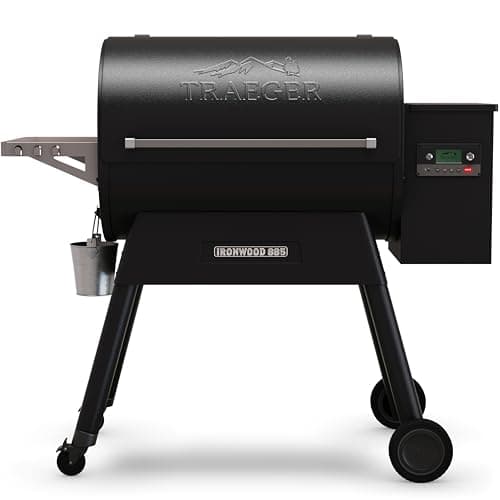
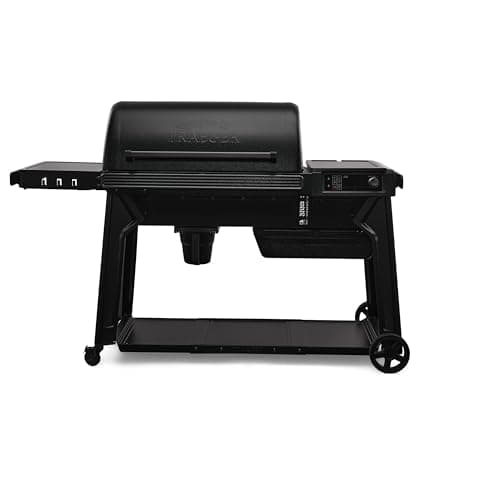
Traeger Ironwood vs Woodridge Pro: The Bottom Line
For years the decision tree at Traeger® was simple: buy the Pro Series if you wanted a good pellet grill, buy the Ironwood if you wanted Super Smoke Mode and a better build. The Woodridge™ Pro broke that logic. It arrived in early 2025 as the replacement for the Pro Series, brought Super Smoke Mode, a pellet sensor, and a 10-year warranty down to a much lower price, and did it with far more cooking space than the standard Ironwood.
That leaves the Ironwood in an awkward spot, and this comparison is about being honest about that spot. The Ironwood is still the better-built grill. It has dual-wall construction, Smart Combustion™ fire management, a touchscreen controller, and two wired probes where the Woodridge Pro has one. None of those things is imaginary. The question is whether they are worth several hundred dollars more for a grill with 354 fewer square inches of grate.
Our pick for most buyers: the Traeger Woodridge Pro. It matches the Ironwood on the features that change what ends up on the plate — Super Smoke, WiFIRE app control, a pellet sensor, EZ-Clean, the P.A.L. rail, and the warranty — and it is bigger and cheaper. Buy the Ironwood instead if you smoke through real winters, you want the tightest temperature control Traeger sells below the Timberline, or the on-grill touchscreen and second probe matter to how you cook.
This is a research-based comparison. Every specification below comes from Traeger's own product pages, checked on September 21, 2026, when both grills were listed for sale on traeger.com. Performance notes are attributed to the outlets that ran the tests. We have not run these two grills side by side ourselves.
Side-by-Side Specifications
| Feature | Traeger Ironwood | Traeger Woodridge Pro |
|---|---|---|
| Rating | 3.6 | 4.5 |
| Price (approx) | ~$1,799 | ~$1,149 |
| Cooking Space | 616 sq in (396 + 220) | 970 sq in (585 + 385) |
| Traeger's Stated Capacity | 4 chickens / 8 rib racks / 4 pork butts | 6 chickens / 8 rib racks / 8 pork butts |
| Hopper Capacity | 22 lbs | 24 lbs |
| Max Temperature | 500°F | 500°F |
| Body Construction | Dual-wall | Single-wall |
| Controller | Touchscreen + Smart Combustion | Digital, full-color display |
| WiFi | WiFIRE | WiFIRE |
| Super Smoke Mode | Yes | Yes |
| Meat Probes Included | 2 wired | 1 wired |
| Pellet Sensor | Yes | Yes |
| Hopper Clean-Out | Yes | Yes |
| Side Shelf | Yes (fixed) | Yes (folding) |
| Weight | 199 lbs | 174 lbs |
| Warranty | 10-year limited | 10-year limited |
| See latest price | See latest price |
Prices in the table are approximate and refresh separately from this article. Both grills route through our links to the retailer's live price, so treat the table as a guide to the gap between them, not a quote.
What These Two Grills Share
It is worth starting with the overlap, because it is larger than Traeger's tiering suggests and it is where most of the Ironwood's old justification went.
- Super Smoke Mode. Both grills increase smoke output at low temperatures. This used to be an Ironwood-and-up feature; it is now standard from the Woodridge Pro upward.
- WiFIRE® app control. Both connect to the Traeger App for remote temperature changes, probe monitoring, custom alerts, recipes, and shutdown. The remote experience is the same.
- Integrated pellet sensor. Both warn you through the app before the hopper runs dry, which is the difference between an overnight brisket and a cold grill at 4 AM.
- EZ-Clean™ Grease & Ash Keg. Both channel grease and ash into one removable keg beneath the grill, with no foil liner required.
- Hopper clean-out. Both let you dump pellets to switch flavors or empty the hopper before a wet week.
- P.A.L.® Pop-And-Lock rail and ModiFIRE® compatibility. Both accept Traeger's tool-free accessory rail and its drop-in grate accessories.
- 500°F ceiling. Neither grill is a searing machine. Both top out at the same temperature, and both benefit from a cast-iron or sear-grate accessory for steaks.
- 10-year limited warranty. Traeger lists the same decade of coverage on both, which removes warranty length as a reason to spend more.
If you set both grills to 225°F on a mild day and put identical pork butts on each, the meat would come off in the same window and taste very close to the same. That is the uncomfortable truth for the Ironwood, and the reason the rest of this comparison focuses on the conditions where the two grills stop behaving alike.
Where the Ironwood Earns Its Premium
Dual-wall construction
The Ironwood's cook chamber is built with two walls and an air gap between them. Traeger's product page puts it plainly: dual-wall construction "keeps your set temperature consistent." The Woodridge Pro is single-walled, which the site's own Woodridge Pro review lists as its most significant structural con.
On a warm, still evening, insulation is nearly irrelevant. The controller on either grill will hold your set point. In wind and cold, the story changes. A single-wall body sheds heat to the air, the controller compensates by feeding more pellets, and the result is higher fuel consumption and wider swings every time a gust hits the lid. An insulated chamber blunts all of that. It is why the Ironwood anchors our best pellet grills for cold weather roundup and why cold-climate buyers should weight this section more heavily than any other.
If you cook in a place where winter means a few chilly weekends rather than months below freezing, the honest advice is that an insulated blanket for the Woodridge Pro recovers much of this advantage for a small fraction of the price gap between the grills. It is not as elegant, and you have to take it off before hot cooks, but it works.
Smart Combustion fire management
Traeger's Smart Combustion technology, paired with the FreeFlow firepot, is the second real differentiator. The Woodridge Pro's digital controller does what a good pellet grill controller has always done: it reads the chamber temperature and adjusts the auger and fan to chase the set point. Smart Combustion monitors the fire itself and manages fuel and airflow proactively, which is designed to produce steadier temperatures and a cleaner burn.
What this means in practice is smaller, less frequent temperature excursions and, according to Traeger, more consistent smoke. It is the feature the Ironwood shares with the Timberline that nothing in the Woodridge family has. For a cook who checks the app graph and cares that the line is flat, it is meaningful. For a cook who checks the meat and cares that it is tender, the Woodridge Pro's controller is already very good, and Taste of Home's Mary Henn, who tested a Woodridge Pro, came away with "super-juicy pulled pork with a nice red smoke ring" after six hours and ribs a knife "went through like warm butter."
The touchscreen and the second probe
The Ironwood has a touchscreen display on the hopper; the Woodridge Pro has a full-color digital display with physical controls. Both grills are fully controllable from the app, so the difference is what you see when you are standing at the grill with a basting brush in one hand. The touchscreen is a nicer place to glance at probe temperatures and change a set point without pulling out your phone.
The probe count is the more practical gap. The Ironwood ships with two wired meat probes; the Woodridge Pro ships with one, though it is compatible with Traeger's Bluetooth thermometer. If you routinely cook two large cuts at once — a brisket and a pork butt for a party, or two turkeys at Thanksgiving — the second probe out of the box is convenient. If you already own a good wireless meat thermometer, it is a non-issue.
Fit, finish, and the cart
This is the part of the Ironwood premium that is hardest to quantify and easiest to notice in person. Smoked BBQ Source's Joe Clements, in a Traeger lineup guide updated in April 2026, writes that with Super Smoke now available on the Woodridge Pro "the Ironwood isn't quite as appealing, although the build quality and cart are still a lot nicer." CookOut News described the Ironwood's remaining advantages as "extra insulation" and "a little more refinement." Both of those are fair descriptions, and both are the kind of advantage you appreciate over years of ownership rather than in a spec table.
Where the Woodridge Pro Wins Outright
Cooking space: 970 vs 616 square inches
This is not a subtle gap. The Woodridge Pro's 970 square inches is split 585 on the main grate and 385 on the upper rack; Traeger's own capacity figures are six whole chickens, eight racks of ribs, or eight pork butts. The standard Ironwood's 616 square inches splits 396 and 220, for four chickens, eight rib racks, or four pork butts. The Woodridge Pro fits twice as many pork butts as the grill that costs several hundred dollars more.
For a household of two to four, the Ironwood's grate is plenty. For anyone who hosts, the Woodridge Pro removes the second-batch problem entirely. If you want Ironwood technology and Woodridge Pro space, the answer is the Ironwood XL at 924 square inches, but that pushes the price gap wider still.
Hopper and weight
The Woodridge Pro's 24-pound hopper edges the Ironwood's 22 pounds, a small but real advantage on unattended overnight cooks. The Woodridge Pro is also lighter by Traeger's numbers, 174 pounds against 199, which mostly matters on assembly day and if you ever move the grill.
Price
We do not print dollar figures in this comparison because they move, and we would rather you see the live number on the buttons than anchor on a stale one. What has been stable is the structure of the gap: when we checked traeger.com on September 21, 2026, the Ironwood cost several hundred dollars more than the Woodridge Pro, and the Ironwood XL more again. When we checked, traeger.com was listing the Ironwood below the price it carried earlier in 2026, which narrows the gap somewhat, but not enough to change the math for a buyer who does not need insulation.
Put differently: the Woodridge Pro premium over the base Woodridge buys Super Smoke, a pellet sensor, 110 square inches, a side shelf, and locking casters. The Ironwood premium over the Woodridge Pro buys insulation, Smart Combustion, a touchscreen, one more probe, and a nicer cart while giving back 354 square inches. The first upgrade is easy to recommend. The second is only worth it for specific buyers.
Shared Weakness: Neither One Sears
Both grills stop at 500°F, and neither has a direct-flame mode. Taste of Home's verdict on the Woodridge Pro applies equally to the Ironwood: "if you're looking for a grill to cook things like thin steaks, smash burgers, and lamb chops, you'll likely want to go the gas grill route to achieve a high-temp sear."
That is a pellet grill limitation, not a Traeger one, and there are three honest ways around it. A reverse sear on either grill gets thick steaks most of the way there. A set of cast-iron or GrillGrate panels stores enough heat to put real crust on a steak at the grill's 500°F ceiling. And if searing is a top-three priority, the Woodridge Elite adds a dedicated side sear station and an insulated lid to the Woodridge Pro's chassis, which addresses both of the Woodridge Pro's weaknesses at once without moving to the Ironwood platform. See our best pellet grills for searing if that is the deciding factor.
Cold-Weather Math
Because insulation is the Ironwood's clearest advantage, it deserves its own scenario.
You live somewhere with mild winters. Occasional 40°F evenings, rare frost. The Woodridge Pro will hold temperature fine, burn a little more fuel than it does in July, and the insulation gap is academic. Buy the Woodridge Pro.
You live somewhere with real winters and smoke a few times between December and March. The Woodridge Pro will do it, especially with an insulated blanket and the grill positioned out of the wind, but you will notice longer preheats and a hungrier hopper. Still a reasonable case for the Woodridge Pro plus a blanket, with the savings going toward pellets and a good thermometer.
You live in the upper Midwest, New England, the mountain West, or Canada and you smoke all year. This is the Ironwood's buyer. The dual-wall body and Smart Combustion are designed for exactly this, and the smaller grate is a fair trade for a grill that behaves the same in January as in June. Our pellet grill cold-weather guide covers the technique side for either grill.
Who Should Buy Which?
Buy the Traeger Woodridge Pro if you:
- Cook for groups and want room for two briskets or eight pork butts in one cook
- Live in a moderate climate, or are willing to add an insulated blanket for winter
- Want Super Smoke, a pellet sensor, WiFIRE, and a 10-year warranty without paying for insulation you rarely need
- Already own a wireless thermometer and do not need a second wired probe
- Would rather put the price difference toward pellets, grates, and a cover
Buy the Traeger Ironwood if you:
- Smoke year-round in a climate with sustained sub-freezing weather
- Value the flattest possible temperature graph and Smart Combustion's proactive fire management
- Want the touchscreen and two wired probes on the grill itself
- Cook for a household of two to four and do not need 970 square inches
- Appreciate a heavier, more refined build and a better cart, and are willing to pay for them
Consider a different Traeger if you:
- Want Ironwood technology and big-cook space: the Ironwood XL (924 sq in) — see our Ironwood XL review
- Want a real sear on a Woodridge chassis: the Woodridge Elite, with a side sear station and insulated lid
- Want enclosed storage under the grill: the Woodridge Pro Plus, same 970 sq in as the Pro
- Are not sure you need Super Smoke at all: read Woodridge vs Woodridge Pro before spending more
How the Old Advice Changed
If you researched Traeger grills a couple of years ago, you probably read that the Ironwood was the best Traeger for most people, and at the time that was right. The old Pro Series lacked Super Smoke, a pellet sensor, and hopper clean-out, and it carried a shorter warranty, so the Ironwood's premium bought a long list of things you could actually use. Our Pro vs Ironwood comparison walks through that older matchup.
The Woodridge Pro moved most of that list down a tier. Smoked BBQ Source's guide says it directly: "Until the Woodridge Pro was released, we considered the Ironwood the best Traeger for most people." CookOut News predicted at the Woodridge launch that the Ironwood would become a harder sell, and a year and a half later that is how the lineup reads. The Ironwood did not get worse. The grill below it got much better, and its remaining advantages are real but narrow.
Frequently Asked Questions
Is the Traeger Ironwood better than the Woodridge Pro?
It is the better-built grill, and it is not the better buy for most people. The Ironwood adds dual-wall construction, Smart Combustion fire management, a touchscreen controller, and a second wired meat probe. The Woodridge Pro gives up all of that but offers 970 square inches of cooking space against the Ironwood's 616, a larger 24-pound hopper, the same Super Smoke Mode, the same WiFIRE app control, the same pellet sensor, and the same 10-year warranty, for several hundred dollars less. Unless you smoke through real winters or you specifically value the tighter temperature control, the Woodridge Pro is the smarter purchase.
Does the Woodridge Pro have Super Smoke Mode like the Ironwood?
Yes. Super Smoke Mode used to be one of the main reasons to step up from the old Pro Series to the Ironwood, but Traeger included it on the Woodridge Pro, Pro Plus, and Elite. Only the base Woodridge and the Westwood lack it. On both grills, Super Smoke increases smoke output at low temperatures, which matters most during the first few hours of a brisket, pork butt, or rib cook.
Is the Ironwood worth it for cold weather?
This is the strongest case for the Ironwood. Traeger describes its dual-wall construction as keeping the set temperature consistent, and an insulated cook chamber loses less heat to wind and freezing air than a single-wall body does. The Woodridge Pro is single-walled, so in sub-freezing weather it has to work harder to hold temperature and will burn more pellets doing it. An insulated blanket for the Woodridge Pro narrows the gap for a fraction of the price difference, but it does not fully close it.
How much bigger is the Woodridge Pro than the Ironwood?
Substantially. Traeger rates the Woodridge Pro at 970 square inches total (585 main, 385 upper) and says it fits six whole chickens, eight racks of ribs, or eight pork butts. The standard Ironwood is rated at 616 square inches (396 and 220) for four chickens, eight rib racks, or four pork butts. If you want Ironwood technology with comparable space, the Ironwood XL at 924 square inches is the model to look at.
Which Traeger has the better controller?
The Ironwood has a touchscreen display with Smart Combustion technology behind it, which actively manages the fire rather than simply reacting to chamber temperature. The Woodridge Pro uses Traeger's digital controller with a full-color display and physical controls. Both connect to the Traeger App over WiFIRE for remote temperature changes, probe monitoring, alerts, and shutdown. The Ironwood's advantage is on-grill convenience and tighter fire management, not remote capability.
Should I buy an Ironwood or the Woodridge Elite instead?
They solve different problems. The Woodridge Elite keeps the Woodridge Pro's 970 square inches and adds a built-in side sear station and an insulated lid, so it addresses searing and heat retention without moving to the Ironwood platform. The Ironwood still has the fully dual-wall body, Smart Combustion, the touchscreen, and two probes. If searing is your priority, look at the Elite. If precision and all-weather smoking are your priorities, the Ironwood remains the more refined smoker.
Our Recommendation
For most buyers, the Traeger Woodridge Pro is the grill to buy. It has the features that matter most to the food — Super Smoke, a pellet sensor, WiFIRE, EZ-Clean, a 10-year warranty — plus far more cooking space than the standard Ironwood, at a meaningfully lower price. Spend part of the difference on an insulated blanket if your winters are cold and a set of cast-iron grates if you like steak, and you have covered its two real weaknesses.
The Ironwood is the right grill for a narrower buyer: someone who smokes year-round in a genuinely cold climate, who values the steadiest temperature control Traeger offers below the Timberline, and who cooks for a small enough household that 616 square inches is not a constraint. For that person the dual-wall body, Smart Combustion, touchscreen, and second probe are worth the premium, and the Ironwood is still a superb smoker.
Read the full individual reviews for more detail: Traeger Ironwood Review | Traeger Woodridge Pro Review
Our Pick for Most Buyers: Traeger Woodridge Pro
Super Smoke Mode, a pellet sensor, WiFIRE, 970 sq in of cooking space, and a 10-year warranty — the Ironwood's headline features at a lower price, with more room on the grate.
Check Woodridge Pro PriceFor Cold Climates and Precision: Traeger Ironwood
Dual-wall construction, Smart Combustion fire management, a touchscreen controller, and two wired probes. The more refined smoker if winter is part of your grilling season.
Check Ironwood PriceExplore more: Ultimate Traeger Grill Guide | Best Traeger Grill | All Comparisons | Is the Woodridge Worth It?