
Can You Use Heating Pellets in a Pellet Grill? No — Here's Why
Short answer: no. Never put heating pellets, stove pellets or fuel pellets in a cooking grill — not for a cook, not for a burn-in, not "just this once because the bag was on sale."
This question comes up constantly, and for a completely reasonable reason: heating pellets sell by the ton at a fraction of the cost per pound of cooking pellets, they look identical in the hand, and they are both made of compressed wood. If you own a pellet stove and a pellet grill, the two bags sit in the same garage.
They are not the same product, and the differences are exactly the ones that matter when the smoke is going into your food.
The Three Differences That Decide It
1. Species: softwood versus hardwood
Heating pellets are typically softwood — pine, fir, spruce. That is a deliberate engineering choice, not a cost cut: softwood carries more resin, resin carries more energy per pound, and a heating pellet's entire job is BTU per dollar.
Cooking pellets are hardwood, because hardwood smoke is what barbecue tastes like. Every flavor in our wood pellet flavor guide — hickory, oak, cherry, apple, maple, pecan, mesquite, alder — is a hardwood. There is no softwood in the barbecue tradition anywhere in the world, and the reason is that resinous softwood smoke tastes acrid and leaves sooty deposits rather than clean smoke.
2. Content control: what is legitimately allowed in the bag
This is the part most people have not considered. A heating pellet is graded as a fuel. The specifications it is measured against cover things like ash content, moisture and energy density — metrics about how well it heats a room and how often you clean a stove. None of them address what you would be eating.
Within those specifications, a heating pellet may legitimately contain bark and mixed mill residues, and some fuel pellets are made from recycled or previously treated lumber. Nothing in the supply chain between the mill and the bag is handled as a food-contact product, because it is not one.
A cooking pellet is made under food-grade handling, from a stated species or a stated blend. The better bags go further and tell you what is not in them — CookinPellets states its Perfect Mix contains no oak or alder filler, no bark and no added oils, which is exactly the kind of statement a fuel pellet never makes.
3. Ash and residue: what it does to the grill
Ash content on a heating pellet bag is a convenience figure — how often you empty the stove. In a pellet grill it becomes a mechanical problem. More ash means a firepot that fouls faster, which means poorer combustion, dirtier smoke, and eventually a flame-out mid-cook. Softwood resin compounds it by depositing as soot on the firepot, the auger tube and the chamber walls instead of burning clean.
So even setting food safety aside entirely, fuel pellets are a worse fuel for this appliance. See pellet grill flame out for what that failure looks like in practice.
How to Tell the Bags Apart
They look the same. The packaging does not. Read for these:
Signs you are holding a COOKING pellet:
- The wood species is named — "100% hickory", "apple", "maple, hickory, cherry".
- The bag says cooking, smoking, grilling or BBQ.
- It states what it excludes: no bark, no filler, no added oils or binders.
- It is sold in 20 or 40 pound bags, usually alongside grills and rubs.
Signs you are holding a HEATING pellet:
- The headline numbers are BTU per pound and ash percentage.
- It says stove, heating, fuel, boiler or references a heating standard or grade.
- Species is vague or absent — "premium wood", "softwood blend", "mill blend".
- It is sold by the ton or the pallet, usually alongside stoves or in a hardware aisle.
- The price per pound is a fraction of a cooking bag.
That last point is the tell that matters most. If the price per pound looks too good for a cooking pellet, it is because it is not one.
What to Buy Instead
If the reason you were looking at heating pellets is cost per pound, these are the honest answers — real cooking pellets that minimise the cost without compromising the bag. All four are listings we have verified as live.
| Pellets | Best for | Key specs | Price |
|---|---|---|---|
| Pit Boss Competition Blend (40 lb) | Best cost per pound in a genuine cooking pellet — the direct answer to the heating-pellet temptation | 40 lb · hickory, cherry, maple, oak · about $0.65/lb | $25.50 · View on Amazon Price as of October 17, 2026 |
| Bear Mountain Hickory (40 lb) | Single-species hardwood at a low price per pound — the base for blending your own | 40 lb · 100% hickory · about $0.82/lb | |
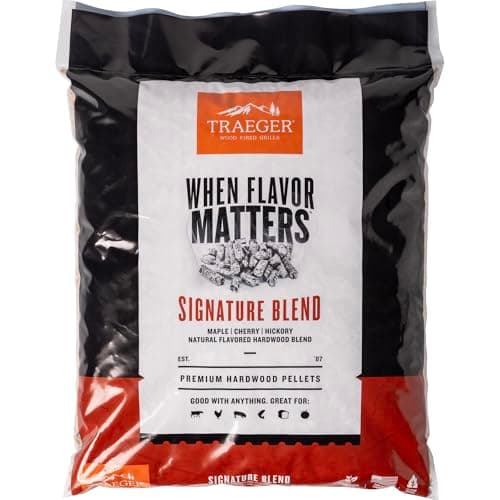
| Traeger Signature Blend | The right pellet for seasoning a new grill and for everyday cooking | Hickory, maple, cherry · medium intensity · the all-purpose default | $19.99 · View on Amazon Price as of October 17, 2026 |
| Lumber Jack Competition Blend (40 lb) | A published ratio rather than a vague blend, for cooks who want to know exactly what burns | 40 lb · published 33/33/33 maple-hickory-cherry · about $1.09/lb |
#ad — the price buttons are affiliate links and we may earn a commission at no extra cost to you. Prices come from Amazon as of October 17, 2026; the live Amazon price always wins. See our affiliate disclosure.
At roughly $0.65 per pound, the Pit Boss Competition Blend closes most of the gap that makes heating pellets tempting in the first place — and it is a stated four-wood hardwood blend made for cooking.
If You Have Already Put Heating Pellets In
Do this in order:
- Shut the grill down and do not cook on it.
- Discard any food that was already on it.
- Empty the hopper completely. Do not leave a layer in the bottom.
- Clear the auger tube. Run the auger with the hopper empty, or pull it per your manual, until no fuel pellets remain in the tube.
- Vacuum the firepot and the ash. Resin and binder residue is the thing you are removing.
- Dispose of the fuel pellets — put them in the stove they were made for.
- Run a burn-off with cooking pellets at a high temperature for 20-30 minutes, no food inside, before your next real cook.
If the auger is already jammed with swollen or clumped material, our pellet grill auger jam guide walks through clearing it.
The Related Mistake: Storing Cooking Pellets Badly
Buying the right bag and then ruining it is almost as common as buying the wrong bag. Pellets are hygroscopic — they pull moisture out of the air whether or not it ever rains on them. A swollen pellet turns to sawdust, and sawdust jams augers and starves firepots.
Three rules: keep bags sealed in a dry container, keep them off a concrete floor (concrete wicks moisture), and never store pellets in the hopper between cooks, especially not between seasons. Our how to store wood pellets guide covers the routine properly, and can you use a pellet grill in the rain covers keeping water out of the hopper during a cook.
A Note on Charcoal, Wood Chips and Other Substitutions
While we are on things that should not go in a pellet hopper: a pellet grill's auger is sized and geared for a pellet, and its controller expects a pellet's burn rate. Wood chips, chunks, sawdust and charcoal do not belong in the hopper — they bridge, jam or burn unpredictably.
If what you want is more smoke flavor than your grill produces, the right tool is a smoke tube filled with cooking pellets, placed on the grate. Our best smoke tube for a pellet grill roundup covers them, and best pellet grill for smoke flavor covers the grills that produce the most on their own.
Frequently Asked Questions
Can you use heating pellets in a pellet grill?
No. They are a fuel product, not a food-contact one — typically softwood, potentially containing bark, mill residue or treated wood, with no food-grade handling.
What is the core difference?
Softwood versus hardwood, uncontrolled versus stated content, and ash graded for stove convenience rather than for a firepot with food above it.
What if I already used some?
Shut down, discard the food, empty the hopper, clear the auger, vacuum the firepot, then burn off with cooking pellets before cooking again.
Is every hardwood pellet food safe?
No. Look for a stated species, a stated cooking purpose, and ideally a no-bark/no-filler statement. BTU and ash figures mean you are holding a heating bag.
Can I use them for the seasoning burn?
No — the residue coats the surfaces every later cook's smoke passes over. Use a cheap all-purpose cooking pellet. See how to season a new Traeger.
What is the cheapest safe option?
A stated hardwood cooking blend at the bottom of the price range, such as the Pit Boss Competition Blend at roughly $0.65 per pound.
The Bottom Line
Heating pellets are a well-engineered product for a completely different appliance. They are softwood where you need hardwood, loosely specified where you need a stated species, and graded for how often you empty a stove rather than for what the ash does above your food.
Buy a cheap cooking pellet instead. At around $0.65 per pound, the gap that makes fuel pellets tempting mostly disappears — and the bag you end up with is one the manufacturer actually intends you to eat the smoke from.
The Cheap Pellet That Is Still a Cooking Pellet
Pit Boss Competition Blend — a stated hickory, cherry, maple and oak hardwood blend in a 40-lb bag, at about $0.65 a pound. Check the live price.
#ad — the buttons on this page are affiliate links and we may earn a commission at no extra cost to you. See our affiliate disclosure.
Explore more: Wood Pellet Flavor Guide | Best Wood Pellets for Smoking | Best Wood Pellets for Chicken | How to Store Wood Pellets | Pellet Grill Auger Jam | Best Smoke Tube for a Pellet Grill | How Many Pellets Does a Pellet Grill Use