
Can You Use a Pellet Grill in the Rain? What's Safe and What Isn't
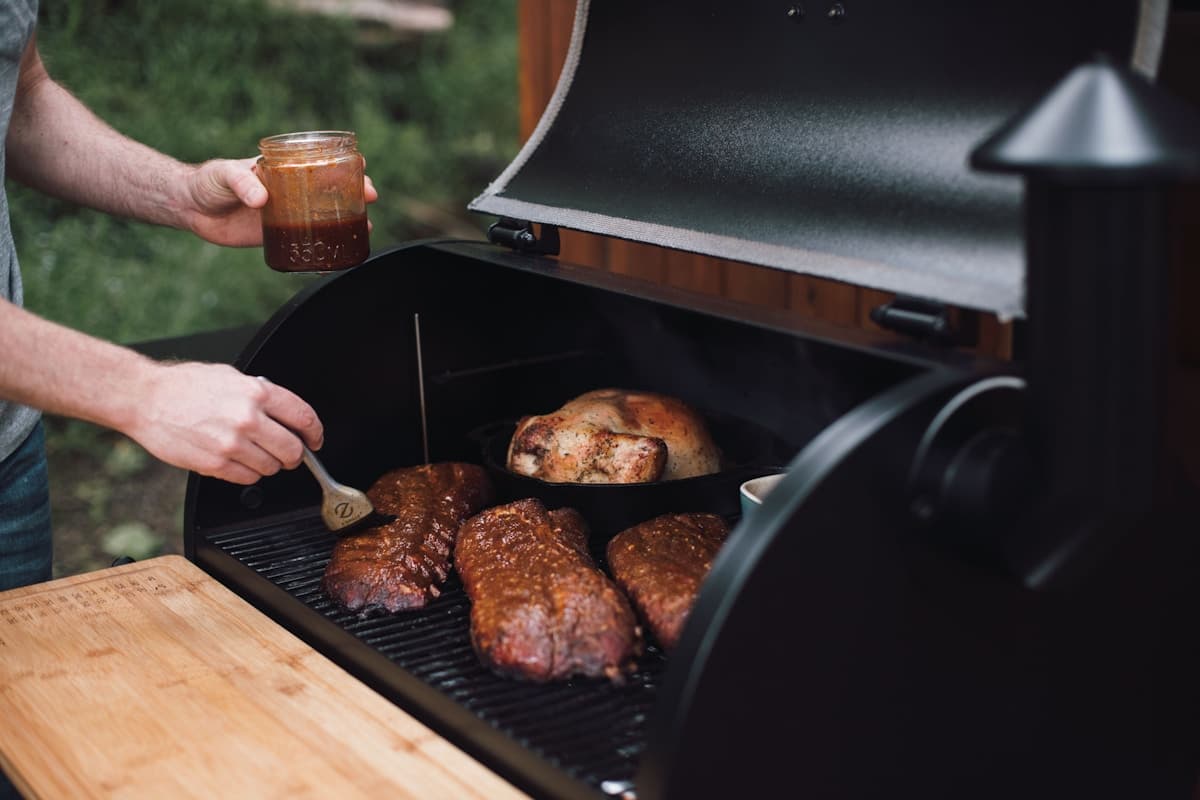
Short answer: yes, you can cook on a pellet grill in the rain — in light to moderate rain, lid closed, with the hopper and the controller kept out of direct water. What you should not do is cook in heavy rain or a thunderstorm, and you should never plug a grill into an outlet or a cord sitting in water.
Pellet grills are outdoor appliances. They are built to live on a patio through weather. But they are also the only common type of grill with electronics, a fuel hopper and a powered auger, and all three of those care about water in ways a kettle or a gas grill does not. Rain on a closed lid is a non-event. Rain in the hopper is a jammed auger. Rain at the controller can be the end of the grill.
This guide separates the three.
What Rain Actually Does, In Order of Cost
1. Water in the hopper — the common failure
Wood pellets are hygroscopic: they pull moisture out of the air whether or not it ever rains on them. Direct water is dramatically worse. A wet pellet swells, loses its structure and turns to sawdust, and sawdust is what jams augers and starves firepots.
This is the failure you will actually experience if you are careless in the rain, and it usually gets blamed on the grill. The fix is prevention: keep the hopper lid shut, keep direct water off the hopper, and empty the hopper if water got in. Our pellet grill auger jam guide covers clearing one, and how to store wood pellets covers keeping the bag dry in the first place.
2. Water at the controller or the power connection — the expensive one
The controller, the power inlet and your extension cord are the only parts of a pellet grill that are not fundamentally steel. Water reaching the board can end the grill, and water at the plug is a genuine electrical hazard rather than an inconvenience.
Two rules, and the second matters more than the first:
- Keep the controller panel out of direct, driving water. Most are shielded for weather, not submersion.
- Never run the grill from a cord, outlet or power strip sitting in a puddle. Use a GFCI outlet, keep connections elevated and dry, and if the only available outlet is in standing water, do not cook.
3. Water in the barrel and grease channel — the slow one
Rain that works its way into the chamber, or that collects where grease already sits, holds moisture against the steel. That is how the barrel rusts from the inside, and a rusted-through chamber is the one failure that ends a pellet grill rather than costing it a part. Keeping grease out is as much a rust measure as a fire measure — see how long do pellet grills last and the grease fire guide.
When You Should Not Cook
Three situations, and they are not judgement calls:
Heavy rain or a thunderstorm. Not because the grill will explode — because you will be standing outside next to a powered appliance in a storm, opening a lid that dumps heat and takes water every time. Move the cook.
Water at the power connection. Covered above. This is the one that can hurt you.
Any enclosed space. This is the mistake that gets made because it is raining, and it is the dangerous one. A pellet grill produces carbon monoxide, and it needs open air. Never run one in a garage, a carport with a closed end, a shed, a screened porch with the sides down, or under a low tarp. "Just inside the garage door with the door open" is not ventilation.
If what you want is to cook through bad weather regularly, the answer is a high, open-sided canopy or awning with the grill well clear of walls and siding — never a cover, a tarp draped over the grill, or an enclosure.
Cooking in the Rain: The Practical Routine
- Shelter the hopper, not the grill. An awning, a patio umbrella well clear of the chimney, or simply positioning so the prevailing wind drives rain away from the hopper and controller side.
- Keep the hopper lid closed for the entire cook. Load before you start.
- Preheat longer. Cold rain strips heat from the chamber; give it an extra ten minutes to stabilise before food goes on.
- Open the lid as little as possible. Every opening in wet weather costs more recovery time than it does in summer, and lets water into the chamber.
- Expect more pellets. The controller compensates for heat loss by feeding more fuel. Our how many pellets does a pellet grill use guide has the numbers; wet and cold is the high end of every range.
- Watch for wider swings. A single-wall grill in cold rain will wander more than it does in July. That is physics, not a fault — see pellet grill temperature swings.
- Use a wireless probe so you are not opening the lid to check doneness in the rain.
Afterwards: The Step Most Owners Get Wrong
When the cook is done:
- Run the grill a few extra minutes to burn off surface moisture before shutdown.
- Shut down normally and let the fan complete its cycle.
- Let it cool completely — this is the important one.
- Then cover it.
Covering a warm grill is actively worse than leaving it bare. The residual heat drives moisture out of the metal and the grease, and a sealed cover condenses it right back onto the surfaces. Owners who kept a grill covered and still found rust have almost always done exactly this. In humid climates, choose a vented cover and pull it off on a dry day now and then to let everything breathe.
Finally: check the hopper. If any water reached the pellets, empty it. Clumped pellets are a jam waiting for your next cook.
What to Look For in Wet-Weather Gear
Before the picks, the criteria — because this category is full of products that do not fit and one that does the opposite of what it claims.
Fitment beats fabric. Pellet grills have an awkward silhouette: a hopper hanging off one side, usually a chimney, sometimes a shelf. A universal cover cut for a rectangular gas grill either will not close around the hopper or drapes loose everywhere else — and a loose cover in wind is worse than none, because it flaps, abrades the finish, works its way off and forms sagging pockets that hold standing water directly against the grill. Buy for your model family.
Denier is one input, not a verdict. A 1000D cover is woven from thicker yarn than a 600D one and resists abrasion better. What denier does not tell you is anything about the waterproof coating underneath, the UV inhibitors, or whether the seams are sealed — and those three are what usually fail first.
Vents matter in humid climates. A sealed cover on a grill stored in humidity condenses water under the fabric every day-to-night temperature swing, with nowhere for it to go.
An insulated blanket is a different product with a different job. It goes on the grill while cooking in cold weather to reduce heat loss. It is not a rain cover and does not replace one.
Our pellet grill cover buying guide has fitment by brand in full detail.
Gear That Actually Helps
| Item | Best for | Key specs | Price |
|---|---|---|---|
| Traeger BAC503 Cover (Pro 575) | Traeger Pro 575 owners who want OEM fitment around the hopper and chimney | Full-length Traeger cover · model-specific cut · OEM warranty relationship | |
| Qulimetal Cover (recteq Flagship) | recteq Flagship owners — fitment at a fraction of OEM pricing | Cut for the Flagship silhouette · third-party | $39.99 · View on Amazon Price as of October 17, 2026 |
| Z Grills 700D-Series Cover | Z Grills 700D owners storing the grill outdoors year-round | Model-family cut for the 700D barrel-and-hopper body | $35.79 · View on Amazon Price as of October 17, 2026 |
| Insulated Blanket (Traeger Woodridge) | Cooking through a cold, wet season — cuts heat loss and pellet burn | Woodridge-specific insulated blanket · used during the cook, never as a rain cover | $93.50 · View on Amazon Price as of October 17, 2026 |
#ad — the price buttons are affiliate links and we may earn a commission at no extra cost to you. Prices come from Amazon as of October 17, 2026; the live Amazon price always wins. See our affiliate disclosure.
Rain vs Cold: Not the Same Problem
Rain is a moisture problem: hopper, controller, rust. Cold is a heat-loss problem: more pellets, longer preheats, wider swings.
They overlap in a wet winter, and the fixes are different. A cover solves the first and does nothing for the second; a blanket solves the second and nothing for the first. If your season is both, you need both — and our pellet grill cold weather guide covers the heat-loss half properly, including why a double-wall chamber earns its money in January.
If you are shopping with weather in mind, the best pellet grill for cold weather roundup names the grills that handle it best out of the box.
Frequently Asked Questions
Can you use a pellet grill in the rain?
Yes — light to moderate rain, lid closed, hopper and controller out of direct water, and never with the power connection wet.
What is the biggest risk?
Water in the hopper (jammed auger) and water at the controller or plug (dead grill, or a shock hazard). Rain on a closed lid is harmless.
Can I cook under a canopy?
A high, open-sided one, yes. Never in a garage, shed, carport with a closed end, or under a low tarp — pellet grills produce carbon monoxide.
Can I cook with the grill cover on?
No. It is fabric over a firebox. Covers are for a cool, off grill only.
Will I use more pellets?
Yes, noticeably. Cold rain and wind both increase consumption; see how many pellets.
What do I do afterwards?
Run a few extra minutes, shut down normally, cool completely, then cover. Empty the hopper if water reached the pellets.
The Bottom Line
Rain is not the enemy; water in the wrong three places is. Keep it out of the hopper, away from the controller and the plug, and out of a grease-filled barrel, and a pellet grill will cook through a wet season for years. Cook in light rain with the lid closed and the hopper shut. Move the cook for a thunderstorm. Never bring the grill indoors or under an enclosure to escape the weather — that is the one mistake in this guide that can actually hurt you.
The Fix for Wet-Weather Storage
A model-fitted, vented cover on a completely cool grill keeps water out of the hopper, off the controller and away from the grease path. Check the live price.
#ad — the buttons on this page are affiliate links and we may earn a commission at no extra cost to you. See our affiliate disclosure.
Explore more: Pellet Grill Cover Buying Guide | Pellet Grill Cold Weather Guide | How Long Do Pellet Grills Last | Best Pellet Grill for Cold Weather | Best Pellet Grill Insulation Blanket | How to Store Wood Pellets | Can You Leave a Pellet Grill Unattended