
Pellet Grill Grease Fire: How to Stop One and How to Prevent It
If It Is Happening Right Now
Close the lid. Shut the grill down. Unplug it. Do not use water.
That is the order, and each step does a specific job:
- Close the lid. A closed lid starves the fire of oxygen. This alone extinguishes most pellet-grill grease fires within a minute or two.
- Shut down the grill and cut the power. On a pellet grill the combustion fan is actively blowing air into the cookbox — it is a bellows aimed at the fire. Switching the grill off and unplugging it removes the air supply and stops the auger adding more fuel.
- Leave the lid closed. Resist the urge to look. Every time you open it you feed the fire a fresh charge of oxygen.
- Smother, do not douse. If the fire persists, a generous quantity of baking soda smothers a small grease fire, and a Class B or Class K fire extinguisher is the correct tool. Never water — it flashes to steam and throws burning grease outward.
- Know when to stop. If flames are coming from the hopper, if the fire has reached a deck, fence, eave or siding, or if it is not shrinking within a couple of minutes, get everyone clear and call the fire service. A grill is replaceable.
Afterwards, let the grill cool completely, then open it up and find out what burned. Do not cook on it again until the drip tray, grease channel, bucket and fire pot are clean and the gasket, wiring and grease paths have been inspected.
Why Pellet Grills Get Grease Fires
A pellet grill is, on the whole, one of the safer ways to cook outdoors: the fire lives in a steel pot, a controller manages it, and most cooking happens at 225-275°F — well under the temperature at which cooking fats ignite. The fire risk is not the burn; it is what accumulates while you are not burning.
Where grease collects. Fat renders out of the meat, drops onto the angled drip tray, runs down a channel and into a bucket or cup. Along that path it also coats the inside of the lid, the walls of the lower cookbox, the grease channel itself, and the underside of the grates. At 225°F none of that ignites. It just builds.
What triggers it. Two scenarios account for nearly every pellet-grill grease fire:
- A high-heat cook on a grill that has only run low. You smoke all autumn at 225°F, then crank to 450°F to crisp wings — and months of accumulated grease reaches its ignition point simultaneously. This is the classic case, and it is why "clean before you run hot" is the most useful rule in this guide.
- A flame-out followed by a relight. If the fire dies while the auger keeps feeding, pellets pile up in the fire pot. When they all catch at once the flare is far bigger than a normal fire, and it reaches grease that was previously out of harm's way. Our pellet grill flame-out guide covers the causes — damp pellets and an ash-filled fire pot lead the list.
What makes it worse. An overfull grease bucket; a drip tray that has been scraped into a rut so grease pools rather than runs; a fire pot full of ash; cooking very fatty cuts repeatedly (pork belly, bacon-wrapped anything, wings) without cleaning in between; and a grill sited under a wooden eave or against siding, which converts a contained fire into a structural one.
The Prevention Routine
None of this is complicated. It is a schedule, and the schedule is the whole intervention.
Every two to three cooks
- Empty the grease bucket or cup. An overflowing bucket is both a fire risk and a mess.
- Look at the drip tray. If the foil liner is torn or grease is pooling rather than running, change it.
- Brush the grates while the grill is still warm.
Every 20-25 hours of cooking (more often for fatty cuts)
- Pull the grates and the drip tray out and clean both properly.
- Scrape the grease channel so the path to the bucket actually drains.
- Vacuum the fire pot and the bottom of the cookbox. Ash in the pot causes flame-outs, which cause flares.
- Wipe the inside of the lid. Flaking black deposits are carbonised grease, not "seasoning."
Before any high-heat cook
- Clean the grease path first. This is the one rule that would prevent most of the fires people describe.
Seasonally
- Full teardown clean: cookbox, grease paths, fire pot, hopper. Our how to clean a Traeger grill walkthrough is the detailed version and applies to any brand, and the Traeger maintenance schedule sets out intervals.
Siting, once
- Put the grill on a non-combustible, level surface with clearance on all sides, and not under an eave, a pergola or against vinyl siding. This single decision determines whether the worst case is a ruined grill or a damaged house. It matters even more if you run long cooks while you are elsewhere — see can you leave a pellet grill unattended.
What to Look For in the Products That Help
Three categories of product actually reduce grease-fire risk, and each has one feature that matters:
- Drip tray liners: correct fitment for your drip tray, and enough thickness that they do not tear when you lift them out. A liner that tears lets grease onto the tray, which defeats the purpose. Fitment is model-specific — check the part number.
- A degreaser: it needs to cut baked-on, carbonised grease rather than fresh grease, and if it will touch cooking surfaces it should be food-safe. Thin all-purpose sprays do not touch grill carbon.
- A grill brush: bristle type matched to your grates. Cast iron and porcelain need different treatment from bare stainless, and no wire brush belongs anywhere near fine mesh.
Our Picks for Keeping the Grease Path Clean
| Pick | Best for | Key specs | Price |
|---|---|---|---|
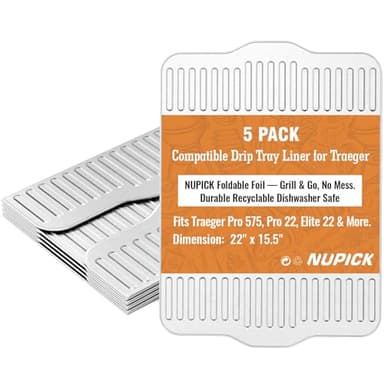
| NuPick BAC507-Pattern Drip Tray Liners | The cheapest fix — turns drip-tray cleaning into a 30-second job | BAC507-pattern liners for Pro 575 / 22-class drip trays · multi-pack | $18.99 · View on Amazon Price as of October 12, 2026 |
| Traeger® Drip Tray Liners | OEM-fit liners for Traeger owners who want no fitment guesswork | Traeger-branded liners · sized per model — check yours | Sizing varies by grill — confirm the pattern before ordering. |
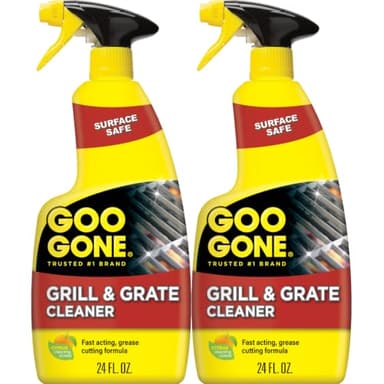
| Goo Gone Grill & Grate Cleaner | Cutting the baked-on carbonised grease a general cleaner will not touch | Grill-specific degreaser · our best overall degreaser pick | $21.99 · View on Amazon Price as of October 12, 2026 |
| Krud Kutter Original Concentrated Degreaser | Heavy-duty concentrate for a seasonal teardown clean | Concentrate — dilutes for cookbox, grease channel and bucket work | $7.97 · View on Amazon Price as of October 12, 2026 |
#ad — the price buttons are affiliate links and we may earn a commission at no extra cost to you. Prices come from Amazon as of October 12, 2026; the live Amazon price always wins. See our affiliate disclosure.
NuPick BAC507-Pattern Drip Tray Liners
Goo Gone Grill & Grate Cleaner
Full rankings and fitment detail are in our best degreaser for a pellet grill roundup and our Traeger drip tray liner guide. A long-cuff pair of gloves from the best BBQ gloves guide is also worth owning before you go reaching into a hot cookbox.
Flare-Ups Versus Grease Fires
Worth separating, because they are not the same event and the right response differs.
A flare-up is a brief flame from fat dripping onto something hot — common on direct-flame grills and on pellet grills with the flame broiler or sear mechanism open. It lasts seconds, it is often just part of grilling, and the response is to move the food, close the lid or lower the heat.
A grease fire is sustained combustion of accumulated grease somewhere in the grill, typically in the drip tray, channel or bucket. It does not stop when you move the food, because the food is not the fuel. That is the one this guide is about, and the response is the five steps at the top.
If you are seeing persistent flare-ups rather than an actual fire, the cause is usually the grease path again — a tray that is not draining — plus fatty food at high heat.
After a Fire: What to Check Before Cooking Again
- The grease path. Drip tray, channel, bucket, cookbox floor — all clean and draining before you cook.
- The fire pot. Vacuum out ash and any unburned pellets.
- The lid gasket and any plastic or rubber parts. Heat damage here is common and affects how the grill seals and runs.
- Wiring and the controller. Anything scorched, melted or brittle needs replacing, not taping. Burnt insulation on a probe or igniter lead is a reason to stop.
- The temperature probe. A chamber probe that has been through a fire may read inaccurately, which puts every future cook off. Our temperature swings guide covers how to spot a drifted probe, and the brand error-code guides — Traeger, Pit Boss, recteq — map codes to parts.
- The paint and the hopper. Check that heat has not reached the hopper or warped the body.
If the grill ran hot enough to damage wiring or the controller, factor repair cost against replacement — our best pellet grills roundup is the starting point if it comes to that.
Frequently Asked Questions
What do you do if your pellet grill catches fire?
Close the lid, shut the grill down, unplug it, and keep the lid closed. Never water. Baking soda or a Class B/K extinguisher if needed; call the fire service if it is not shrinking within a couple of minutes.
What causes a grease fire in a pellet grill?
Accumulated grease in the drip tray, channel and bucket, ignited by a rise in temperature — usually a high-heat cook on a grill that has only run low, or a flare from a flame-out relight.
Can you put water on a pellet grill grease fire?
No. Water flashes to steam and throws burning grease outward, turning a contained fire into a spread fire.
How often should you clean a pellet grill to prevent a grease fire?
Bucket and drip tray every two to three cooks; a full grease-path and fire-pot clean every 20-25 hours of cooking; always before a high-heat cook.
Are pellet grills more likely to catch fire than other grills?
Generally less likely, with one exception: the first high-heat cook on a grill that has accumulated months of grease at low temperatures.
The Bottom Line
A pellet grill grease fire is a maintenance event, not a malfunction. The grease is the fuel, the temperature rise is only the trigger, and the schedule is the fix: bucket and tray every few cooks, a full grease-path clean every 20-25 hours, and always a clean grill before you run hot. Put a set of drip tray liners and a real grill degreaser in the cupboard, keep a box of baking soda or a Class B extinguisher on the patio, and site the grill away from the house — those four things cover the entire problem.
Check the live price on drip tray liners
Liners are the cheapest grease-fire prevention there is — the button reads the current Amazon price.
#ad — the buttons on this page are affiliate links and we may earn a commission at no extra cost to you. See our affiliate disclosure.
Explore more: How to Clean a Traeger Grill | Pellet Grill Flame-Out | Best Degreaser for a Pellet Grill | Traeger Maintenance Schedule