
Best Wood Pellets for Turkey in 2026: 6 Bags Ranked for a Whole Bird
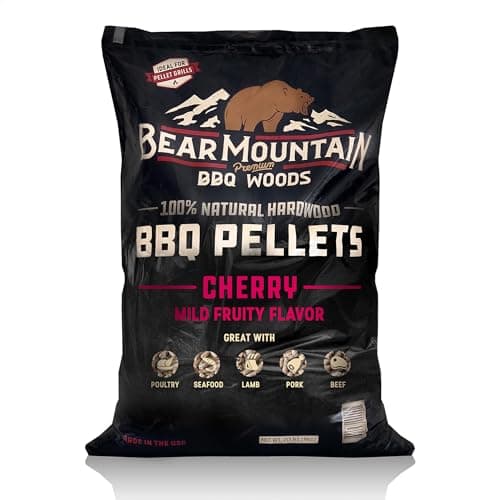
A turkey is the highest-stakes cook most pellet grill owners attempt all year, and it is the one where the wrong bag of pellets does the most damage. You get one bird, it feeds everyone you are related to, and it is mostly lean white meat that takes smoke readily — so the failure mode is not "not smoky enough," it is a centerpiece that tastes acrid at a meal nobody can start over.
The short answer: buy cherry. Bear Mountain Cherry is the bag we would hand anyone smoking a whole turkey. It is mild enough to be safe on breast meat, it has enough presence that the bird actually tastes smoked rather than roasted, and it gives skin the deep mahogany color that makes a holiday turkey look like the pictures. Budget pick: Kingsford Craftsmoke Applewood, the cheapest fruit wood here we would happily run on a bird.
Six bags make this list. Every one of them had a live, in-stock listing at our last price refresh, every price in the table comes from our tracked price layer with an "as of" date, and every pick carries honest cons. This page is about the fuel — if you are still choosing the grill, our best pellet grill for turkey roundup ranks machines on main-grate room and a steady 275-325°F cruise, and the smoked whole turkey recipe covers the brine, the spatchcock option and the pull temps.
Quick Picks: Best Wood Pellets for Turkey
| Pellets | Best for | Key specs | Price |
|---|---|---|---|
| 1. Bear Mountain Cherry | Best overall — mahogany skin with no risk of a bitter breast | 40 lb · all-natural cherry hardwood · about $0.85/lb · mild-to-medium | $33.99 · View on Amazon Price as of November 20, 2026 |
| 2. Traeger Apple Hardwood | Most forgiving — the safest bag for a first turkey or smoke-shy guests | Apple · mild intensity · about $1.00/lb · nearly impossible to overdo | $19.99 · View on Amazon Price as of November 20, 2026 |
| 3. Bear Mountain Pecan | Best Southern-style bird — nutty depth without hickory's punch | 2 x 20 lb sealed bags · pecan · about $0.87/lb · medium | |
| 4. Kingsford Craftsmoke Applewood | Budget pick — real fruit wood at the lowest price here | 20 lb · applewood and oak · about $0.90/lb | $17.99 · View on Amazon Price as of November 20, 2026 |
| 5. Camp Chef Competition Blend | Best blend under $20 — maple sweetness over a mild hickory base | 20 lb · maple, hickory, cherry · about $1.00/lb | $19.99 · View on Amazon Price as of November 20, 2026 |
| 6. Traeger Signature Blend | Best one-bag answer — turkey in November, ribs in July | Hickory, maple, cherry · medium intensity · the all-purpose default | $19.99 · View on Amazon Price as of November 20, 2026 |
#ad — the price buttons are affiliate links and we may earn a commission at no extra cost to you. Prices come from Amazon as of November 20, 2026; the live Amazon price always wins. See our affiliate disclosure.
What Actually Matters in a Turkey Pellet
A turkey is not a big chicken, and the criteria shift accordingly. These are the four things we weighted, in order.
1. Intensity, measured against a long cook on lean meat. Our wood pellet flavor guide states the governing rule: match the intensity of the wood to the richness of the protein. Turkey breast is about as lean and mild as smoking gets, and unlike a chicken — done in ninety minutes — a whole bird sits in smoke for three to five hours. That combination of mild meat and long exposure is why fruit woods dominate this list and why mesquite is disqualified outright.
2. Color, because a holiday bird is looked at before it is eaten. This is the criterion nobody admits to. Apple-smoked turkey tastes excellent and comes off the grill pale gold; cherry-smoked turkey comes off a deep reddish mahogany. If the bird is going to the table whole and photographed before it is carved, cherry earns its top spot on appearance as much as flavor.
3. Bag size against what a turkey actually burns. Our pellet consumption guide puts a grill at 250-300°F at roughly 1.5 to 2.5 pounds an hour, and the whole turkey recipe plans on about 20 minutes per pound at 275°F — so a 13-pound bird is a 3.5 to 4.5 hour cook burning something like 6 to 12 pounds of pellets. That makes a 20-pound bag technically sufficient and a 40-pound bag genuinely safer, for one reason: it is November. Cold and wind can push consumption up toward double on a single-wall grill, which is the single most common way a Thanksgiving cook runs the hopper dry at hour four.
4. What the bag actually contains. Pellet labels describe flavor, not always composition. "Applewood" can mean 100% apple or apple over an oak base, and both are legitimate products at different prices — but you should know which you are buying before you put it under the one bird you cook this year. We say which below.
How We Chose
These rankings are research-based. We work from each manufacturer's published composition and specifications, from retailer listings we verify as live and in stock, and from the flavor behavior documented across our own pellet guides and recipe notes. We do not run a laboratory and we do not claim measured smoke chemistry or a side-by-side turkey bake-off.
Prices come from our tracked price registry and render live inside the buy buttons, with an "as of" date — never typed into the prose, where a pellet price is wrong within a month. The cost-per-pound figures in the table are calculated from recent verified listings for comparison, not quoted as an offer.
1. Bear Mountain Cherry — Best Overall for Turkey
Bear Mountain Cherry (40 lb)
Who it is for: anyone smoking a whole bird that is going to the table looking like a holiday turkey.
Cherry is the wood that solves both halves of the turkey problem at once. On flavor it is mild-to-medium — enough presence that the bird reads as smoked rather than oven-roasted, never enough to overwhelm breast meat over a four-hour cook. On appearance it is the clear winner: cherry's signature is the deep mahogany color it puts on skin and bark, which is exactly the look people associate with a professionally smoked bird and the reason competition cooks lean on it for poultry.
Bear Mountain's is all-natural cherry hardwood in a 40-pound bag, and at roughly $0.85 a pound at our last refresh it is the best cost per pound of any single-species fruit wood we track. The bag size is the right call for this cook specifically: it covers the bird, a cold snap and the sides without a mid-cook refill.
Pros
- The best color on the list — deep mahogany skin rather than pale gold
- Mild enough for lean breast meat over a four-hour cook
- 40 lb means you are not watching the hopper on Thanksgiving morning
- Excellent on pork too, so the rest of the bag gets used
Cons
- 40 lb is a lot of cherry if a turkey is genuinely the only thing you smoke
- Thinner on savory depth than hickory or pecan — it is a color-and-restraint wood
- Less forgiving than apple if you also plan to run a smoke tube
2. Traeger Apple Hardwood — Most Forgiving
Traeger Apple Hardwood Pellets
Who it is for: a first turkey, a brined bird, or a table with guests whose smoke tolerance you do not know.
Apple is the gentlest wood in common use, and on a cook with this much at stake that is worth a great deal. The smoke is light, clean and faintly fruity, and it is close to impossible to over-smoke food with it — which is why it is the standard recommendation for smoked turkey breast as well as for whole birds. If somebody at the table says they do not like smoked food, this is the bag that wins them over.
The honest trade is that apple's restraint can tip into absence. On a wet-brined bird at 325°F, apple smoke is subtle enough that some cooks finish wondering whether it registered at all. That is a feature if you are nervous and a flaw if you wanted the bird to taste unmistakably of barbecue.
Pros
- The hardest wood here to overdo — the safe choice on a once-a-year cook
- Clean, light fruit smoke that suits brined birds and lean breast meat
- Also strong on fish, vegetables and cheese, so the bag has a life after November
- Traeger's own bag, which matters if your warranty language references brand fuel
Cons
- Can read as barely-there on a brined bird at the top of the temperature range
- Noticeably less skin color than cherry
- Costs more per pound than the generic fruit woods below
- Gets completely lost on beef — not a one-bag-for-everything pellet
3. Bear Mountain Pecan — Best Southern-Style Bird
Bear Mountain Pecan (20 lb x 2)
Who it is for: the cook who finds fruit wood too polite and wants a turkey with some savory depth behind the sweetness.
Pecan is in the same botanical family as hickory but gentler and nuttier, which makes it the traditional poultry wood across much of the South and the most interesting pick on this page. It gives a bird more backbone than cherry or apple without the bacony punch that makes straight hickory a gamble on white meat, and it is excellent on legs and thighs if you are cooking the bird in pieces.
It ships as two sealed 20-pound bags rather than one 40, which is a quietly useful thing for a wood you use seasonally: you open one and the other stays factory-sealed against the moisture that ruins stored pellets.
Pros
- More savory depth than any fruit wood here, without hickory's aggression
- The classic Southern poultry wood — excellent on legs, thighs and spatchcocked birds
- Two sealed bags means half the order stays sealed until you need it
- Works across pork and beef as well, unlike a pure fruit wood
Cons
- More assertive than apple — not the pick for guests who dislike smoke
- Costs more per pound than the cherry, and 40 lb of a seasonal wood is a commitment
- Less skin color than cherry
4. Kingsford Craftsmoke Applewood — Budget Pick
Kingsford Craftsmoke Applewood (20 lb)
Who it is for: the cook smoking one turkey this year who does not want to spend premium money on a bag that will sit in the garage until next November.
This is the cheapest bag on the page we would genuinely run under a holiday bird. It is applewood over an oak base in a 20-pound bag at roughly $0.90 a pound, and the oak is not a problem on turkey — oak is the most neutral smoking wood there is, and our flavor guide notes it has no bad pairings. What you lose is purity of character: this is recognizably fruit-smoked turkey rather than a showcase for apple.
Buy it if the price matters, and buy two bags rather than one if the forecast is cold, because 20 pounds is a single bird's worth of fuel with very little margin.
Pros
- Lowest cost per pound of the fruit woods here
- Oak base is neutral, so nothing it adds works against poultry
- 20 lb is a sensible size for a cook who smokes a bird once or twice a year
- Widely stocked, so it is easy to grab a second bag before a holiday
Cons
- Apple over oak rather than single-species apple — less pure apple character
- 20 lb leaves almost no margin if cold weather doubles consumption
- Beaten on cost per pound by every 40-lb bag on this page
5. Camp Chef Competition Blend — Best Blend Under $20
Camp Chef Competition Blend (20 lb)
Who it is for: the cook who wants a little more than fruit wood alone, in one bag, without thinking about ratios.
This is maple, hickory and cherry in a 20-pound bag, and the balance suits turkey better than the ingredient list suggests. Maple is the quiet star here — our flavor guide calls maple-smoked turkey at Thanksgiving a standout dish, because maple's mild sweetness suits poultry the way it suits cheese. The cherry adds color, and the hickory sits underneath as a backbone rather than the headline.
The honest caveat is that it is a blend without a published ratio, so you are trusting the maker's balance rather than buying a known quantity. On a bird this mild, a hickory-heavy batch would be noticeable.
Pros
- Maple-forward sweetness is a genuinely good match for turkey
- Cherry in the mix still gives useful color
- One bag that handles poultry, pork and weeknight grilling
- Consistently among the cheapest blends we track
Cons
- No published ratio — the hickory share is whatever the batch is
- More assertive than straight apple on lean breast meat
- 20 lb, so the cold-weather margin caveat applies here too
6. Traeger Signature Blend — Best One-Bag Answer
Traeger Signature Blend Pellets
Who it is for: the owner who wants one bag in the garage that is never wrong, on a turkey in November and ribs in July.
Signature Blend is hickory, maple and cherry and sits in the medium band — the all-purpose default for a reason. On a turkey it is the most assertive pick on this page, which makes it the wrong first choice for a nervous cook and the right choice for somebody who already knows they like their poultry properly smoked. It is also the pick if you are running a Traeger and would rather not keep four bags.
Pros
- Genuinely all-purpose — poultry, pork, beef and vegetables all work
- Cherry in the blend still delivers color on skin
- The simplest answer if you only want to own one bag of pellets
Cons
- The most hickory-forward pick here — more smoke than a lean breast needs
- Premium per-pound price for a blend
- Not a specialist at anything, which is the point and the limitation
The Turkey Wood Hierarchy
If the bag you want is out of stock, this is the order we would substitute in, drawn from the pairing table in our wood pellet flavor guide:
| Wood | On turkey | Why |
|---|---|---|
| Cherry | Best | Mild-to-medium with the deepest skin color |
| Apple | Excellent | The most forgiving smoke in common use |
| Maple | Excellent | Mild sweetness; a classic Thanksgiving pairing |
| Pecan | Very good | Nutty depth, gentler than hickory |
| Oak | Good | Neutral and clean; a fine base, unexciting alone |
| Hickory | In blends only | Strong and bacony; dominates lean white meat |
| Mesquite | Avoid | The strongest common wood; harsh on poultry |
Two hopper mixes are worth knowing. 50/50 cherry and apple is the classic poultry combination and gets you color plus restraint in one load. 70/30 cherry and pecan is the move if you want a bird with more savory weight — enough pecan to taste, not enough to take over.
How Much to Buy for Thanksgiving
Work it backwards from the bird. A 13-pound turkey at 275°F is roughly a 3.5 to 4.5 hour cook at about 20 minutes per pound, and at 250-300°F a pellet grill burns roughly 1.5 to 2.5 pounds an hour — so the bird itself is 6 to 12 pounds of pellets, plus a pound or so for preheating.
Then add the two things that break that estimate:
- Weather. Late November is the worst month of the year for pellet consumption. Cold and wind make the controller feed more fuel to hold temperature, and owners commonly report burning up to roughly double their usual amount in severe cold. Our cold-weather guide covers the windbreak-and-blanket routine that recovers most of it.
- Everything else you cook. If the grill stays lit for a casserole, rolls or a second smaller bird, you are into a second cook's worth of fuel.
The practical answer: a 20-pound bag is enough for the bird, a 40-pound bag is enough for the day. And check the hopper before the bird goes on — an auger that runs dry does not pause the cook, it means a cold restart, which is a bad thing to discover at hour three with guests arriving.
What Not to Put Under a Turkey
Mesquite. It is the strongest commonly sold smoking wood, and our flavor guide lists light poultry among the things to avoid it with. On a mild bird it reads as harsh rather than smoky. A 50/50 mesquite and oak blend is world-class on Texas brisket and still wrong here.
Any bag that will not say what wood is in it. A label that only promises a flavor, with no species named, is frequently an oak or alder base with a thin coating of flavored dust. Fine as fuel, not what you want on the one bird you cook this year.
Heating pellets — ever. This is a safety rule rather than a flavor one. Heating pellets are not food-grade and may contain softwoods, binders or treated material. Our heating pellets guide explains how to tell the bags apart at the store.
And store whatever you buy properly. Pellets are hygroscopic — they pull moisture out of the air whether or not it rains on them, and a swollen pellet turns to sawdust that jams augers and starves firepots. Keep bags sealed in a dry container off a concrete floor, and do not leave pellets in the hopper between cooks; our pellet storage guide has the full routine. This matters more for turkey than for anything else on this site, because a seasonal cook means a bag that sits for eleven months.
Frequently Asked Questions
What are the best wood pellets for turkey?
Cherry. Bear Mountain Cherry is the bag we would buy first — mild enough for breast meat, with the deepest skin color here. Traeger Apple if you want maximum restraint.
Cherry or apple?
Cherry for color, apple for restraint. A 50/50 hopper is the classic poultry answer and gets you both.
Can I use hickory on a turkey?
In a blend, as a base under fruit wood. Straight hickory dominates lean white meat; it is better on legs and thighs than on breast.
How many pellets will a turkey use?
Roughly 6 to 12 pounds for a 13-pound bird at 275°F, and plan for more in cold weather. See how many pellets does a pellet grill use.
Do I need pellets made specifically for poultry?
No. Buy cherry, apple, maple or pecan, or a fruit-forward blend, and check that the bag names its species. Poultry-branded bags are usually the same wood with different packaging.
What temperature should I smoke a turkey at?
275-325°F, per our whole turkey recipe — low enough for smoke, hot enough for the skin to render. Pull the breast at 160°F and the thigh at 175°F; a wireless thermometer is the accessory that matters most on this cook.
Our Recommendation
Buy Bear Mountain Cherry if a whole turkey is the reason you are shopping. It is the only bag here that gets both halves of the job right — safe on lean breast meat and the best color on the table — and the 40-pound bag removes the one real risk on a cold-weather holiday cook.
Buy Traeger Apple Hardwood instead if this is your first bird or your guests are smoke-shy, and buy both if you want the 50/50 poultry mix. If money is the constraint, Kingsford Craftsmoke Applewood is real fruit wood at the lowest price here — just buy two bags if the forecast is bad.
Our Pick: Bear Mountain Cherry Pellets
Mild-to-medium cherry smoke with the deepest mahogany skin color on the list, in the 40-lb bag a holiday cook actually needs. Check the live price.
#ad — the buttons on this page are affiliate links and we may earn a commission at no extra cost to you. See our affiliate disclosure.
The other half of a good bird is the rub: see best BBQ rub for chicken for bottles that behave at the temperatures poultry skin needs, and best wood pellets for chicken if your everyday poultry cook is a 90-minute chicken rather than a holiday turkey.
Explore more: Best Pellet Grill for Turkey | Smoked Whole Turkey | Smoked Turkey Breast | Best Wood Pellets for Chicken | Best Wood Pellets Under $25 | Wood Pellet Flavor Guide | How Many Pellets Does a Pellet Grill Use | How to Store Wood Pellets | Cold Weather Pellet Grilling